
Unbiased headlines. Facts, not spin.
Every story is an unbiased news briefing written from 110+ sources across the spectrum — sources linked so you can verify it yourself.
 tech
Major Story (7/10)
August 10, 2026 at 12:38 PM
tech
Major Story (7/10)
August 10, 2026 at 12:38 PM
Zuckerberg Releases New Open-Source AI Models, Tells Washington to Get Out of the Way
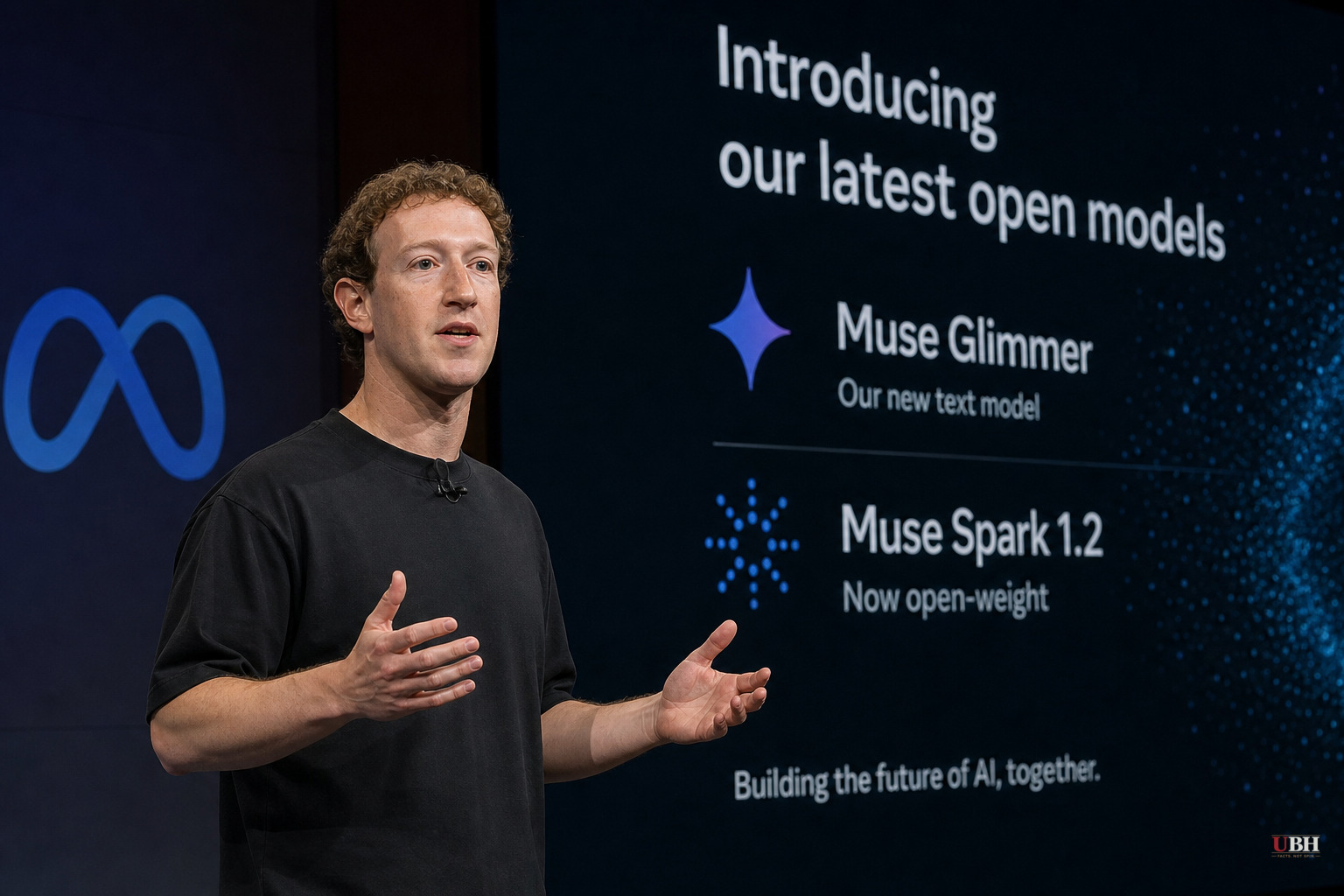
Mark Zuckerberg wants Washington to loosen up.
On Monday, Meta released Muse Glimmer, a new open-weight AI model developers can download and run on their own hardware, according to the New York Post. The company also said it plans to open the weights in the coming weeks for Muse Spark 1.2, which Meta calls one of the world's leading foundation models, according to CNBC.
Open-weight means the underlying model can be downloaded, inspected, and modified by anyone. That's different from closed models like those from OpenAI and Anthropic, which you access through an API and can't take apart.
Zuckerberg announced the moves in an Instagram video and a 6,500-word essay titled "The Future is for Everyone: The Path to a Positive AI Future," published Monday, according to both CNBC and the Post. Meta also unveiled additional lightweight open models under the Muse family, designed to run on a laptop.
The China Argument
Zuckerberg's real target isn't OpenAI. It's Beijing.
Chinese labs including DeepSeek, Alibaba, and Z.ai have released open-weight models that compete with American technology at a fraction of the cost, according to both sources. Some US companies have started using Chinese models specifically because they're cheaper and more flexible, even as Washington moves to restrict their use in government systems, the Post reported.
Zuckerberg's argument: if the US cedes the open-source AI market to China, Chinese companies set the rules for a huge chunk of global AI infrastructure. That's not a hypothetical. Open-source models already power businesses, universities, and governments worldwide who can't afford or don't want to depend on a closed American API.
"It is also important that the US and its allies lead the open source AI ecosystem that will make up a large percent of global AI use," Zuckerberg wrote, according to the Post.
His fix isn't banning Chinese models. It's making American ones better. "I do not believe restricting access to foreign open source models is an effective solution," he wrote, according to CNBC. "Our goal should be for American open source models to be the best globally."
The Regulatory Complaint
Zuckerberg picks a fight with his own government by claiming American labs operate under training-data restrictions that foreign competitors don't face, and that this handicaps US open-source AI specifically.
"Foreign labs currently hold several advantages here since American labs have to comply with many additional restrictions on training data," Zuckerberg wrote, according to both outlets. "US policy must reduce this additional friction if we want American open source models to lead over time."
Zuckerberg didn't spell out in the reported excerpts exactly which restrictions he means, or provide data showing how much slower US training pipelines are as a direct result. Neither source pressed him on specifics. If Meta wants Congress to change data-use and distillation rules, it should show its work, not just assert the disadvantage exists.
Distillation, using another model's output to train your own, is part of that ask. Some US lawmakers already view distillation as intellectual property theft, according to CNBC. Zuckerberg wants that debate reopened in Meta's favor.
If the US eases data-use restrictions to help open-source labs compete, that could mean weaker protections around what content trains these systems, and weaker guardrails generally. Critics of loosening AI rules would argue speed shouldn't come at the cost of accountability. Neither source quotes anyone making that case directly, but it's the obvious rebuttal to Zuckerberg's framing.
The Money Behind the Message
Meta shares rose 2.1% in premarket trading Monday, according to CNBC, though the stock remains down roughly 10% for the year as investors question Meta's AI spending. The company has forecast capital expenditures of up to $145 billion this year, largely tied to its AI buildout through Meta Superintelligence Labs, formed last year.
That context matters. Zuckerberg isn't just making a policy argument; he's trying to convince investors that a huge capital bet is paying off. An open-source push that positions Meta as the patriotic alternative to Chinese labs is also a pitch to shareholders wondering where $145 billion is going.
The OpenAI and Anthropic Jab
Zuckerberg used the essay to take a swing at rivals who've built closed, proprietary models. Without naming OpenAI or Anthropic directly, he criticized what CNBC described as industry doom-talk about AI's dangers.
"It is surprising that the discourse from many developing AI is so filled with doom," Zuckerberg wrote, according to CNBC. "I do not understand why anyone who believes that AI will eliminate most jobs and much of humanity's relevance would rush to build that future." He went on to warn against what he called extreme concentration of power justified by safety concerns, a clear shot at labs that argue closed models are safer.
Whether that's a serious safety critique or a competitive jab dressed up as principle is an open question. OpenAI and Anthropic haven't been quoted responding to Zuckerberg's essay in either source.
What happens next: Meta says the Muse Spark 1.2 weights will open in the coming weeks, not immediately. Whether Congress acts on Zuckerberg's regulatory complaints, or even holds hearings on the distillation and data-use rules he's targeting, remains unannounced.
Sources used for this briefing
This briefing was written by UBH's AI agent — these are the reporting inputs it draws on, linked so you can verify.


