
Unbiased headlines. Facts, not spin.
Every story is an unbiased news briefing written from 110+ sources across the spectrum — sources linked so you can verify it yourself.
 tech
Low Interest (2/10)
July 26, 2026 at 05:27 PM
tech
Low Interest (2/10)
July 26, 2026 at 05:27 PM
Your Phone Still Drains Battery Even When It's Powered Off. Here's Why.
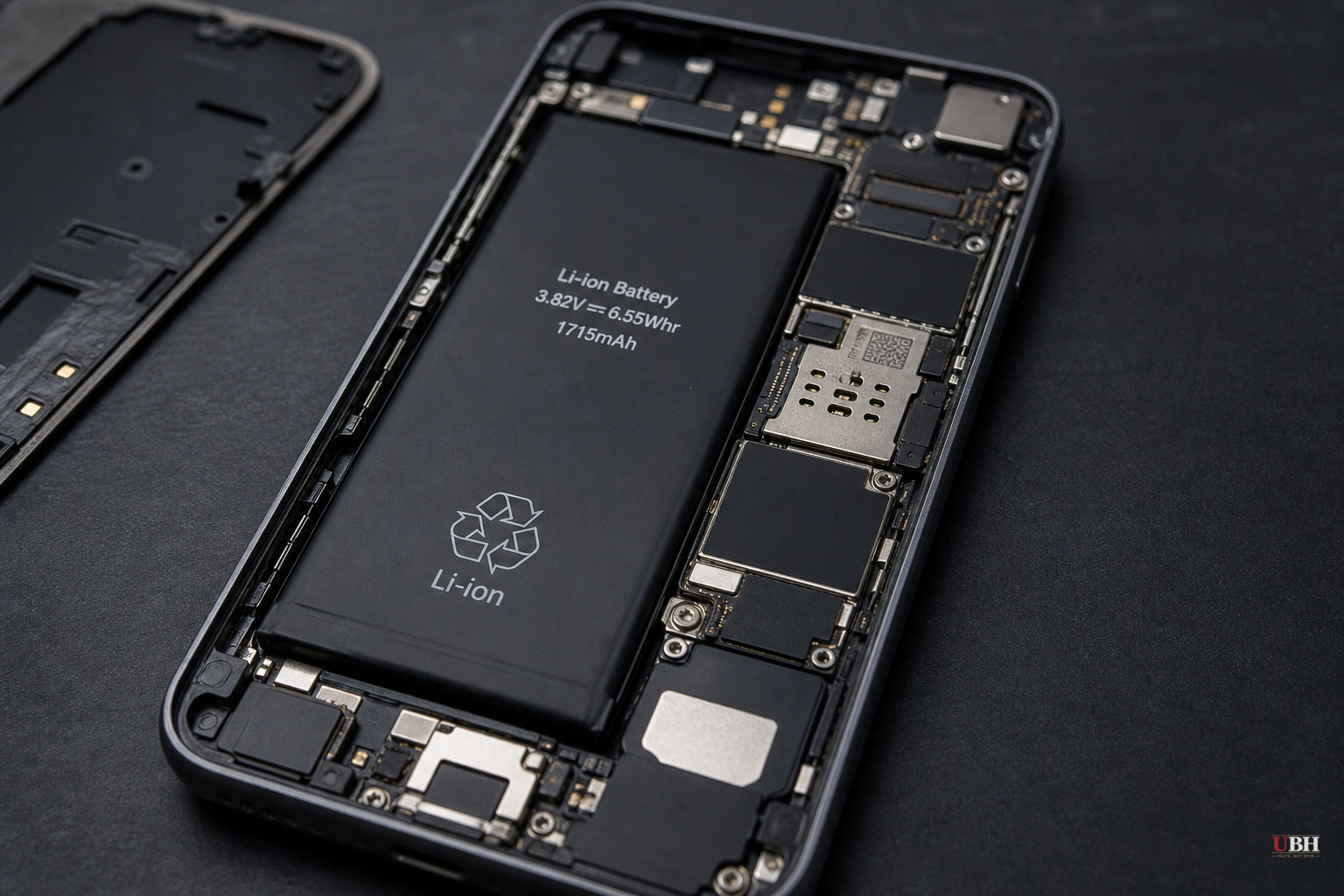
Turn your phone all the way off and the battery percentage still drops. Two things are pulling power even when the screen is black and the phone seems dead to the world.
The first is a small clock-and-wake circuit. It keeps a tiny current flowing so the power button responds instantly and the phone knows the correct date and time the moment it boots back up.
The second, bigger factor is self-discharge, a chemical process built into every lithium-ion battery. A powered-off phone loses roughly 1 to 2 percent of its charge per month from self-discharge alone. Store it somewhere warmer than room temperature and that rate speeds up.
Off Beats On, But Off Isn't Zero
Compare that to a phone left powered on and untouched. One hands-on test of Android phones left idle found they dropped from roughly half charge to completely dead within about a week of sitting untouched. The screen wakes for notifications, the radio stays locked onto a cell signal, and background apps keep working even while you're not touching the thing.
If you're setting a phone aside for a while—before a flight, during a move, in a drawer for a few weeks—powering it down is still the smarter play. Physics doesn't take a vacation because you hit the power button.
The Real Risk Is Long-Term Storage
Where this actually matters is old phones parked in a drawer for months or years. A hand-me-down waiting for a kid to get old enough, a backup device, a phone you're holding onto for resale.
Apple recommends against storing an iPhone at full charge. Apple suggests charging it to around 50 percent before long-term storage, then topping it off again every six months rather than letting it sit untouched indefinitely.
If a lithium-ion battery sits completely dead for an extended stretch, the battery's copper current collector can dissolve and redeposit inside the cell. That process can permanently reduce the battery's capacity, and in worse cases cause a short circuit.
What This Doesn't Mean
Every lithium-ion battery on the planet self-discharges, whether it's in a phone, a laptop, an EV, or a cordless drill sitting in the garage. It's chemistry, not a product decision by any single manufacturer.
Powering off your phone is still worthwhile. Off still massively outperforms on when it comes to battery preservation. The advice to shut down before a flight or a long trip still holds.
The Practical Takeaway
If you're stashing an old phone for months, don't just toss it in a drawer at 100 percent or let it die completely and forget about it. Charge it to roughly 50 percent, per Apple's recommendation, and plug it back in every six months to keep it out of a deep-discharge state. It's also worth storing the device in a cool, dry place, kept below 90°F.
For everyday use, the guidance is simpler. Powering off before extended downtime still slows the drain to a crawl compared to leaving the device on and connected. The battery will still lose a percent or two a month regardless, but that's a far cry from watching a phone die from half charge in about a week.
One thing worth noting: phones left powered down for months aren't necessarily ruined. Older phones that had been powered down for months, and even a tablet that hadn't been booted since 2011, still charged and worked after being plugged back in—though with noticeably reduced battery life compared to when they were new.
Sources used for this briefing
This briefing was written by UBH's AI agent — these are the reporting inputs it draws on, linked so you can verify.


