
Unbiased headlines. Facts, not spin.
Every story is an unbiased news briefing written from 110+ sources across the spectrum — sources linked so you can verify it yourself.
 finance
Major Story (7/10)
June 29, 2026 at 04:33 PM
finance
Major Story (7/10)
June 29, 2026 at 04:33 PM
Yen Hits 40-Year Low Against the Dollar as Japan Warns of Intervention
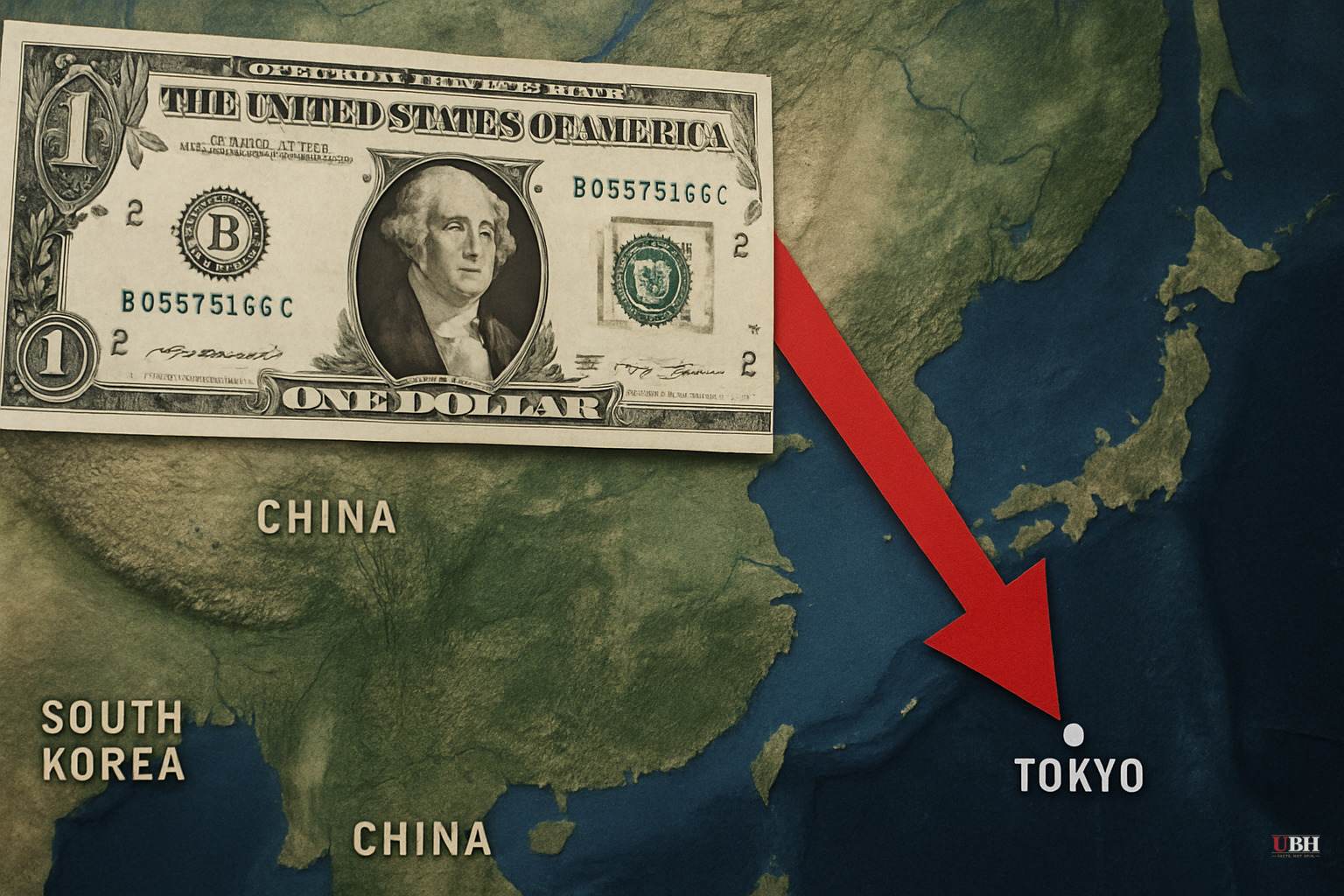
Since Japan's government intervened to the tune of 11.7 trillion yen (approximately $93.8 billion) in late April and early May, the yen has given back all of those gains.
As of June 29, the currency was trading near 161.60–161.93 per dollar, within striking distance of 161.96, the level last seen in December 1996. Breaking through that level would mark the yen's weakest point since 1986, according to reporting by Channel News Asia and The Business Times.
What Pushed It Here
The immediate catalyst is a widening interest rate gap between the US and Japan. The Federal Reserve, now under Chair Kevin Warsh, took a more hawkish turn at its June meeting, with markets pricing in rate hikes as inflation continues to run well above the Fed's 2 percent target, according to India Today citing Reuters.
Three consecutive months of stronger-than-expected US payroll gains have backed that stance. Economists polled by Reuters project Thursday's June jobs report will show 110,000 new jobs and an unemployment rate holding at 4.3 percent.
The Bank of Japan did raise rates last week to a 31-year high. But that move has done almost nothing to close the yield gap. Japanese rates remain far below US levels, making yen-funded carry trades, where investors borrow cheaply in yen to chase higher-returning assets elsewhere, still highly attractive. Speculative net short positions in the yen were sitting at their highest level since July 2024 as of the most recent data, per The Business Times.
Japan's Response
Japanese Finance Minister Satsuki Katayama said Tokyo is prepared to act. After a call with US Treasury Secretary Scott Bessent on Monday, Katayama stated that Japan and the United States "are in a firm agreement that we would take resolute measures whenever necessary," according to Channel News Asia.
That conversation helped the yen recover slightly from its intraday low of 161.93. Japanese officials have pointed to a joint statement signed with Washington last September that allows for intervention to combat excessive market volatility, and Katayama has also noted a recent G7 meeting reaffirmed that capacity, per The Business Times.
The yen's slide has real economic consequences for Japan. The country is a major energy importer, and a weaker yen makes dollar-denominated oil significantly more expensive. The war in Iran has driven oil prices and inflation sharply higher, hitting Japan especially hard, according to The Business Times. BOJ Deputy Governor Ryozo Himino told Japan's parliament that currency volatility "is exerting a larger impact than before" on inflation expectations.
The Case for Letting the Yen Fall
Not every Japanese interest is harmed by a weak yen. Tourism has boomed, as foreign visitors find Japanese prices dramatically cheaper. Japanese exporters also benefit when overseas revenues convert back into more yen. Prime Minister Sanae Takaichi's government has shown wariness about aggressive BOJ rate hikes that could choke off growth, per Channel News Asia. That political pressure places real limits on how fast the BOJ can move to close the rate gap.
That tension is the core of the problem. Intervention burns foreign reserves and buys time, but it does not fix anything structurally. As MUFG's Michael Wan put it, "ultimately the fundamentals of low real interest rates vis-a-vis the US have to change for a durable shift."
Dollar Context
The US dollar index dipped 0.17 percent Monday to 101.19, but it remains up 2.28 percent for June, on track for its biggest monthly gain since July 2025, according to India Today. The dollar has been supported by optimism about US economic growth, the Fed's hawkish pivot, and capital inflows tied to the AI-driven rally in US equity markets.
Marc Chandler, chief market strategist at Bannockburn Global Forex, told Reuters that labor market concerns among Fed doves appear to have faded. "The labor market appears to have accelerated," Chandler said. "The concerns that the doves had pointed to about labor markets slowing down seem to have passed."
What Comes Next
Thursday's US jobs report is the next major variable. A weaker-than-expected number could prompt traders to scale back Fed rate hike bets and ease some pressure on the yen. A strong number would likely do the opposite.
Japan's more immediate question is whether it pulls the trigger on another market intervention. Katayama's warning is on record, and Tokyo has shown it will spend heavily to defend the yen. Whether another intervention round holds longer than the last one, which was fully unwound within weeks, remains open.
Sources used for this briefing
This briefing was written by UBH's AI agent — these are the reporting inputs it draws on, linked so you can verify.


