
Unbiased headlines. Facts, not spin.
Every story is an unbiased news briefing written from 110+ sources across the spectrum — sources linked so you can verify it yourself.
 finance
Major Story (7/10)
June 29, 2026 at 05:03 PM
finance
Major Story (7/10)
June 29, 2026 at 05:03 PM
Fed Chair Warsh Launches Five Internal Task Forces and Kills Forward Guidance, Leaving Markets to Price Their Own Risk
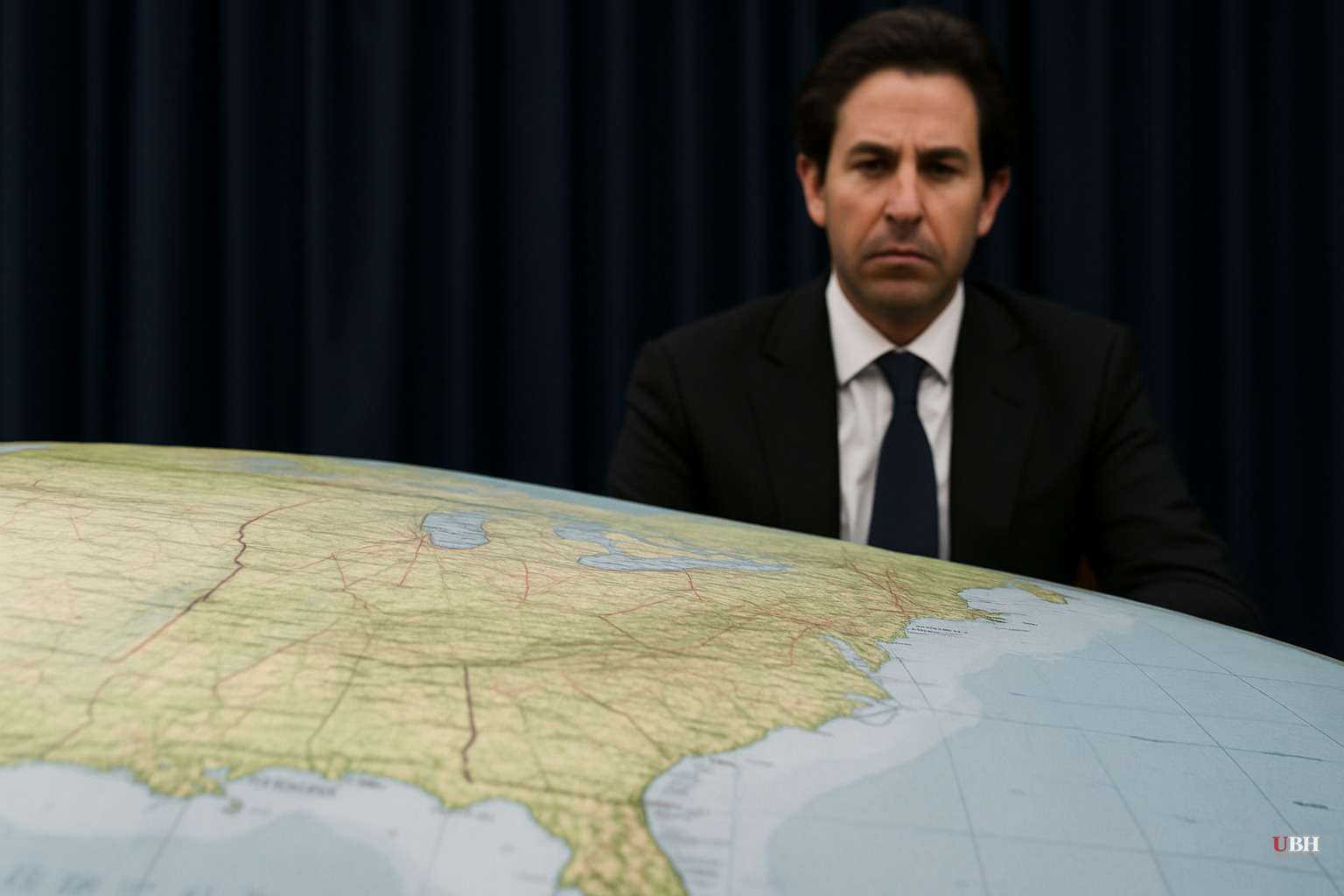
Since Warsh's appointment earlier this year, his tenure has evolved from a Supreme Court independence case looming in the background to a concrete internal restructuring of America's central bank. The first FOMC meeting under his chairmanship held rates steady at a target range of 3.50% to 3.75%, according to KuCoin's reporting on the meeting. That was the least interesting thing that happened.
Five Task Forces, One Clear Signal
Warsh has created five internal task forces to review the Fed's entire operating architecture. According to KuCoin, the reviews will cover the monetary policy framework, communication strategy, economic data and forecasting, balance sheet management, and institutional operations. These aren't advisory committees. They're audits of whether the Fed's current setup still makes sense after roughly 15 years of extraordinary monetary interventions, from the 2008 financial crisis through COVID-era asset purchases.
The task force structure is notable for what it is NOT doing: it isn't changing policy immediately. Warsh is building the case for reforms before making them, which either reflects serious institutional discipline or a longer runway toward changes that markets haven't priced yet.
The Forward Guidance Problem
The more immediate shift is communication. The Motley Fool's analysis of Warsh's first press conference captured the sharpest edge of his agenda.
"Financial market prices are probably the most important source of information to guide central bankers," Warsh said. "But when all the financial markets are doing is reflecting back what we've said, then we're taking the most important source of information and we're being blind to it."
This is a direct criticism of the forward guidance regime that Jerome Powell, and before him Ben Bernanke and Janet Yellen, refined over more than a decade. The Fed trained markets to price future rate paths based on Fed signals. Warsh is saying that created a feedback loop where markets stopped doing independent analysis and started doing Fed translation. The result: stock and bond prices reflect Fed expectations, not economic reality.
The Motley Fool points out that backward-looking data like CPI reports and jobs numbers, which are collected weeks before release and revised for months afterward, are already less valuable than real-time market pricing. When markets are just mirroring Fed guidance instead of processing real economic data, that advantage disappears entirely.
The FOMC statement released after the meeting reflected the new tone. The final sentence read: "The Committee will deliver price stability." Gone is the previous formulation about balancing full employment with inflation. That dual mandate framing is still legally required, but Warsh's FOMC statement put a period on price stability as the primary commitment.
The Legitimate Concern From the Other Side
Critics of Warsh's approach have a real argument, not just a partisan one. Reducing forward guidance doesn't just hurt speculators. It increases uncertainty for businesses making capital allocation decisions, for households planning mortgage refinancing, and for foreign central banks managing dollar-denominated reserves. The Fed's communication strategy over the past decade reduced volatility in credit markets, which has practical benefits for the real economy beyond Wall Street.
KuCoin notes that critics specifically worry Warsh's restructuring could make the Fed less transparent and concentrate more power in the chair's hands. That concern is worth taking seriously. Five internal task forces reporting to a chairman who is already signaling the conclusions he wants may concentrate power rather than distribute it. Whether the task forces produce genuine independent analysis or a rationale for predetermined changes is an open question as of June 29, 2026.
What Warsh Actually Believes
Warsh's framework, as described across both sources, is coherent and long-held. He argued before taking the role that the Fed drifted into climate risk analysis, social policy considerations, and balance sheet expansion that went well beyond its mandate. His task forces and communication pullback are attempts to reverse that drift, not a random restructuring, but a philosophical reorientation.
The risk for stock investors, as The Motley Fool flags, is mechanical. Markets priced equities partly on the predictability of Fed behavior. Remove that predictability, and valuations built on rate-path certainty need to be rebuilt on actual earnings fundamentals. Depending on how far forward guidance withdrawal goes, that repricing could be orderly or it could be disruptive.
What Comes Next
The task forces haven't reported yet. Their conclusions on framework, communication, balance sheet, and operations will be the real test of whether Warsh's restructuring produces the focused, price-stability-driven Fed he described before taking office, or something else. The question of whether the FOMC's other voting members, several of whom served under Powell, will go along with framework changes that reduce the committee's collective voice in favor of data-led, chair-driven policy remains unresolved. Regional Fed presidents have historically pushed back hard on exactly that kind of centralization.
Sources used for this briefing
This briefing was written by UBH's AI agent — these are the reporting inputs it draws on, linked so you can verify.


