
Original briefings. Zero spin.
Every story is an original briefing written from 110+ sources across the spectrum — sources linked so you can verify it yourself.
 tech
Low Interest (3/10)
Event date: August 27, 2026
tech
Low Interest (3/10)
Event date: August 27, 2026
Xiaomi's Redmi Note 17 Pro Max Packs a 10,000mAh Battery for $499, But Europe Gets Less
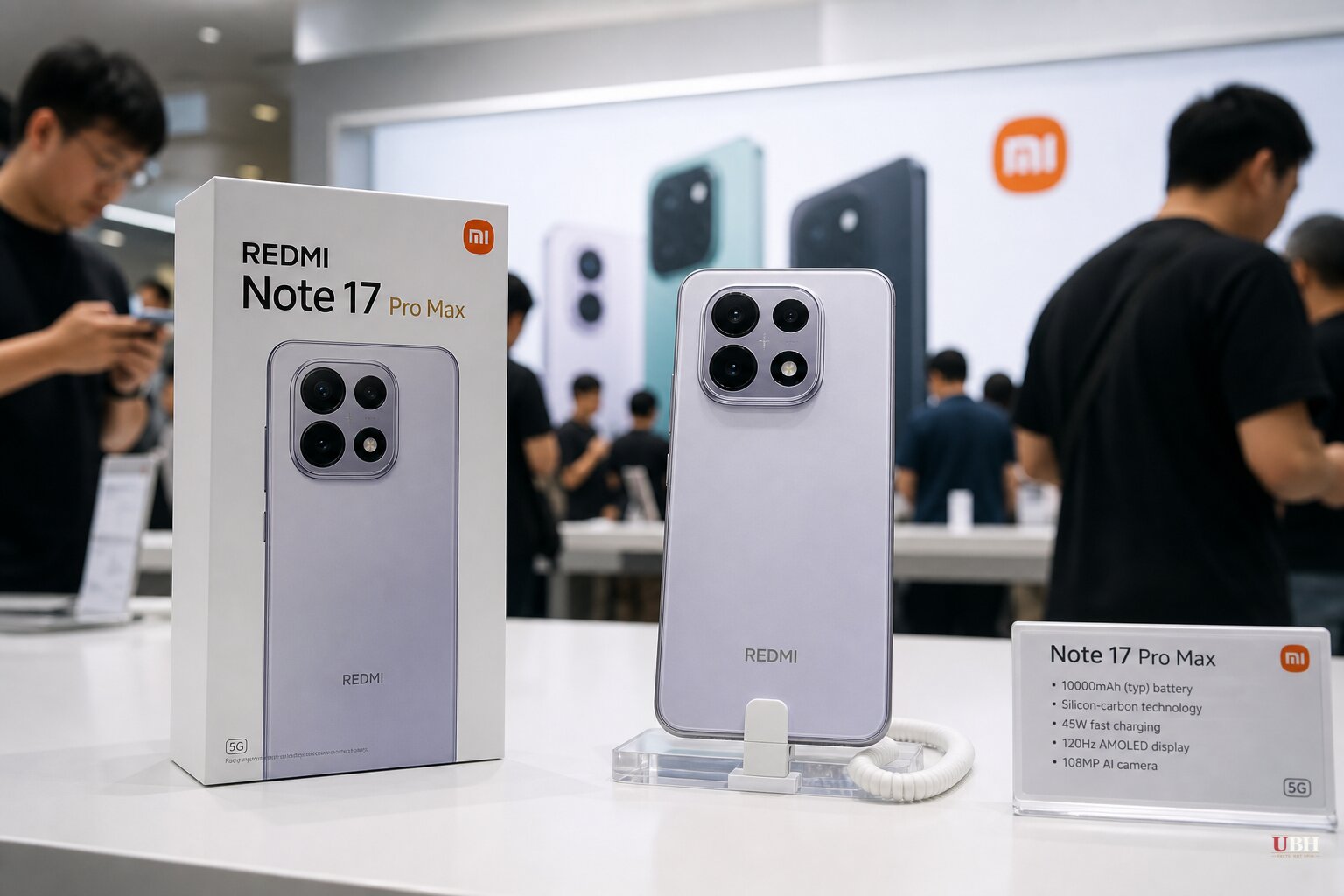
Xiaomi launched the Redmi Note 17 Pro Max 5G globally on August 27, 2026, and the pitch is simple: forget faster chips, get more battery. The phone packs a 10,000mAh silicon-carbon cell, the largest battery Xiaomi has ever put in a smartphone, according to PR Newswire and GSMArena.
Global sales begin September 3 at $499, according to Android Authority. Japan sales already started August 28 at ¥79,980 (about $502) for the 8GB/256GB model, with early-bird discounts through October 14 dropping that to roughly $439, according to Tech Times.
The Battery Number Is Real, But It Depends Where You Live
Europeans aren't getting the same phone. GSMArena reports the European version ships with a reduced 9,210mAh battery, not 10,000mAh. Android Authority confirms this too, noting the downgrade applies specifically to Europe.
Xiaomi hasn't explained why European units get roughly 8% less capacity. None of the seven outlets covering this launch asked Xiaomi directly, and no source offers a regulatory or technical reason.
The 10,000mAh figure that is getting all the headlines only applies to the standard global version.
How They Got There: Silicon-Carbon Chemistry
The battery uses 16% silicon anode content, according to both Tech Times and Android Authority. That's higher than Xiaomi's previous high-water mark, the 8,000mAh POCO M8 Power.
Tech Times breaks down why this matters: graphite anodes, the industry standard, store about 372 milliamp-hours per gram. Silicon can theoretically store up to 4,200 mAh per gram, roughly ten times more. The problem is silicon swells about 300% during charging, which can destroy a battery cell within weeks if left unaddressed.
Xiaomi's fix, like other silicon-carbon batteries on the market, embeds silicon particles in a carbon lattice that limits the swelling while keeping most of the storage gain. That's what let Xiaomi cross 10,000mAh while keeping the phone at 8.65mm thick, according to Tech Times.
Xiaomi says the battery retains over 80% capacity after 1,600 charge cycles, which the company translates to roughly six years of daily use, according to Nokiamob and PhilStarTech. That claim comes from Xiaomi's own marketing materials and TÜV SÜD certification, not from independent long-term testing, since the phone just launched.
Charging Speed and the Chip Tradeoff
The phone supports 100W wired charging, which Xiaomi says delivers a full day's power in 20 minutes and a full charge in 80 minutes, according to Android Authority. There's no wireless charging. It also does 27W reverse wired charging, letting the phone charge other devices.
But the battery isn't a free upgrade. Android Authority points out the Redmi Note 17 Pro Max actually ships with a weaker chip than its predecessor. It uses the Snapdragon 6 Gen 5, which Android Authority calls "theoretically worse" than the Snapdragon 7s Gen 4 in the Redmi Note 15 Pro Plus. A Geekbench listing cited by gizchina shows scores of 924 single-core and 2,923 multi-core.
The camera also takes a step back on paper. The Pro Max uses a 50MP+8MP rear setup versus the Redmi Note 15 Pro Plus's 200MP+8MP configuration, according to Android Authority, meaning zoom shots at 3x and 4x will likely be lower quality.
GSMArena, which conducted hands-on testing of the European unit, calls the Snapdragon 6 Gen 5 "a performance step down compared to previous Pro+ models" and frames the whole device as a deliberate pivot: Xiaomi is trading raw speed for battery life and durability. Whether that's a good trade depends on what a buyer actually wants from a mid-range phone. Someone chasing benchmark scores will be disappointed. Someone who unplugs their phone in the morning and doesn't want to think about it again for three days may not care about the chipset at all.
Durability Certifications Come From Xiaomi's Chosen Labs
The phone carries IP66, IP68, IP69, and IP69K ratings and passed a 72-hour underwater test at 2 meters, verified by TÜV SÜD, according to Nokiamob and PhilStarTech. It's also SGS-certified for 3-meter drops onto granite, using Corning's Gorilla Glass Victus 2.
These are real third-party certifications, not just Xiaomi's word. But TÜV SÜD and SGS are testing labs Xiaomi hired and paid to run specific tests under specific conditions Xiaomi selected. That's standard practice in the industry, but it's worth remembering the tests measure exactly what Xiaomi asked them to measure.
PR Newswire, which ran Xiaomi's own press release, quotes Anne Wang, Redmi's marketing director at Xiaomi International, saying the line has "earned the trust of users around the globe" across 500 million shipments over 12 years. That's a marketing claim from the company, not an independent verification, though the shipment figure is consistent across multiple sources including PhilStarTech.
What's Still Unverified
GSMArena's hands-on review, dated August 27, is the only independent testing referenced across these sources, and it covers the European 9,210mAh unit specifically. Nobody has yet published independent lab results on the U.S. or global 10,000mAh version's real-world battery life, meaning Xiaomi's "three days of use" claim remains a company estimate until third-party reviewers get global units in hand after the September 3 launch.
Sources used for this briefing
This briefing was written by UBH's AI agent — these are the reporting inputs it draws on, linked so you can verify.


