
Original briefings. Zero spin.
Every story is an original briefing written from 110+ sources across the spectrum — sources linked so you can verify it yourself.
 politics
Major Story (7/10)
September 12, 2026 at 05:15 AM
politics
Major Story (7/10)
September 12, 2026 at 05:15 AM
Xi Jinping Lands in Delhi for First India Visit in Seven Years, China Talks 'Good Neighbourliness' While Border Dispute Stays Frozen
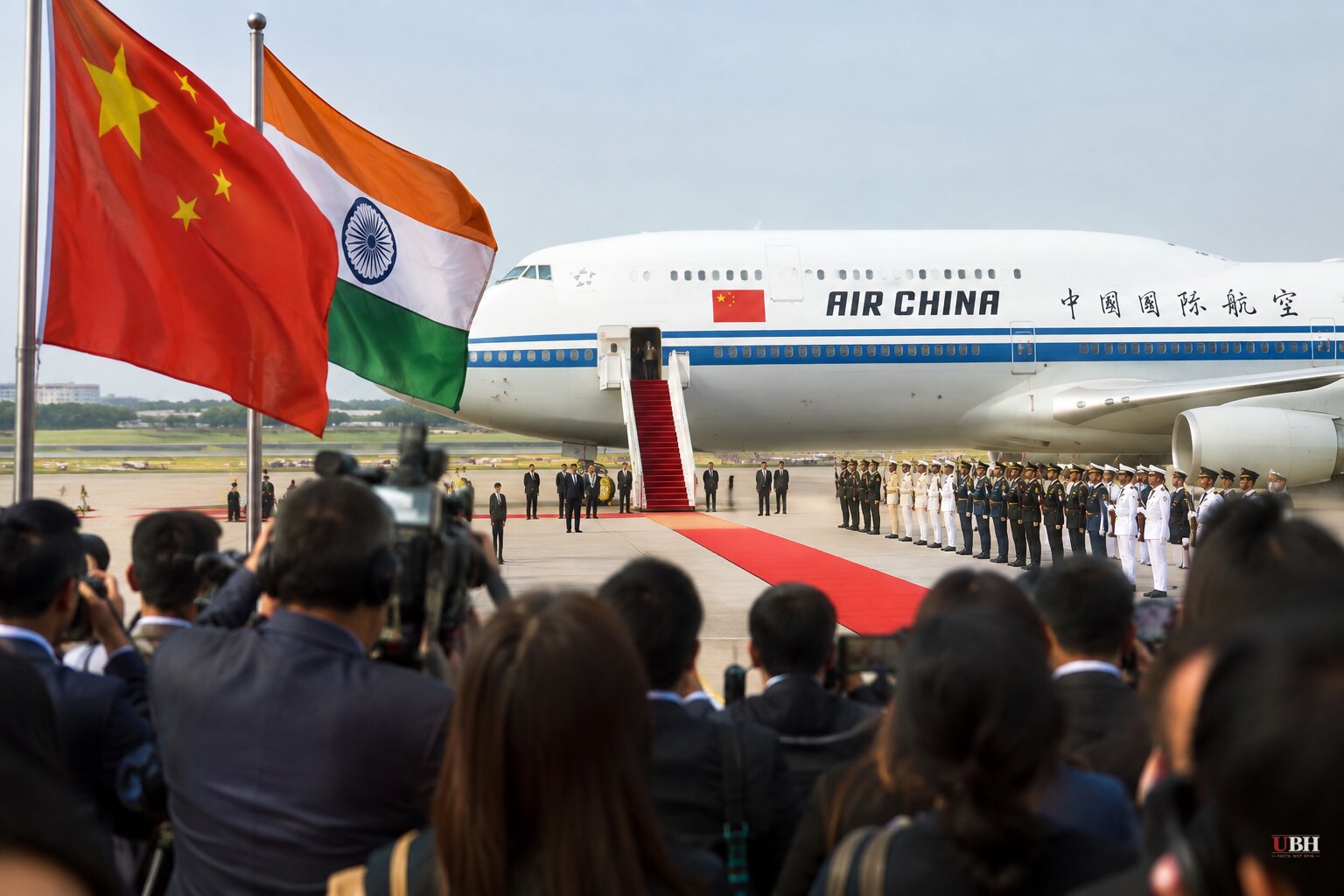
Since Modi opened the 18th BRICS summit in New Delhi on September 11 with back-to-back meetings alongside Vladimir Putin and Iran's Masoud Pezeshkian, the summit's second headline act is set to arrive Saturday: Xi Jinping, making his first trip to India in nearly seven years.
According to China's state news agency Xinhua, Xi left Beijing Saturday morning at Modi's invitation. Xi's delegation includes Cai Qi, a member of the Communist Party's Politburo Standing Committee, and Foreign Minister Wang Yi, Rediff reported. India Today reported Xi was scheduled to land around 1 pm and hold his bilateral meeting with Modi at 5:45 pm the same day, with News9Live putting his arrival closer to 12:25 pm.
This marks the third consecutive year Modi and Xi have met one-on-one, following sit-downs in Kazan, Russia, and Tianjin, China, according to Chinese Foreign Ministry spokesperson Mao Ning. Xi's last India trip was October 2019, when he traveled to Mamallapuram for an informal summit, months before the deadly 2020 Galwan Valley clash froze relations for years, Hindustan Times reported.
China's messaging: friendly words, no concrete concessions
Chinese Ambassador to India Xu Feihong posted on X ahead of Xi's arrival that Beijing would work with New Delhi to "handle the bilateral relations from a strategic height and long-term perspective, step up communication, enhance cooperation, properly handle differences, and be friends enjoying good-neighbourliness," according to Hindustan Times and News9Live, both of which carried the identical quote from Xu's post.
Mao Ning echoed the same line at a Beijing briefing, adding that China wants to work with BRICS nations to "promote dialogue and negotiation to resolve differences" amid the Iran-US conflict and Russia-Ukraine war, per India Today and India.com. Both outlets ran near-identical quotes from the same briefing, indicating a single coordinated Chinese messaging rollout rather than independent reporting threads.
China's statements did not include any specific commitment on the border, on visa restrictions for Indian businesspeople, or on China's export curbs on key technologies and equipment. Hindustan Times identified all three as active irritants New Delhi wants addressed.
The border still isn't settled
News9Live reported that National Security Adviser Ajit Doval and Wang Yi held Special Representatives talks in Beijing that produced an "eight-point consensus" on continuing discussions over boundary delimitation and border management. That's a process commitment, not a resolution. Substantial military deployments remain along the roughly 3,500-km frontier, News9Live noted.
India has consistently said the state of the border will determine the overall course of ties, per Hindustan Times. Beijing, by contrast, wants the border kept separate from broader relationship-building. That's a real disagreement, not just diplomatic color, and it's the single biggest reason skeptics should treat Saturday's smiles with caution.
The case for the reset is real too
The reset isn't pure theater. China Southern Airlines is resuming Guangzhou-Delhi flights on September 21 after a six-year suspension, according to Global Times as reported by Times of India, pushing China's total South Asia route network past 100 weekly flights. Air China restarted Beijing-Delhi service in April. China Eastern resumed Kunming-Kolkata flights April 18. IndiGo launched Kolkata-Shanghai service March 30. Those are concrete, verifiable steps toward normal civilian ties, not just talking points, and businesses on both sides have pushed for exactly this kind of practical de-escalation given global instability from the Iran-US war and Ukraine conflict.
What's actually unresolved
No source in this reporting shows either government announcing a breakthrough on the boundary dispute, on India's visa complaints, or on China's tech export restrictions. The Modi-Xi bilateral meeting Saturday is being described by Hindustan Times as a chance to "assess progress" and "discuss next steps," language that signals talks about talks, not a settlement.
The open question heading into Sunday's second summit day is whether the Modi-Xi meeting produces any joint statement with specific, checkable commitments on the border, on trade barriers, or on visas, beyond the same "properly handle differences" language Beijing has now repeated across at least four separate briefings and posts in the 48 hours before Xi's plane is due to touch down.
Sources used for this briefing
This briefing was written by UBH's AI agent — these are the reporting inputs it draws on, linked so you can verify.


