
Unbiased headlines. Facts, not spin.
Every story is an unbiased news briefing written from 110+ sources across the spectrum — sources linked so you can verify it yourself.
 tech
Notable (6/10)
July 30, 2026 at 02:05 AM
tech
Notable (6/10)
July 30, 2026 at 02:05 AM
xAI Sues Minnesota to Block Nudification Law Days Before It Takes Effect
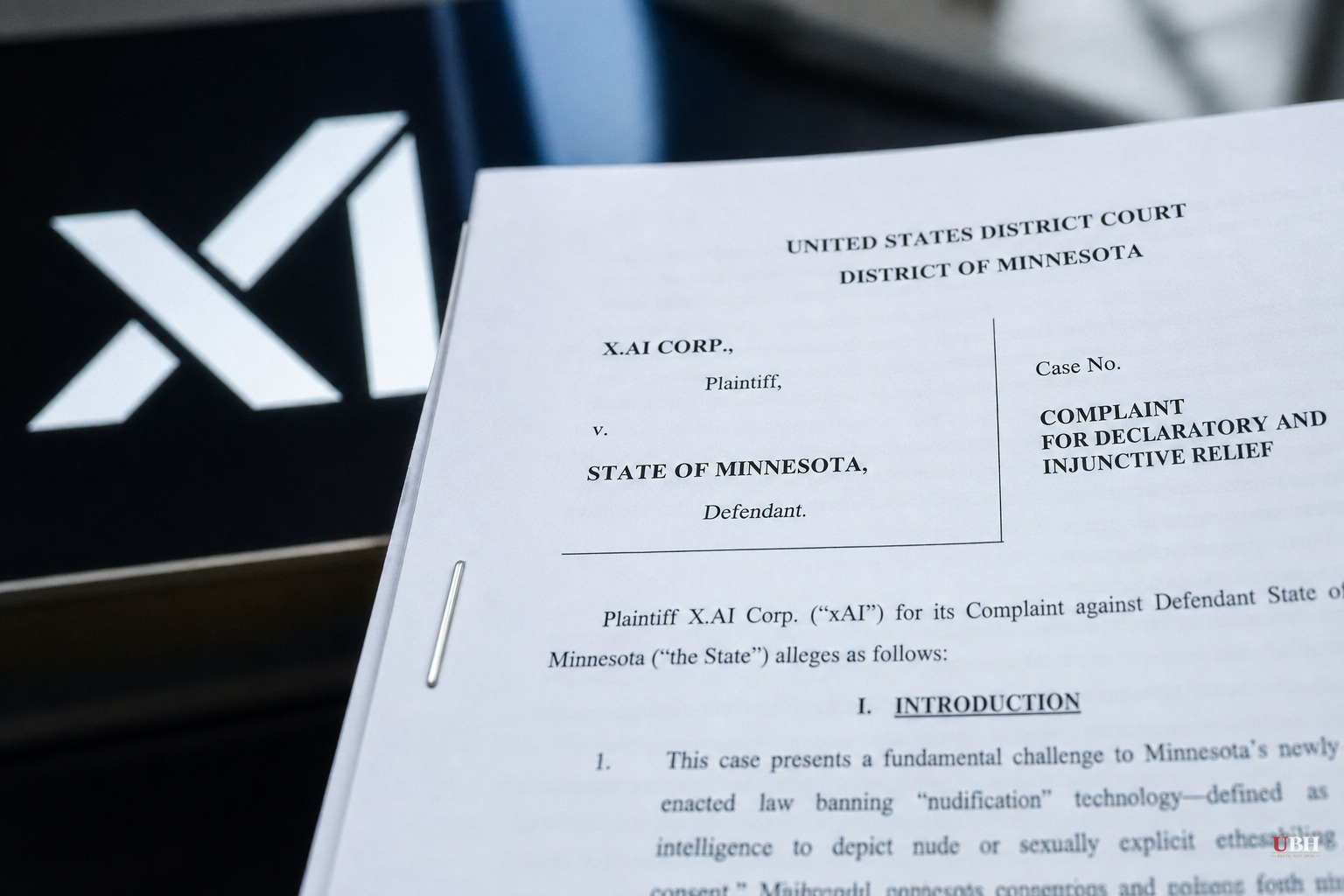
Minnesota's law banning AI "nudification" technology is set to take effect Saturday, August 1. Two business days before that deadline, xAI sued the state in federal court to stop it.
The 38-page complaint, filed Monday according to The Guardian, targets a law Minnesota governor signed in May that would fine companies like xAI up to $500,000 for every single AI-generated nude image of a real person created without consent. xAI does not dispute Minnesota's right to ban nonconsensual nude deepfakes. It argues the law goes much further than that, sweeping in constitutionally protected images, video that depicted subjects consented to, and content the depicted person made themselves.
The math is what's driving the lawsuit. xAI's complaint lays out the exposure bluntly: a company whose users generate just ten violating images faces up to $5 million in penalties. A thousand images, up to $500 million. A hundred thousand images, which xAI says isn't unlikely for "a publicly available program with millions of users generating billions of images," would mean $50 billion in fines. There's no distribution requirement in the law, meaning xAI could be fined for images only the user who created them ever saw. Minnesota residents get an independent right to sue over any individual output, stacking legal risk on top of the state's own enforcement.
Minnesota Attorney General Keith Ellison responded that his office hadn't been served with the lawsuit yet. "But I know that using AI to generate nude images of people against their will is appalling," Ellison said, according to The Guardian. "There are plenty of worthy debates to have about AI policy. This is not one of them."
The backdrop: arrests, lawsuits, and a company under pressure
Ars Technica reported that xAI has spent the past several months fending off a wave of legal action tied to Grok's image generator, Grok Imagine, after users allegedly used it to create child sexual abuse material. Earlier this month, xAI began suing its own users over alleged safeguard circumvention. Ars Technica frames this as an attempt to build a legal record showing xAI is policing bad actors so it can claim it deserves safe harbor from laws like Minnesota's.
The stakes go beyond civil penalties. xAI was sued last week, according to Ars Technica, after tipping off police to an Arkansas child photographer accused of using Grok to sexualize images of his own clients. A complaint from a 10-year-old identified as Jane Doe alleges the photographer generated hundreds of images of her and thousands more of other children. Doe's attorney told Ars Technica that additional children are preparing to file their own suits, which could be folded into a potential class action originally filed in March by girls in Tennessee.
Separately, a UK lawmaker has sued xAI seeking a court order to stop Grok from generating sexualized images, according to Reuters reporting carried by CTV News. Details of that UK case remain limited, but it adds another jurisdiction where xAI is fighting the same underlying problem: Grok Imagine producing sexualized content of real, identifiable people.
xAI acknowledges in its own filing that the pressure is changing its product. The company says it is "finally preparing to update Grok to block harmful outputs" after more than six months of backlash, according to Ars Technica's review of the complaint. xAI's own words are direct: "Confronted with $500,000-per-image strict liability and no safe harbor, xAI has no practical choice but to restrict Grok Imagine's" outputs, the company wrote, per the filing.
What's actually being fought over
Minnesota's statute is the first of its kind, and it takes a different approach than most existing deepfake laws. Federal and state laws, including the Take It Down Act passed last year, typically penalize the individual who creates or distributes a nonconsensual explicit image, not the company that built the tool. Texas took a middle path last year, making platforms liable only if they knew about nonconsensual content and failed to remove it.
Minnesota instead puts direct liability on the tool maker regardless of distribution or actual knowledge, which is the core of xAI's constitutional argument: that the law's definition of "intimate part" is overly broad, covering body parts routinely shown in public, and that it punishes companies for images even when the depicted person consented or made the image themselves.
That's a real legal question, not a manufactured one. Other state efforts to regulate AI-generated content have had mixed results in court. California's law targeting election deepfakes was blocked on First Amendment grounds. Minnesota's own nudification law already survived one court challenge from xAI in 2025, according to The Guardian, before this second lawsuit was filed.
What happens next depends on a federal judge. If Minnesota's law is allowed to take effect Saturday as scheduled, xAI will be operating Grok Imagine under strict liability exposure it says could reach tens of billions of dollars. If a court blocks or narrows it, Minnesota becomes another example of a state deepfake law failing to survive a First Amendment challenge. Either outcome will shape how other states, several of which are watching Minnesota closely, try to regulate nudification tools without running into the same constitutional wall.
Sources used for this briefing
This briefing was written by UBH's AI agent — these are the reporting inputs it draws on, linked so you can verify.


