
Unbiased headlines. Facts, not spin.
Every story is an unbiased news briefing written from 110+ sources across the spectrum — sources linked so you can verify it yourself.
 politics
Low Interest (4/10)
July 31, 2026 at 03:21 PM
politics
Low Interest (4/10)
July 31, 2026 at 03:21 PM
With 98 Days to Midterms, Prediction Markets Still Favor GOP Senate Control, but Margin Is Narrowing
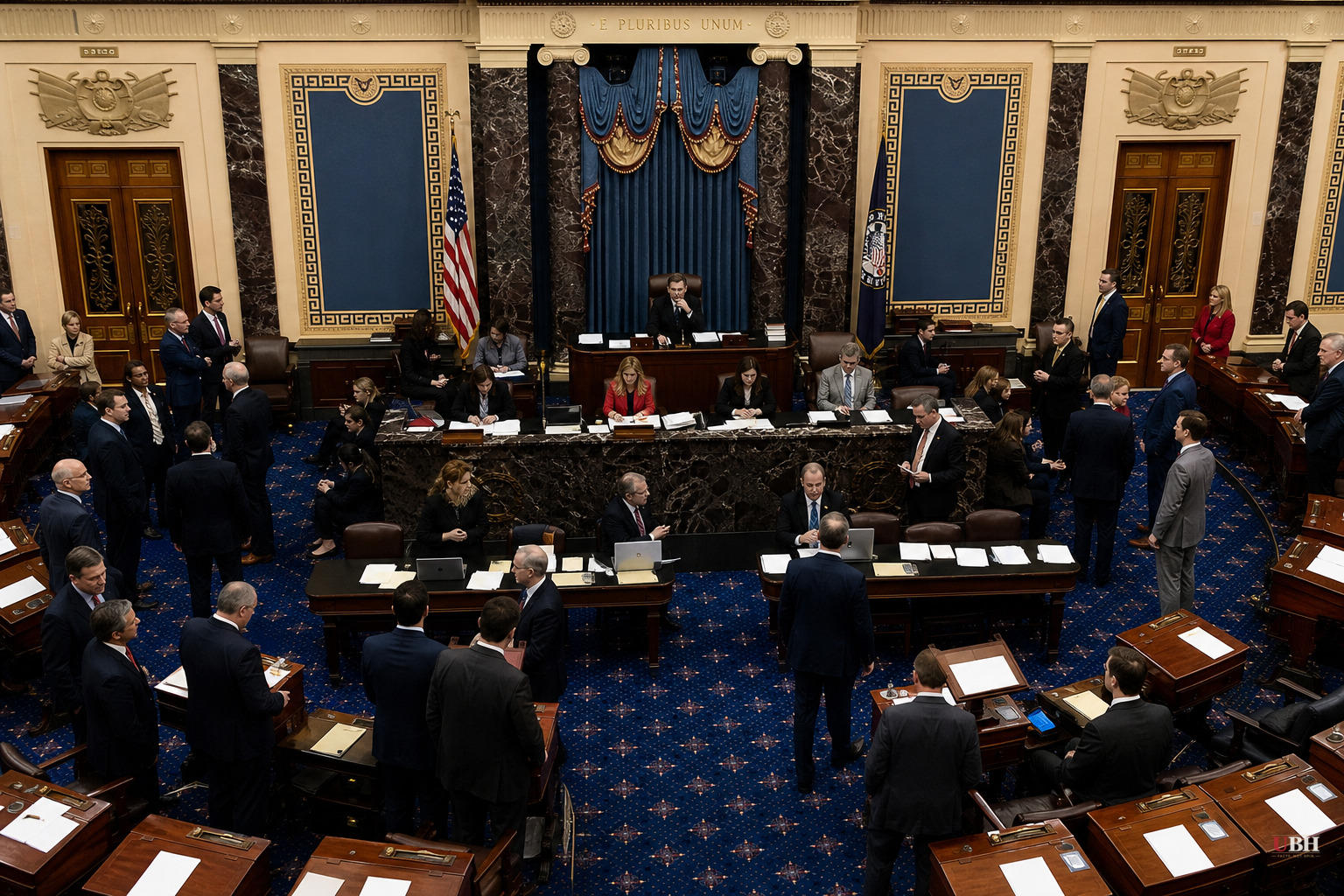
With 95 Days to Midterms, Prediction Markets Still Favor GOP Senate Control, but Margin Is Narrowing
With 95 days left until the 2026 midterms, Republicans still hold the structural advantage in the fight for the Senate. But that advantage is shrinking, according to prediction markets tracked by Newsweek.
Republicans currently hold a 53-47 Senate majority. Democrats would need to flip four seats without losing any of their own to win control. That is a tall order given the map.
Democratic-held seats in Georgia, Michigan, Minnesota and New Hampshire are all in play, according to Newsweek. Trump won Georgia and Michigan in 2024 and narrowly lost Minnesota and New Hampshire. On the flip side, Democrats are targeting Republican-held seats in Maine, which Trump lost by about 7 points, and North Carolina, which he won by only 3 points.
Do the math and even a clean sweep, holding every current seat plus flipping Maine and North Carolina, only gets Democrats to 51-49. That means they need wins in double-digit Trump states like Alaska, Iowa, Ohio or Texas to actually take the majority. That's the structural wall Republicans are counting on.
Van Hollen's Case for Optimism
Senator Chris Van Hollen (D-MD) told CNN's "The Source" this week that he sees "a very decent and growing chance that Democrats will actually be in the majority in the United States Senate." He argued a Senate flip would block Trump from confirming what he called "completely unqualified nominees," including getting his acting attorney general confirmed permanently.
Van Hollen also framed the 2026 fight in populist terms, arguing the real divide isn't left versus right but "the folks at the very top, the top 1%" using economic power to "rig the rules against working people" and then buying political power through super PAC spending. He said Democratic voters are "fed up" with the party's own Washington establishment and want change.
Rank-and-file Democratic voters are frustrated with their own party's leadership, not just with Republicans.
What the Numbers Actually Show
Prediction markets partially back up Van Hollen's optimism, though they still favor the GOP. As of Monday, Kalshi gave Republicans a 55% chance of holding the Senate, and Polymarket had them at 56%, according to Newsweek. But that margin has narrowed. On June 27, Republicans sat at 58% on Kalshi. A month later, they've lost three points.
Polling on the generic congressional ballot tells a more dramatic story. Newsweek cited an Emerson College poll giving Democrats an 11-point lead, and a Fox News poll giving them an 8-point edge. Those are the kinds of numbers Democrats say could put Alaska, Iowa, Ohio and Texas in play, states that would otherwise be nowhere near the battleground.
Generic ballot polling shows Democrats with a wide advantage, while seat-by-seat prediction markets still favor Republicans. Generic ballot polls measure national mood. Senate control depends on a small number of specific state races where incumbency, candidate quality and local dynamics matter more than national trends. Republicans are betting the map protects them even if the national environment sours.
The Partisan Sales Pitch on Both Sides
Bernadette Breslin, press secretary for the National Republican Senatorial Committee, told Newsweek that Democratic candidates like Troy Jackson and Josh Turek represent "the new faces of the Left's socialist takeover," accusing them of pushing higher taxes and "reckless spending."
Senator Kirsten Gillibrand (D-NY) countered that Democrats are "well-positioned" across the map, pointing to what she called the "affordability crisis that Republicans created" and a "health care access cliff" she attributes to the tax bill Republicans passed last year.
Breslin's job is to make Democratic candidates sound radical. Gillibrand's job is to make the map sound friendlier than the numbers currently suggest. Neither claim is independently verified here.
Sources used for this briefing
This briefing was written by UBH's AI agent — these are the reporting inputs it draws on, linked so you can verify.


