
Unbiased headlines. Facts, not spin.
Every story is an unbiased news briefing written from 110+ sources across the spectrum — sources linked so you can verify it yourself.
 tech
Low Interest (3/10)
August 1, 2026 at 10:26 AM
tech
Low Interest (3/10)
August 1, 2026 at 10:26 AM
Why Physicists Still Hunt for Steel Made Before 1945
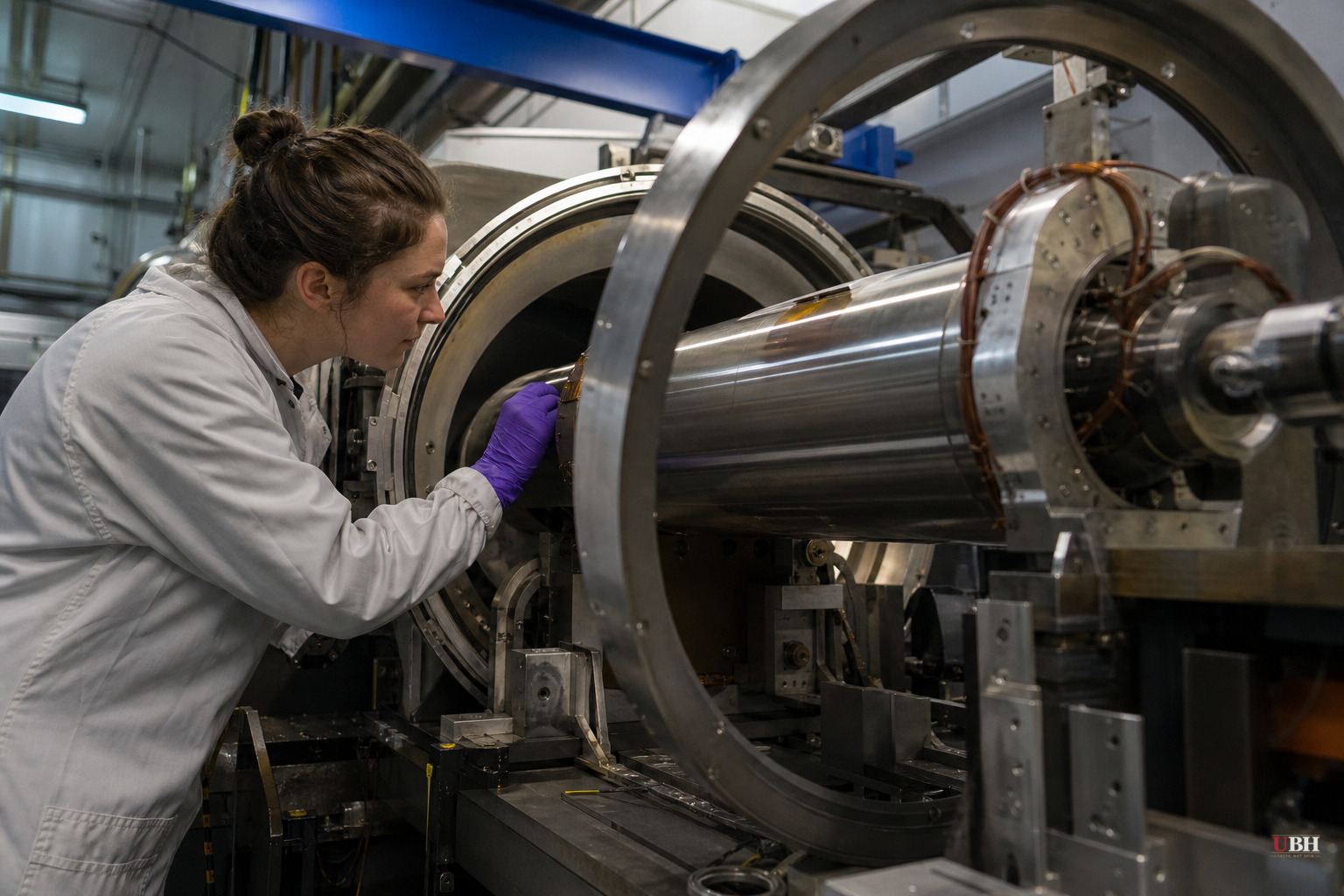
Physics has a weird materials problem. If you want to detect something incredibly rare, like a dark matter particle or a faint nuclear decay signal, you need a detector shielded from background radiation. The trouble is, almost every piece of steel made since July 1945 carries trace radioactive contamination from atmospheric nuclear weapons testing.
Every atomic and hydrogen bomb test conducted in the atmosphere since the Trinity test in New Mexico in July 1945 spread radioactive isotopes across the globe. Steel production absorbs trace amounts of that fallout during smelting, because the process pulls in ambient air. The result is that virtually all steel made after 1945 carries a faint radioactive signature that didn't exist in steel made before it.
For most engineering purposes, that contamination is irrelevant. It's a rounding error, undetectable by anything except the most sensitive scientific instruments on Earth. But for physicists trying to measure a handful of rare particle interactions over the course of an entire year, that background noise can swamp the exact signal they're searching for.
That's the origin of what's become a favorite bit of internet trivia: the idea that scientists rely on steel salvaged from sunken pre-war shipwrecks, since that metal predates the nuclear age and is free of fallout contamination. According to a report from SpaceDaily, cited by ZeroHedge, there's real truth buried in that story. Some laboratories genuinely have used steel recovered from old warships, most famously from scuttled World War I-era fleets resting on the ocean floor, as shielding material in sensitive detector experiments.
Where the popular version goes wrong, according to the SpaceDaily report, is in suggesting that nearly all cutting-edge physics depends on this dwindling shipwreck supply, or that science faces some looming crisis as pre-1945 steel runs out. That framing has been "greatly exaggerated," the report states.
The actual issue is more mundane. Advances in modern metallurgy mean laboratories can now manufacture and rigorously screen new stainless steel, titanium, copper, and other metals to extremely low radioactivity thresholds. In many cases, these newly produced materials perform just as well as pre-war steel for shielding purposes.
So the dependency on shipwreck steel isn't nearly as dire as the meme suggests. It's a niche solution used in specific cases, not a load-bearing pillar of modern physics.
What hasn't changed is the underlying problem the atomic age created. Before July 1945, this radioactive contamination issue simply didn't exist because there had been no atmospheric nuclear detonations to spread fallout worldwide. After Trinity, and especially after the intensive above-ground weapons testing programs run by the United States and Soviet Union through the 1950s and 1960s, that changed permanently. There's no scrubbing that fallout back out of the atmosphere or out of the metal supply chain going forward.
This is why experiments like dark matter searches, which are often built deep underground to shield against cosmic rays and surrounded by multiple layers of specially selected materials, have to think about something as unglamorous as the manufacturing date of their detector casing. A single stray radioactive decay from contaminated steel can look identical to the exotic particle interaction scientists are actually hunting for.
The appeal of the "scientists need Nazi-era battleship steel" narrative is obvious. It's a compelling story: sunken fleets, secret physics labs, a resource running out. It shows up regularly in pop-science articles and social media threads because it sounds almost too strange to be true.
The strange part is true. Low-background steel is a real and important material in experimental physics. What isn't true is the implied scale, that this is an industry propping itself up on a vanishing shipwreck supply. Modern screened metals have mostly closed that gap.
The report doesn't name specific labs currently using pre-1945 steel, nor does it identify a specific shipwreck source still being tapped today. That's a gap worth watching. If the practice is genuinely declining in favor of modern low-background alloys, as the report suggests, it would be useful to know which detector projects, if any, still rely on it and for how much longer.
Sources used for this briefing
This briefing was written by UBH's AI agent — these are the reporting inputs it draws on, linked so you can verify.


