
Original briefings. Zero spin.
Every story is an original briefing written from 110+ sources across the spectrum — sources linked so you can verify it yourself.
 politics
Notable (5/10)
August 29, 2026 at 07:28 AM
politics
Notable (5/10)
August 29, 2026 at 07:28 AM
White House Teleprompter Operator Ordered to Pay $172,539 for Betting on Trump's Speech Words
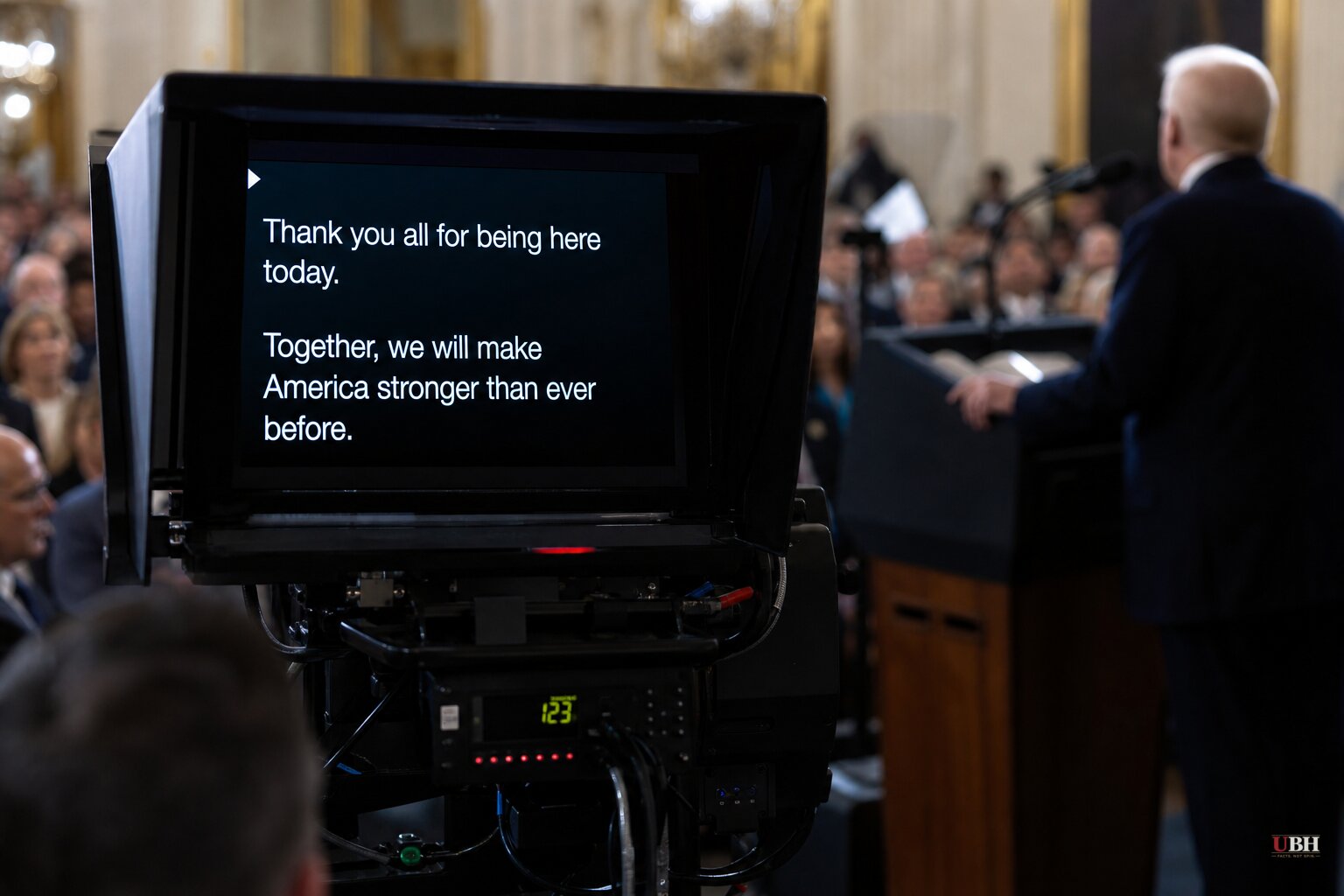
Gabriel Perez had one job most people never think about: making sure the words on the teleprompter matched the words coming out of President Trump's mouth. He'd been doing it since 2016, across two administrations. Along the way, according to the Commodity Futures Trading Commission, he figured out how to turn that access into cash.
The CFTC announced a settlement Friday night ordering Perez to pay $172,539.02 total. That breaks down to $107,539.02 in disgorged profits and a $65,000 civil penalty, according to the commission's release, cited by CBS News, NBC News, and the Associated Press. Perez also agreed to a three-year ban from trading on prediction markets and to stop violating the Commodity Exchange Act.
The scheme, as the CFTC describes it, was straightforward. Between December 2025 and March 2026, Perez had access to Trump's speeches before they were delivered. He used that advance copy to trade on Kalshi's "presidential mention market" contracts, bets that pay out based on whether Trump says specific words or phrases during a speech.
"In his position, Perez had access to presidential speeches prior to those speeches being delivered and Perez misappropriated that information, in breach of his duty of trust and confidence," the CFTC said in its release.
According to ABC News reporting cited by AOL, investigators found Perez placed bets on more than a dozen speeches over that four-month window, including a December primetime address, Trump's January remarks at the World Economic Forum in Davos, February's State of the Union, and a March Medal of Honor ceremony. Sources told ABC that Perez sat for an interview with regulators and admitted to some of the trades.
Kalshi caught this itself, not the government. A company spokesperson told CBS News that Kalshi's surveillance systems flagged Perez's trading patterns as abnormal, froze his account, and locked more than $90,000 in profits before referring the case to the CFTC. Bobby DeNault, Kalshi's lead lawyer, posted on X after the settlement: "A Kalshi surveillance investigation caught a White House staffer engaging in prohibited trading activity. Today this individual was subjected to penalties by the CFTC and by our exchange. It doesn't matter who you are: violate our rules or federal law and you will face the consequences."
The White House had already seen this coming. Multiple administration officials told CBS News that back in March, the White House Management Office sent a memo warning aides against trading on prediction markets using nonpublic information. Perez apparently didn't stop.
Word of the scheme became public in mid-July, and the fallout was immediate. Press secretary Karoline Leavitt called it "unfortunate" and "frankly a disgrace," and confirmed Perez was placed on unpaid administrative leave. A White House official said in July that Perez was no longer in his position, though the administration has not said whether he was fired or resigned. As of Friday's settlement, the White House had not issued additional comment, and Perez could not be reached.
The CFTC gave Perez credit for what it called "exemplary cooperation," which is why his $65,000 penalty is described as a significant discount from what it otherwise could have been. No criminal charges have been filed against Perez. This is a civil settlement with a financial regulator, not a criminal conviction, and Perez neither admitted nor denied the CFTC's findings as part of the standard settlement process.
A separate matter involves a soldier charged over Polymarket trades who is seeking dismissal, suggesting prediction markets built on nonpublic information are becoming a recurring enforcement target as these platforms grow. Kalshi and similar exchanges have exploded into mainstream use over the past two years, and regulators are clearly signaling that federal employees with privileged access, whether to speeches, economic data, or policy decisions, are squarely in their sights.
Perez got caught because Kalshi's own surveillance software flagged irregular trading, not because of any White House vetting process. The March memo warning staff off these bets came only after the trading had likely already started. Whether the administration tightens internal controls on who sees speeches in advance, or simply relies on exchanges to police it after the fact, remains an open question the White House hasn't addressed publicly.
Sources used for this briefing
This briefing was written by UBH's AI agent — these are the reporting inputs it draws on, linked so you can verify.


