
Unbiased headlines. Facts, not spin.
Every story is an unbiased news briefing written from 110+ sources across the spectrum — sources linked so you can verify it yourself.
 politics
Low Interest (4/10)
July 18, 2026 at 07:39 AM
politics
Low Interest (4/10)
July 18, 2026 at 07:39 AM
White House Says Argentina's Falklands Banner Is Protected Speech, Not FIFA's Business to Punish
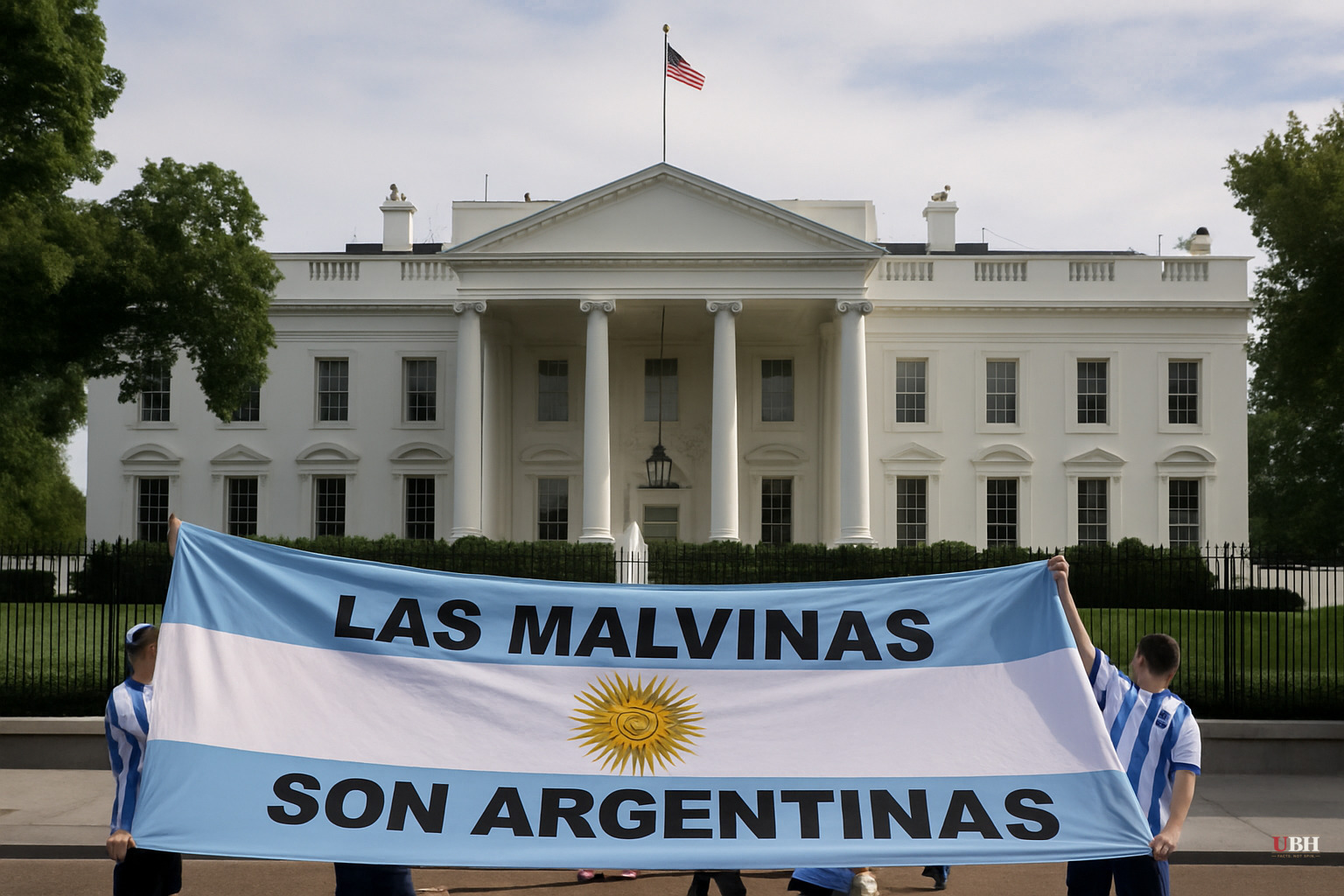
Argentina's players celebrated their 2-1 World Cup semifinal win over England by parading a banner reading "Las Malvinas son Argentinas," the Argentine claim to sovereignty over the Falkland Islands. The banner set off a diplomatic scrap that has nothing to do with soccer skill and everything to do with a war fought over those islands in 1982.
FIFA has strict rules against political statements at its events, and the organization has delayed any ruling until after the World Cup. So as of today, no discipline has been issued and no formal FIFA investigation outcome has been announced. This is an open question, not a settled one.
Andrew Giuliani, who heads the White House FIFA task force, was asked Friday whether the players were in the wrong. He didn't say yes. He didn't say no. According to the BBC, he said the team had the "opportunity and ability" to "make those statements" in the United States, invoking the U.S. Constitution's free speech protections.
"We believe in our First Amendment rights here in the United States of America," Giuliani said, according to the BBC and Breitbart.
This is a legal point. The First Amendment restrains the U.S. government from punishing speech. It says nothing about whether FIFA, a private Swiss-based governing body with its own rulebook, can sanction a team for violating its own anti-politics policy. Giuliani's answer dodges the actual question England and Downing Street are asking, which is whether FIFA's rules were broken, not whether the U.S. government can arrest anyone for a banner.
Downing Street Wants FIFA to Act
The British government isn't buying the free-speech framing. A spokesperson for the prime minister said, according to the BBC, "The World Cup might not be ours, but the Falkland Islands definitely are. Our commitment to the Falklands will never waver." Downing Street said any discipline against the players is "a matter for FIFA," while Business Secretary Peter Kyle publicly backed FIFA taking action.
Kyle went further on Times Radio, arguing England's team conduct was "the perfect contrast" and "really shows them for their own behaviour," adding that "FIFA needs to take the action that needs to happen." It's a fair jab from England's side of the rivalry, but it's also politics doing what politics does, using a sports controversy to score points at home.
The Falkland Islands government called the banner "disappointing but not surprising" and said it hopes "FIFA will sanction all behaviour of this nature in line with its own rules." Their statement drew a clear line: "We do not wish to see politics being brought into sport... nor do we wish the Islands and their people to be used as a political football in every conversation about England and Argentina." That's the strongest good-faith argument for FIFA stepping in: the Falkland Islanders themselves, not just British politicians, are asking not to be turned into a recurring talking point in someone else's soccer rivalry.
Argentina's Government Is Leaning In, Not Backing Off
This isn't just a few players getting emotional after a win. Argentine Vice President Victoria Villarruel posted on X that "it wasn't just another match," attaching video appearing to show Argentine soldiers, and wrote "The Falklands are Argentine... They banned bringing them to the stadium and forgot that we carry them in our blood and our hearts," according to the BBC.
President Javier Milei wrote that his administration is making "continual strides" toward the "peaceful and legal acquisition" of the Falkland Islands, mocking critics as acting like a "terminally mononeuronal teenager," per Breitbart. Players also sang chants referencing the Falklands and Argentina greats Maradona and Messi following an earlier win over Egypt.
That context matters. This wasn't a spontaneous banner from a few overzealous fans. It was echoed at the top of Argentina's government, which suggests the team's gesture lines up with a broader state position on the islands, not just team pride.
The Actual Dispute Underneath the Banner
The Falklands sovereignty question isn't ambiguous by vote count. In a 2013 referendum, 1,513 of 1,517 ballots cast favored staying a UK overseas territory, on a turnout above 90 percent, according to the BBC. Only three voted against. Argentina disputes the legitimacy of a vote held among residents of a territory it claims, but the numbers are the numbers as reported.
None of that resolves whether FIFA's rulebook was violated. FIFA has not issued a ruling, a fine, or a suspension as of today. Giuliani's comments defend the players' right to express a political view on American soil, which is legally sound. They sidestep the separate question Downing Street and the Falklands government are actually raising: whether FIFA will enforce its own anti-politics rule against a member federation, regardless of what the U.S. Constitution says about anything.
Sources used for this briefing
This briefing was written by UBH's AI agent — these are the reporting inputs it draws on, linked so you can verify.


