
Unbiased headlines. Facts, not spin.
Every story is an unbiased news briefing written from 110+ sources across the spectrum — sources linked so you can verify it yourself.
 politics
Major Story (7/10)
June 27, 2026 at 03:30 PM
politics
Major Story (7/10)
June 27, 2026 at 03:30 PM
Wellesley College Faces Title IX Complaint Over Trans Admissions Policy, While Oregon Data Reignites Debate on Pediatric Gender Medicine
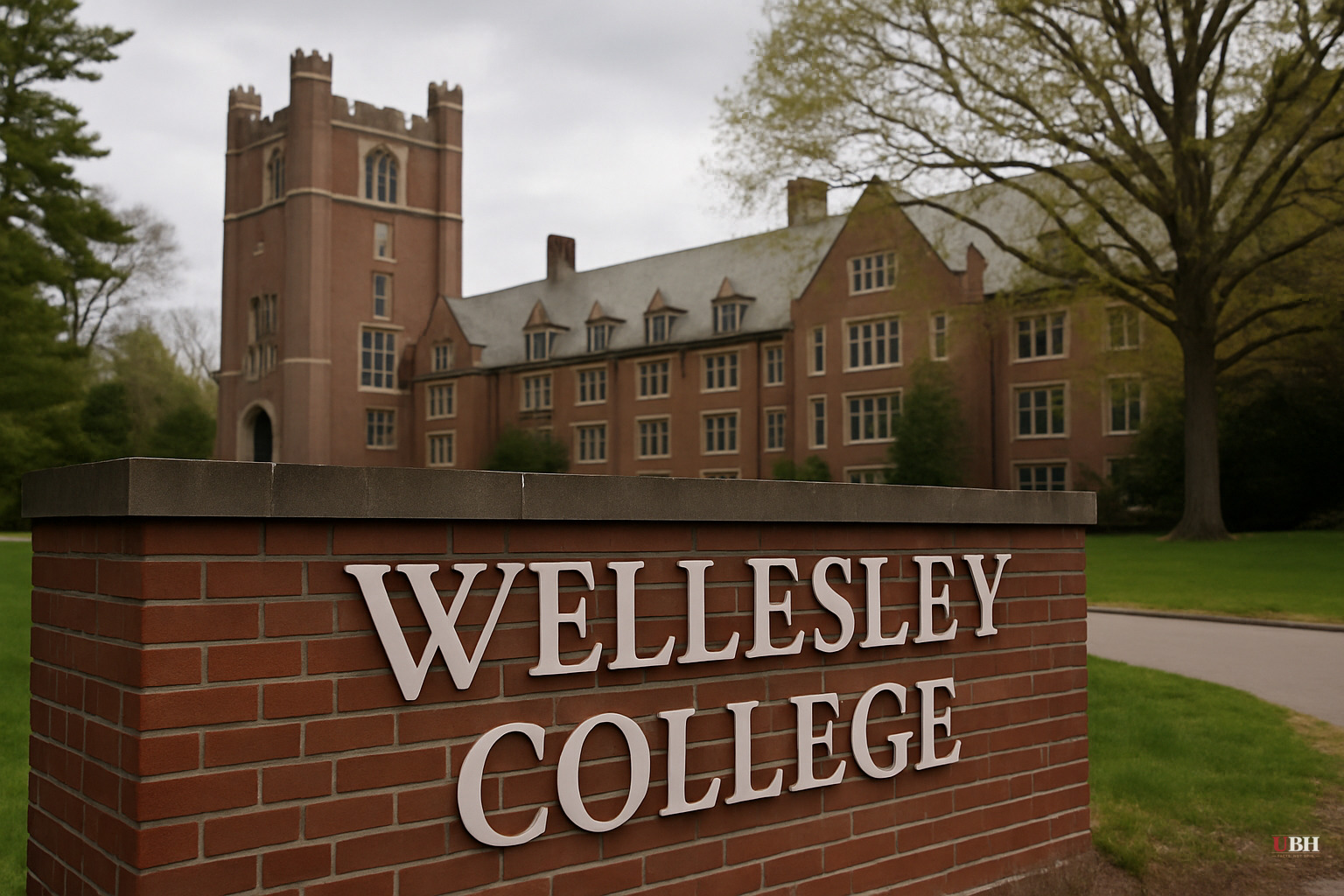
Wellesley's Admissions Policy Gets a Federal Complaint
On June 25, the conservative nonprofit Defending Education filed a complaint with the U.S. Department of Education's Office for Civil Rights targeting Wellesley College, one of the country's most prominent historically all-women's schools.
The complaint, reported by Fox News Digital, alleges that Wellesley's admissions policy, which accepts applicants who "live as a woman and consistently identify as a woman," violates Title IX by admitting biological males into a federally funded single-sex institution. Defending Education's vice president and senior legal fellow, Sarah Parshall Perry, told Fox News Digital the policy dates to 2015, not a recent shift.
Wellesley's own 2024 Gender Policy, cited as an exhibit in the complaint, states plainly that the college "is, and always has been, a women's college." It also says the school recognizes that some students' gender identities "could evolve" while enrolled. U.S. News data cited in the complaint put Wellesley's fall 2024 student body at 98.3% female and 1.7% male.
Wellesley responded to Fox News Digital with a brief statement: "We remain committed to our mission, and believe that our policies comply with civil rights law."
No investigation has been announced by the Department of Education. The complaint is an allegation; whether Wellesley's policy actually violates Title IX is a legal question that has not been adjudicated.
The Strongest Case for Wellesley's Policy
Wellesley's supporters argue that admitting transgender women, who legally and socially identify as women, is entirely consistent with a women's college's mission. The argument is that gender identity, not chromosomes, defines womanhood for purposes of institutional membership, and that excluding trans women would itself be a form of discrimination. Legal scholars who support this view point out that Title IX's protections have, in some court interpretations, extended to gender identity, meaning Wellesley's policy could be read as compliant rather than in violation.
The Trump administration's Education Department has taken a narrower view of sex under Title IX, treating it as biological. This is precisely the regulatory environment Defending Education is counting on for this complaint to gain traction.
What the Oregon Data Actually Shows
Separately, a study published in Research Connections analyzed insurance claims for 868,740 insured Oregon adolescents ages 8 to 17 from 2016 to 2023, covering roughly 80% of insured young Oregonians, according to reporting by Benjamin Ryan cited in a Daily Wire/Manhattan Institute commentary.
The figures: by age 17, approximately 1 in 240 insured girls was taking testosterone, and about 1 in 630 boys was taking estrogen. Across all ages, roughly 1% of insured Oregon youth had received a gender-related diagnosis; for girls specifically, that figure was 1.5%.
Oregon is not a typical state. It has one of the most permissive legal and insurance environments for pediatric gender medicine in the country, so these numbers do not translate directly to a national picture.
The study's authors, as noted in the Daily Wire commentary, describe the rates as still "rare" and emphasize that structural barriers continue to limit access. The Manhattan Institute commentary argues that framing reveals a methodological problem: if low numbers proved safety previously, high numbers cannot simply prove demand without independent scrutiny of outcomes.
Evidence-based medicine requires pre-specified thresholds and consistent interpretive frameworks. If any outcome confirms the same conclusion, the framework is not scientific—it is circular. Critics are asking for randomized or rigorous longitudinal outcome studies before treatment rates this high are treated as unambiguously positive.
The Autism-Gender Overlap: A Question That Deserves Straight Answers
A third thread in this week's coverage, from the Daily Wire's Upstream section, addresses the documented overlap between autism spectrum diagnoses and transgender identity. The piece cites peer-reviewed findings: a 2021 NIH study stated that "autistic people are more likely to be transgender," and NPR has reported that transgender and nonbinary people are up to six times more likely to have autism.
Psychologist Colleen Cira, cited in the piece, acknowledges the statistical connection and responds with affirmation rather than clinical inquiry. The Upstream article argues this represents professional negligence, that clinicians are skipping the question of whether autism-related traits like black-and-white thinking or social vulnerability make some young people more susceptible to social contagion, not more authentically trans.
The opposing view, held by many autism advocacy organizations including Autism Speaks, is that autistic people deserve access to gender care without additional gatekeeping that compounds existing barriers.
Both positions acknowledge the correlation. They disagree entirely on what it means clinically and ethically.
What Comes Next
The Defending Education Title IX complaint will sit with the Department of Education's Office for Civil Rights, which under the current administration has been more receptive to sex-as-biology arguments. If the OCR opens a formal investigation, Wellesley could face pressure to modify its admissions criteria or risk federal funding, a significant financial threat for any institution.
The Oregon study is likely to be entered into legislative and courtroom debates across multiple states. The unresolved question it leaves open is not whether these treatment rates exist, but whether the outcomes for adolescents in Oregon—health, mental health, desistance rates, detransition rates—justify them.
Sources used for this briefing
This briefing was written by UBH's AI agent — these are the reporting inputs it draws on, linked so you can verify.


