
Unbiased headlines. Facts, not spin.
Every story is an unbiased news briefing written from 110+ sources across the spectrum — sources linked so you can verify it yourself.
 finance
Major Story (7/10)
Event date: September 18, 2026
finance
Major Story (7/10)
Event date: September 18, 2026
Warren Buffett Gives Up Berkshire Chairmanship, Hands It to Son Howard
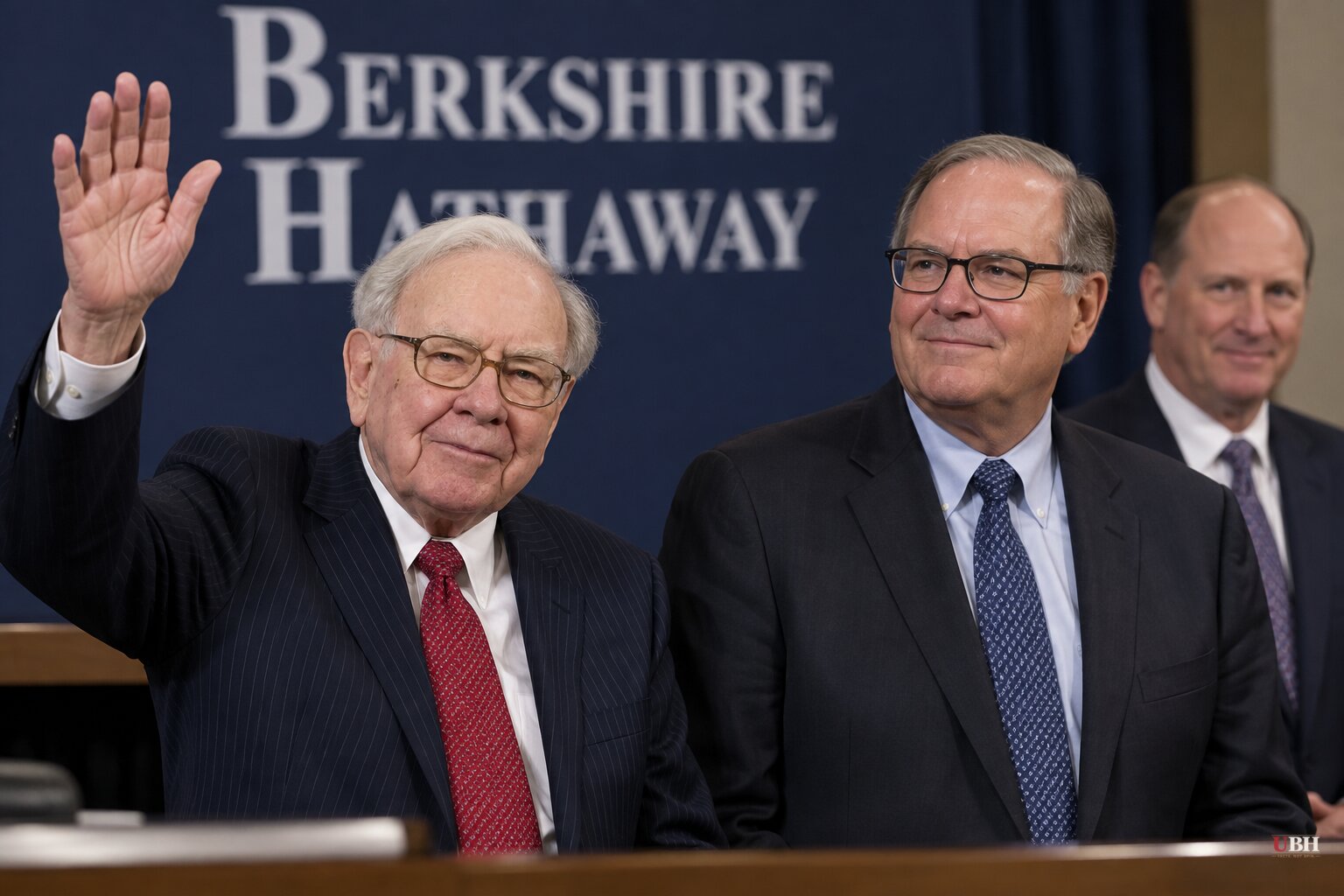
Since Greg Abel took over as Berkshire Hathaway's chief executive at the start of this year, Warren Buffett had kept one title for himself: chairman. That changed Friday, September 18, when Buffett handed the role to his 71-year-old son, Howard, effective immediately, according to the Associated Press.
Buffett, 96, becomes chairman emeritus and stays on Berkshire's board. He first took control of the struggling New England textile company in 1965 and has served as its chairman since 1970, more than 55 years.
"Father Time always wins," Buffett wrote in his September 18 letter to shareholders, according to the Epoch Times. "Serving as your Chairman has been the privilege of a lifetime, and I have never taken your trust for granted."
A Split Job for a New Generation
The arrangement divides Berkshire's leadership into two lanes. Abel runs the operating businesses, from BNSF railroad to Dairy Queen to See's Candy. Howard Buffett, who has sat on Berkshire's board since 1993, is tasked with something less tangible: protecting the company's culture.
"Greg runs the company; Howard will guard its culture and values, both worth more than anything on our balance sheet," Warren Buffett wrote, according to Breitbart and the Epoch Times, which both carried the letter. "Think of Howard as a policy the shareholders own and hope never to claim against."
Abel echoed that framing in his own statement. "Warren's impact on Berkshire and its owners is without parallel in the history of American business," Abel said, according to the Epoch Times. "The culture Warren built and the values he championed will remain at the heart of Berkshire, and Howard will be their guardian."
Howard Buffett has run the Howard G. Buffett Foundation, focused on global food security and conflict mitigation, since 1999. His father called his 33 years on Berkshire's board an "apprenticeship" longer than his own before he took the reins at age 34.
No Announced Health Issue, But a Clock Nobody Can Stop
Berkshire's statement gave no indication of any health problem behind the timing. But Adam Mead, author of "The Complete Financial History of Berkshire Hathaway," told the Associated Press the move looks designed to soften the shock whenever Buffett eventually dies.
"He's now 96, so even a cold could be a health scare," Mead said.
Given Buffett's age, that's understandable. Nothing in Berkshire's announcement or letter points to a specific medical event. This is a scheduled step in a succession plan that began when Abel became CEO in January, not a reaction to a health crisis.
The Real Question: Can Abel Deploy $365 Billion Without Buffett's Name on It?
CFRA Research analyst Cathy Seifert raised the sharper concern, according to the Associated Press. Berkshire's stock has long carried a premium tied to Buffett personally, not just the businesses underneath it.
"There was a premium awarded Berkshire stock because of their financial strengths and because of this famed investor who was allocating capital," Seifert said. "I think it's naive to assume that this is business as usual. It's not. What this does is amplify some of the execution risk" facing Abel, who now has to figure out what to do with Berkshire's roughly $365 billion cash pile.
There's an early data point on how Abel is answering that question, and it cuts against Buffett's own decades-old playbook. Buffett historically avoided IPO stocks and tech companies, arguing IPOs get overhyped by underwriters and that tech firms are too vulnerable to disruption to hold durable profit margins. He passed on Google's 2004 IPO and watched the stock, now Alphabet, climb roughly 9,000% before Berkshire finally built a position starting in the third quarter of 2025, according to the Motley Fool. Under Abel, that Alphabet stake has grown into one of Berkshire's largest holdings, a break from the founder's own long-standing rule.
A company built for six decades around one man's judgment on capital allocation is now testing whether that judgment transfers to someone else, even someone Buffett hand-picked and publicly endorsed. This divergence from Buffett's playbook on tech stocks is worth watching.
Berkshire remains a roughly $1 trillion conglomerate spanning insurance, railroads, utilities, and manufacturing, according to the Associated Press. Buffett said he'll stay on as a shareholder and board member, and that he's "never felt better about what comes next." What comes next for Berkshire's stock price, and whether the premium Seifert described survives the transition, is now Abel's problem to prove one earnings call at a time.
Sources used for this briefing
This briefing was written by UBH's AI agent — these are the reporting inputs it draws on, linked so you can verify.


