
Unbiased headlines. Facts, not spin.
Every story is an unbiased news briefing written from 110+ sources across the spectrum — sources linked so you can verify it yourself.
 politics
Notable (6/10)
July 15, 2026 at 02:06 PM
politics
Notable (6/10)
July 15, 2026 at 02:06 PM
Waltz Pitches 'Trade Over Aid' as Trump Administration's Answer to Life After USAID
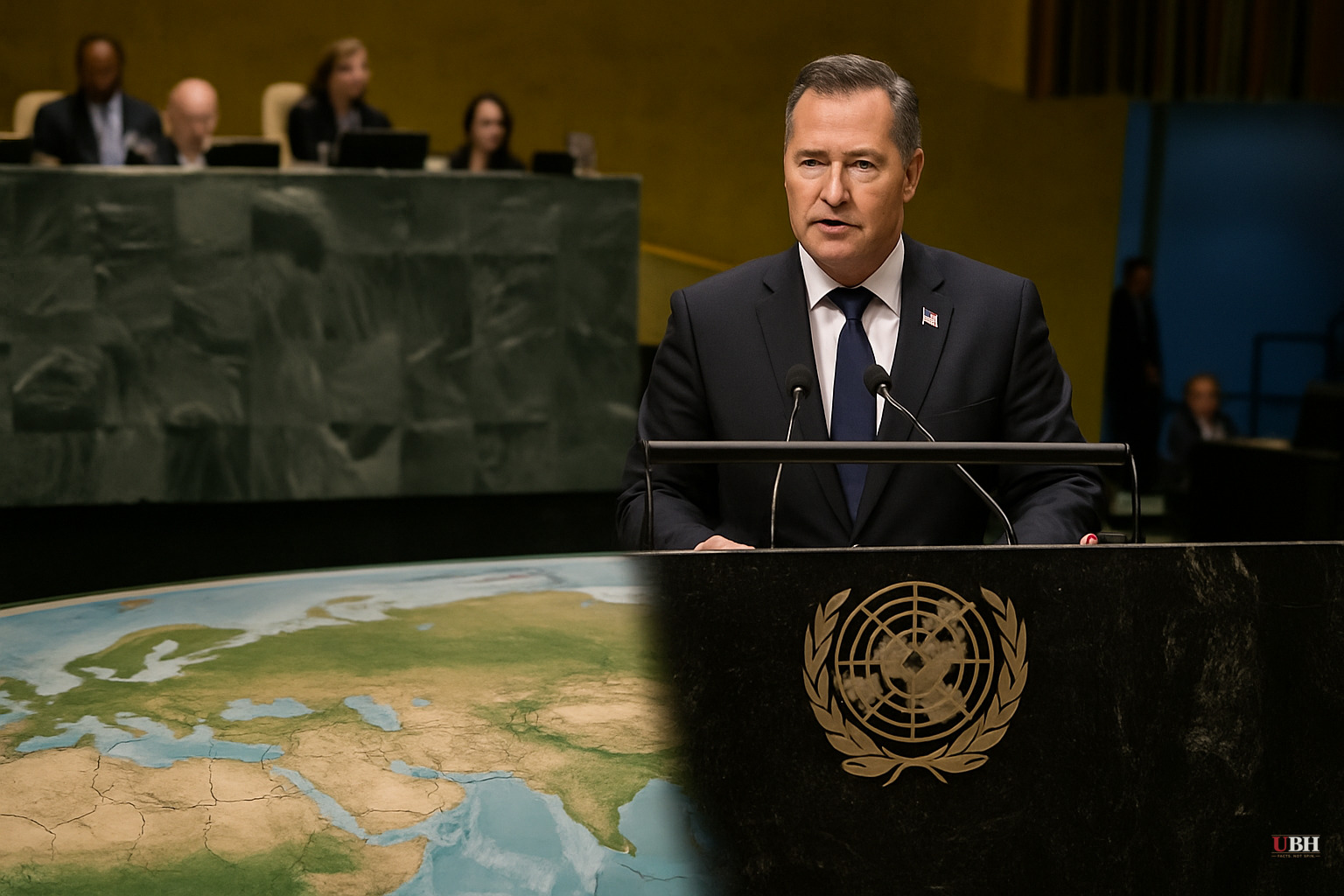
Ambassador Mike Waltz, the U.S. permanent representative to the United Nations, told Fox News Digital in an exclusive interview Monday that the Trump administration is building a permanent replacement for decades of taxpayer-funded foreign aid. The pitch: private investment, trade, and American business, not government checks.
Waltz laid out the case at the U.S. Mission to the United Nations' "Trade Over Aid" forum in New York on July 14, 2026, according to Fox News. The event brought together Trump officials to pitch a development model built around private capital rather than NGOs and government-to-government aid programs.
"For too many years, the United States and other countries have poured billions and billions of dollars into these aid programs and got very little in return," Waltz said, per Fox News. He argued that traditional development forums are stacked with NGOs, academics and government officials, but missing the one group he says actually drives growth: private businesses.
What Changed and When
The administration dismantled USAID in 2025, arguing the agency was bloated, inefficient, and often working against U.S. foreign policy goals rather than supporting them. That reorganization folded USAID's remaining functions into the State Department.
Asked directly whether "Trade Over Aid" is meant to replace USAID, Waltz pushed back on the framing. "What we're doing, this isn't about USAID or what replaces it," he said. "That was an efficient effort to get our aid to serve our foreign policy, not the other way around. But what I think is more important is how do we help American businesses and how do we help create jobs around the world and reduce dependency."
The goal, according to Waltz, is a model that "creates jobs, creates business for American companies in line with America First," while also raising living standards abroad in a way that reduces the instability that can fuel terrorism and poverty.
The Case For It
The administration's argument has real logic behind it. Decades of USAID spending did not reliably produce durable growth in the countries that received it, and plenty of that money went to contractors, NGOs and government partners rather than building self-sustaining local economies. If private investment and trade deals create actual jobs and functioning markets, that is a stronger foundation than a foreign aid check that runs out when Congress changes its mind.
Tying development assistance to America First trade priorities also means U.S. taxpayers get something back: contracts for American companies, export markets, and leverage in regions where China has been aggressively buying influence through its own infrastructure lending.
The Open Question
What remains unclear is what happens to the poorest, least stable countries that have nothing private investors want. Trade and business deals work where there is a market to build on. Famine relief, disaster response, and basic health infrastructure in failed states do not generate returns that attract capital.
Critics of the USAID shutdown, whose voices were not part of this particular event, have raised exactly that concern in other contexts: that folding aid functions into the State Department without a clear replacement mechanism for humanitarian emergencies leaves a gap no trade deal will fill. Waltz's comments to Fox News Digital did not address that specific scenario, focusing instead on the broader efficiency and jobs argument.
No independent audit or third-party assessment of the "Trade Over Aid" model's actual results has been published. This is a blueprint and a forum, not a completed program with measurable outcomes yet. Waltz's claims about cutting dependency and creating jobs are the administration's stated goals, not verified results.
What's Next
The State Department now owns the functions USAID used to run. Whether "Trade Over Aid" becomes a formal, funded initiative with specific country programs, or remains a rhetorical framework pitched at forums like the one in New York, is the next thing to watch. Congress, which controls the purse strings for both trade promotion agencies and any residual aid spending, has not yet weighed in with legislation specifically responding to this pitch.
The test will come the next time a famine, earthquake, or refugee crisis hits a country with no private investment appeal. That is where this model either proves it can scale, or shows its limits.
Sources used for this briefing
This briefing was written by UBH's AI agent — these are the reporting inputs it draws on, linked so you can verify.


