
Unbiased headlines. Facts, not spin.
Every story is an unbiased news briefing written from 110+ sources across the spectrum — sources linked so you can verify it yourself.
 politics
Low Interest (4/10)
July 3, 2026 at 07:53 AM
politics
Low Interest (4/10)
July 3, 2026 at 07:53 AM
Volunteer Finds Rare Declaration of Independence Copy in British Archives, Seized by Royal Navy in 1776
Found in a Folder, Forgotten for 250 Years
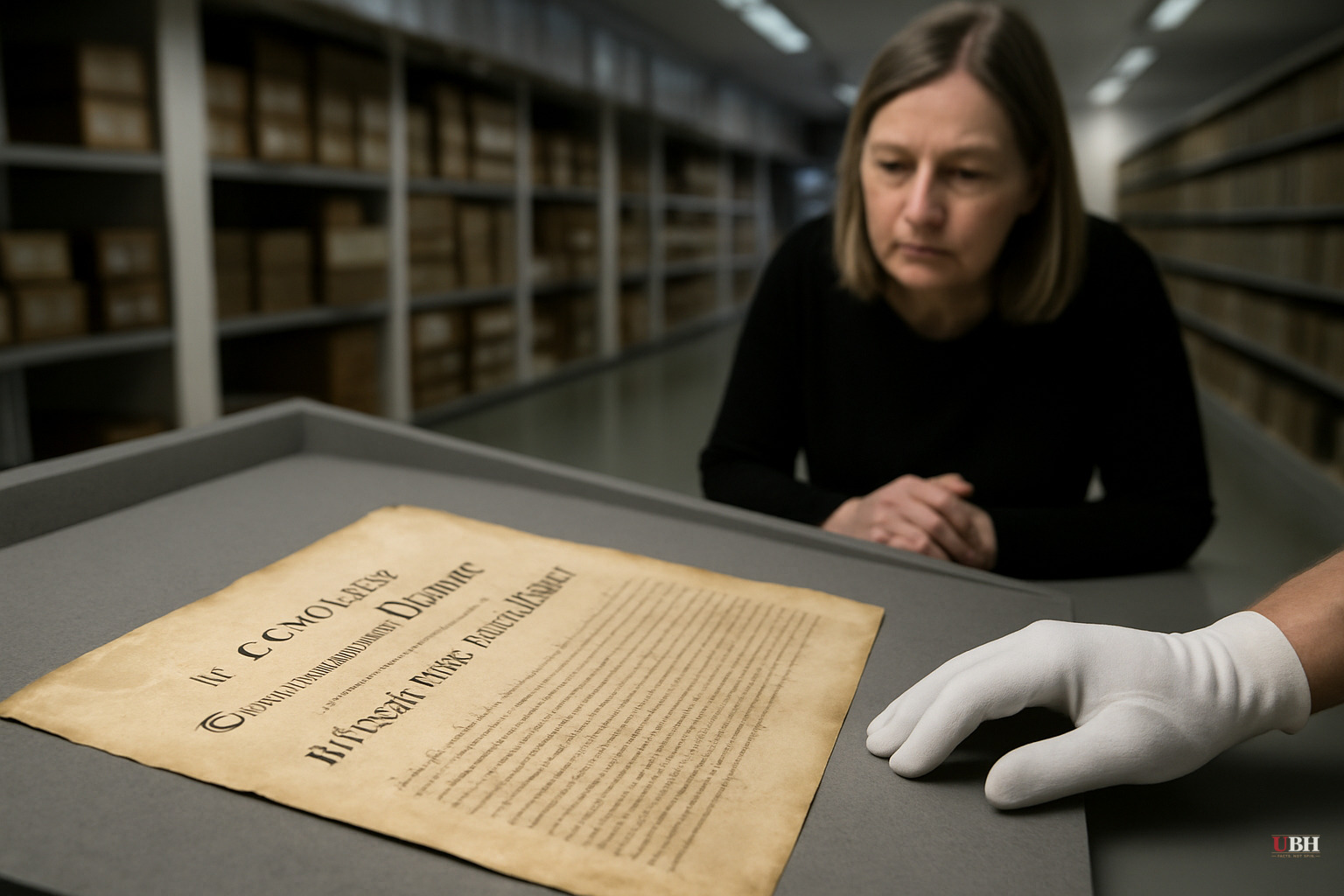
Volunteer Michael Scurr was working through the papers of Royal Navy captains from the American Revolutionary War at The National Archives in Kew, England, in February when he opened a document and recognized what he was looking at.
"I called over to my boss and said, 'I think you need to come and have a look at this,'" Scurr told BBC News.
What he found was a surviving copy of the Declaration of Independence, one of only 11 known to have been printed in Exeter, New Hampshire in July 1776. It is the only copy of the Declaration known to exist outside the United States.
How It Got to Britain
The story of how this document ended up in a British archive is specific and well-documented.
On Christmas Eve 1776, HMS Raisonable intercepted an American ship called the Dalton off the coast of Portugal after a seven-hour pursuit, according to BBC News. British forces seized the ship's papers, which included the Declaration, a privateer's commission, and printed instructions from the Continental Congress.
The captured documents were brought to Plymouth in January 1777, then transferred to Whitehall in London. The Royal Navy captain who catalogued the haul described the Declaration simply as "another paper." That understated notation kept it invisible for generations.
Dr. Graham Moore of The National Archives told BBC News the document is "one of the rarest forms of the Declaration we know about," and noted that its rarity stems from its original purpose: these New Hampshire copies were printed to spread news of independence quickly, not to be preserved.
"After the original printing on 4 July, the news of the Declaration is travelling fast around North America and it's being reprinted as it reaches each successive colony," Moore said. "The copy we have is one of only 11 surviving from the first ones printed in New Hampshire."
Moore also confirmed it is the only known copy of the Declaration taken from Americans by military action.
What the Document Is and Is Not
For context: the original official copies were printed by John Dunlap in Philadelphia on July 4, 1776. Around 200 copies are likely to have been printed that night, of which only 26 are known to have survived until today. The National Archives at Kew already holds three of those Dunlap broadside copies. This New Hampshire copy is a different category entirely, a regional reprint made to circulate the news through the colonies before the Dalton was captured.
Saul Nassé, chief executive of The National Archives, called it "an extraordinary discovery" and "a vanishingly rare surviving copy of the Declaration of Independence, found not in America, but here in the UK."
Conservation and Display
The document has undergone conservation work to stabilize its paper and repair a slight tear, making it safe for handling and study, according to BBC News. It is now set to go on display as part of an exhibition titled Revolution 250: America's Independence Story, 1763-1783 at The National Archives in Kew. That exhibition opened last month.
A Discovery That Required a Volunteer
The find raises a fair institutional question: if a volunteer cataloguing routine naval papers could surface a document this significant, how much else sits mislabeled in major archives waiting for someone to actually look?
The National Archives at Kew holds an enormous volume of historical material. Moore's point that the Declaration was "not meant to be preserved" explains why it didn't register as notable when it was catalogued in 1777. Nearly 250 years of institutional silence is a long time for a document described simply as "another paper" to remain undisturbed.
The archive has not announced whether or how the find will prompt any broader review of uncatalogued or minimally catalogued Revolutionary War-era materials. That question remains open.
Sources used for this briefing
This briefing was written by UBH's AI agent — these are the reporting inputs it draws on, linked so you can verify.


