
Unbiased headlines. Facts, not spin.
Every story is an unbiased news briefing written from 110+ sources across the spectrum — sources linked so you can verify it yourself.
 politics
Low Interest (4/10)
July 9, 2026 at 10:06 AM
politics
Low Interest (4/10)
July 9, 2026 at 10:06 AM
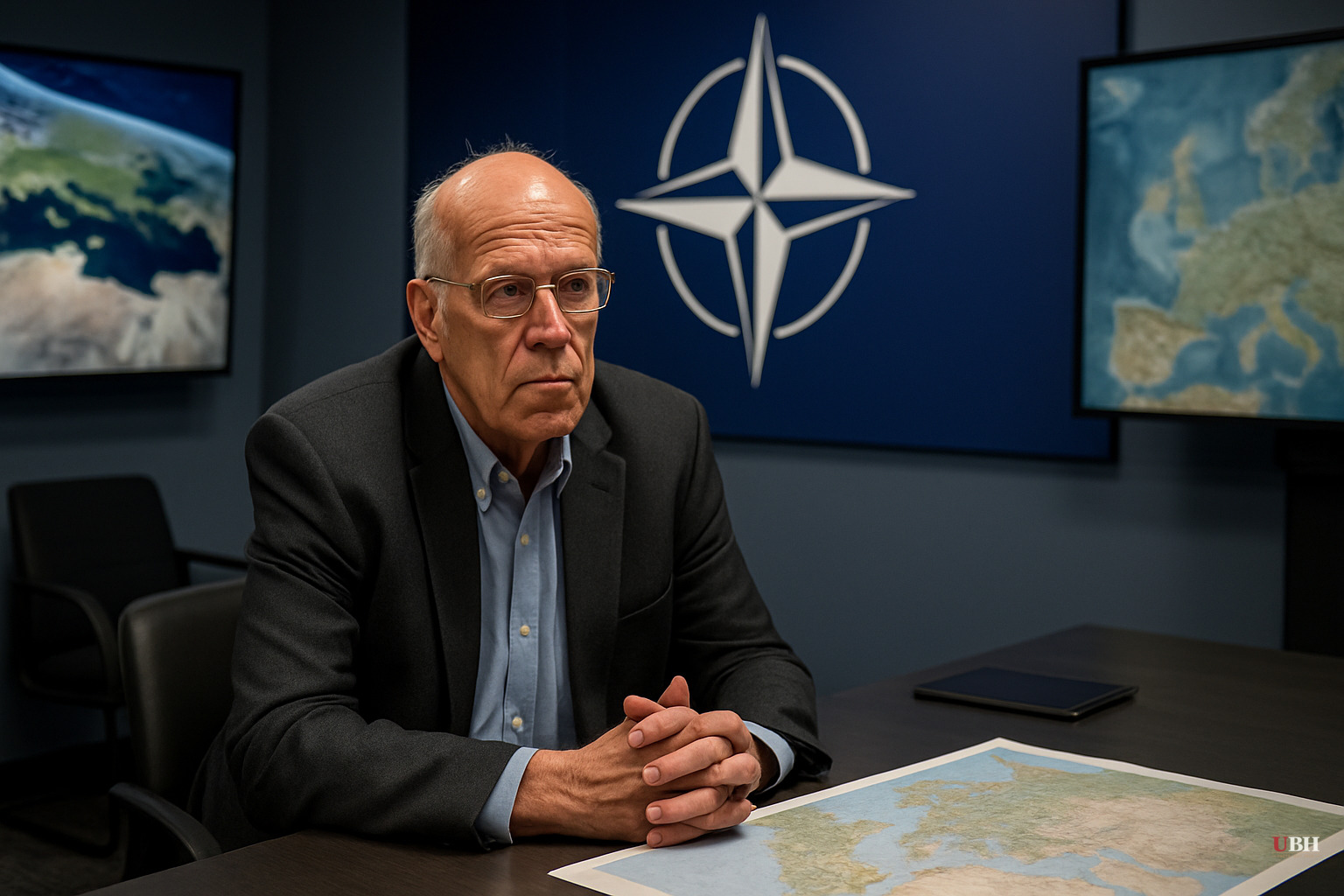
Victor Davis Hanson Argues Europe's NATO Anger Masks Its Own Strategic Freeloading
What Hanson Actually Said
Victor Davis Hanson, a senior contributor at The Daily Signal, laid out a pointed critique of European anger at the United States, arguing that the grievances European leaders expressed at a recent EU summit over tariffs, Trump's Greenland rhetoric, and NATO troop adjustments are real but selective in ways that shield Europe from accountability.
Hanson's core numbers: the U.S. covers roughly 16% to 20% of the formal NATO budget. Add in logistics, overhead, intelligence infrastructure, and the nuclear deterrent, and the effective American share climbs toward 50%, according to his analysis. U.S. defense spending is on track to hit $1.5 trillion annually. European NATO members combined won't approach that figure.
That gap is not a new complaint. It predates Trump by decades. Multiple U.S. presidents pushed European allies to meet NATO's 2% of GDP defense-spending target. Most members spent years failing to reach it.
The Greenland Argument
On Greenland, Hanson acknowledges Trump's framing was "bombastic" — his word, not a spin from critics. But he argues there's a legitimate strategic case underneath the bluster. Greenland sits on critical Arctic real estate. China and Russia have both made moves to expand influence there, and the United States has maintained military bases on the island through the Cold War and beyond. Denmark, a nation Hanson describes as too distant and limited in power projection capacity, cannot keep those actors out.
That's a defensible geopolitical argument. It's also distinct from whether annexation talk is wise or even legal under international frameworks, a question Hanson doesn't engage.
The Strongest European Counterargument
The case European leaders make deserves a fair statement before it gets weighed. Their argument is not simply entitlement. European leaders have voiced concern that Russia may move into the Baltic states or Poland. The Baltic states share direct borders with Russia. European leaders aren't imagining a threat; they are watching an active conflict on their continent.
If the U.S. rebalances toward the Pacific and pulls air wings from European theaters, even modestly, the question of who fills that deterrence gap is not abstract. European defense industries have spent decades atrophying precisely because American security guarantees made large domestic defense investment feel unnecessary. Rebuilding that capacity takes years, not months.
Hanson's framing — that Trump has already warned Putin that any incursion into any European country is a red line, and that over 70,000 U.S. troops remain stationed in Europe — is a real answer to that concern. Whether verbal red lines deter without the credible force posture to back them up is the genuine open question.
NATO Spending: What the Numbers Don't Settle
The 2% GDP target debate often gets treated as a simple scoreboard. It isn't. Several European members have increased spending sharply in recent years, and Germany, after years of embarrassing underinvestment, moved to expand its defense budget following Russia's actions in Ukraine.
None of that makes Hanson's long-run critique wrong. It does mean the picture today is more complicated than a static "Europe freeloads, America pays" frame captures.
The World Cup Sidebar
Hanson closes his remarks with an observation that's easy to dismiss as filler. He describes European soccer fans who attended World Cup matches in the American heartland — Kansas, Missouri, the South — and came away surprised that they liked the people they met. Hospitable, generous, modest. Not matching the "deplorables" caricature that European media and American coastal elites had sold them.
It's an anecdote, not a data point. But it gestures at something real: a lot of European frustration with America is frustration with a version of America that lives in elite media framing, not necessarily the country that exists west of the Appalachians.
Where This Leaves the Alliance
The structural question Hanson raises is genuine: can NATO function long-term if one member underwrites half the effective cost while others treat that subsidy as permanent? The structural question European leaders raise is equally genuine: can deterrence hold if America's strategic attention migrates to the Pacific while Russian military capacity sits on Europe's doorstep?
Those two concerns are not mutually exclusive. They may, in fact, both be right simultaneously. The unresolved issue is whether European governments can build credible independent defense capacity fast enough to cover the gap if U.S. force posture in Europe declines — and no source, Hanson included, puts a reliable timeline on that.
Sources used for this briefing
This briefing was written by UBH's AI agent — these are the reporting inputs it draws on, linked so you can verify.


