
Unbiased headlines. Facts, not spin.
Unbiased Headlines is an independently owned news organization. We bring you the facts, not opinions, written fresh from 110+ named sources. Sources linked so you can verify it yourself.
 sports
Low Interest (3/10)
sports
Low Interest (3/10)
Venus Williams Finishes Loss to Sofia Kenin After 2 AM as US Open's Scheduling and Length Problems Collide
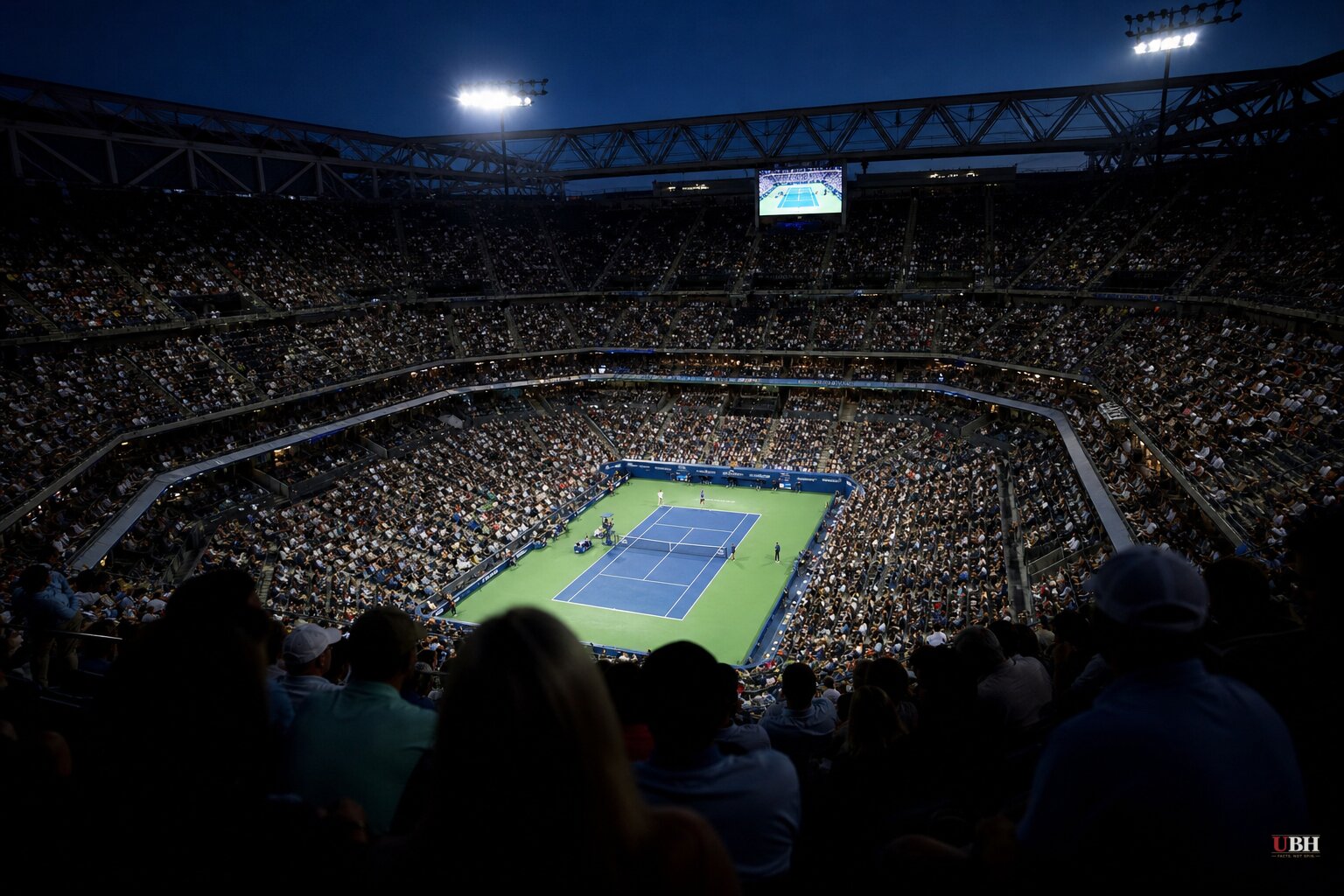
Venus Williams, 46, was supposed to play Sofia Kenin in a Sunday night primetime slot on Arthur Ashe Stadium at the US Open, in front of a home crowd for what could be her final US Open as a singles player. Instead, the match didn't start until just after midnight. Kenin closed it out in straight sets shortly after 2 a.m. local time Monday.
Williams called the scheduling "not ideal" afterward and said the late finish "wasn't great" for either player's conditioning, according to the BBC. It was her 15th straight singles loss. She's still set to play doubles at the tournament with sister Serena.
Why matches run past midnight
Three of tennis' four Grand Slams—the Australian Open, Roland Garros and the US Open—run split day-and-night schedules. The US Open picks one men's and one women's match to headline a session starting at 7 p.m., after a full day of matches has already been played on the same courts.
The reason is money, plainly. Splitting the day into two sessions lets organizers sell the same seat twice, once to a day-session crowd and again to a night-session crowd, according to the BBC. Night tickets cost more because they're scheduled for after-work hours and typically showcase bigger names.
TV rights make the case even stronger. ESPN agreed in 2024 to pay $2.04 billion (£1.5 billion) to broadcast every US Open match until 2037, a deal worth $170 million (£126 million) a year, per the BBC. Primetime ad slots sell for more, and America's late-night TV audience skews later than the UK's.
Wimbledon runs it differently. Play starts at 11 a.m. and stops at 11 p.m. sharp, unfinished match or not, with players returning the next day to finish. Fans know they can get home on public transit. Players know when they're done, win or lose. It's a simpler system, and it doesn't chase a night-session ad premium.
American Taylor Fritz has said there's "no chance" he can sleep until 5 or 6 a.m. after finishing a match at 2 a.m., a complaint echoed by a long list of players over the years covering both majors and lower-tier events.
The tournaments themselves are also getting longer
The late finishes are only part of the problem. What was once a two-week Grand Slam championship now extends into a third week, according to the Associated Press. Asked how he hoped to see that growth continue, U.S. Tennis Association CEO Craig Tiley smiled and answered, "Four weeks." Last year the USTA moved the singles main draw's start to Sunday and shifted mixed doubles to a two-day event just before it, hoping to lure top singles players into an event most had skipped. This year added a qualifying event on Monday for the final two spots and a free-admission "fan week" that drew large crowds. Tiley has described the direction as building "the tennis Disneyland," though he stressed that doesn't necessarily mean extending the tournament's length so much as adding more types of events during it.
Players aren't universally thrilled. Ukraine's Marta Kostyuk, the No. 11 seed, said she hopes the tournament doesn't keep creeping earlier into the week: "I just hope they will not start on Saturday at some point." Canadian Denis Shapovalov argued an extra day off between matches isn't real rest: "Being off is when you're at home. We're still going to have to come back tomorrow, practice." Leylah Fernandez, the 2021 runner-up, said she appreciated the extra day to spend with her sister, showing the split isn't universal.
The Masters 1000 and WTA 1000 tier has the same fight playing out with sharper consequences. Montreal's extended Canadian Open saw Jannik Sinner, Carlos Alcaraz and Novak Djokovic all withdraw this year, according to Tennis365. World No. 3 Alexander Zverev said top players are simply skipping the North American swing because of its length: "If you play everything and you're a top player, you spend seven weeks here." His fix is blunt: "Make us be here for two weeks, not seven. For the Masters, it's two weeks for both of them."
Organizers do have a real counterargument worth stating plainly. Longer events mean more matches, which the Tennis365 report notes has come with increased prize money for players, plus more content for broadcasters and fans, and the USTA's free fan-week programming has reportedly drawn big crowds who might not otherwise attend. Growth isn't automatically bad business.
But none of the sources indicate the ATP, WTA or Grand Slam organizers have any near-term plan to shorten these events or cap night-session finish times. Tiley's own comments suggest the opposite direction. Zverev's fix, going back to two-week Masters events, has not been adopted by tour organizers as of this US Open. Whether top players start boycotting more North American events, or whether a Grand Slam eventually imposes a Wimbledon-style hard stop time, remains an open question nobody running the sport has answered yet.
Sources used for this briefing
7 links from 6 independent newsrooms (syndicated copies of the same report count once)
These are the sources it draws on, linked so you can verify.


