
Unbiased headlines. Facts, not spin.
Unbiased Headlines is an independently owned news organization. We bring you the facts, not opinions, written fresh from 110+ named sources. Sources linked so you can verify it yourself.
 sports
Low Interest (4/10)
Earhart Expedition Finds No Plane on Nikumaroro: Team Says Object Was Likely Driftwood
The latest hunt for Amelia Earhart's plane ended without a plane.
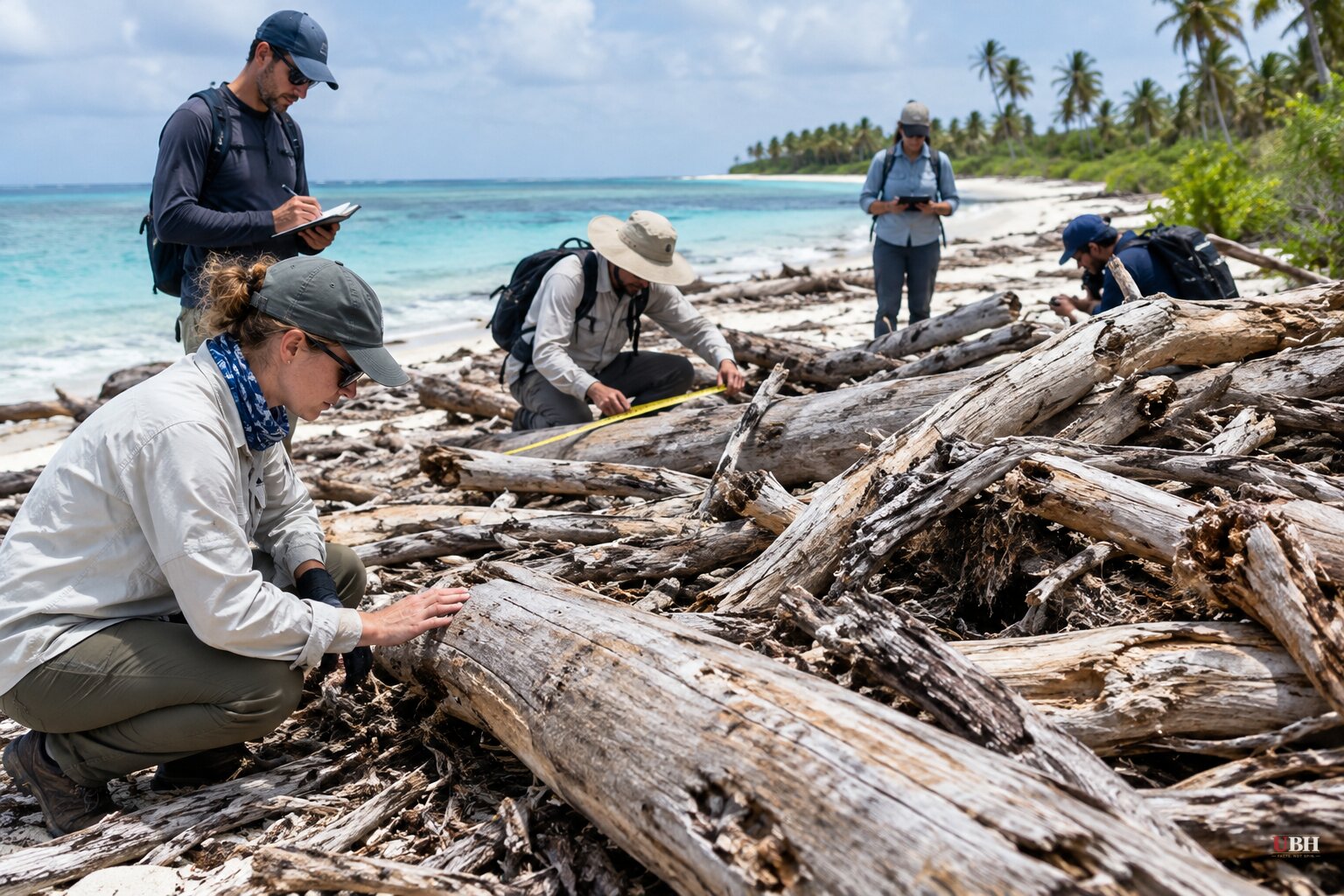
The Taraia Object expedition announced Sunday evening, Oct. 18, Eastern time (Monday, Oct. 19 in Nikumaroro, which is 17 hours ahead) that it "found no conclusive evidence" that wreckage from Earhart's Lockheed Electra 10-E sits in a lagoon on the remote Pacific atoll. The anomaly that drove the trip was most likely a collection of large trees.
What the team found
The object was first spotted in satellite imagery in 2020 by a Navy veteran. It also shows up in aerial photos dating to 1938.
By the time the team arrived, a good portion of the debris had fragmented and washed away. What remained was a single Y-shaped segment, a fraction of the anomaly's original size in the imagery, according to Purdue University.
The shine that made researchers suspect metal came from a carbonate veneer. Other items nearby were "similarly coated with a shiny concretized amalgam of coral sand," the university said.
"We think it's most likely that the object was a collection of debris that accumulated here," said Rick Pettigrew, executive director of the Archaeological Legacy Institute.
The researchers had earlier described the evidence for the object as "very strong," CBS News reported. In an Oct. 14 statement, Pettigrew said it was "too early to reach conclusions."
The trip
The expedition, a joint effort of the Archaeological Legacy Institute, the Purdue Research Foundation and Purdue University, left Tarawa in Kiribati on Oct. 6. It took five days at sea to reach Nikumaroro, an uninhabited coral atoll in the Phoenix Islands.
The team began surveying the lagoon around Oct. 14. Severe weather kept researchers aboard their ship for several days. Limited fuel and supplies ruled out an extension.
On the island, the team dealt with thick vegetation, rats and large coconut crabs. The plan called for photographing and filming the lagoon, running magnetometer and sonar surveys, then retrieving the object for identification.
Pettigrew thanked "the private donors who shared our vision and made this journey possible."
"We set out to test a hypothesis, not to guarantee a particular result, and we followed the evidence to the end," said Steve Schultz, Purdue's general counsel and an expedition member.
"Unfortunately, we weren't able to find that smoking gun," Schultz said in a video released Sunday.
Skeptics saw this coming
Not everyone was surprised. Ric Gillespie, a longtime Earhart researcher who has led numerous expeditions to Nikumaroro, told Reuters before the results came out that he believed the Taraia Object was a fallen pandanus tree, not airplane wreckage.
The team's finding lines up with that view of the object itself. It does not settle the larger question of what happened to Earhart and her navigator, Fred Noonan.
The castaway theory survives
The expedition says the failure to find a plane does not sink its broader idea. That theory holds that Earhart and Noonan missed Howland Island, about 400 miles northwest of Nikumaroro, and landed on the atoll's reef flat, where they were marooned.
Pettigrew said the theory is supported by human bones and artifacts found on the island over the years, and by radio bearings the U.S. Navy and Coast Guard recorded from transmissions at the time. The expedition also pointed to 1930s glass bottles and a woman's makeup compact found on the island.
Those are the expedition's claims. None of the finds has been confirmed as belonging to Earhart or Noonan, and the team itself calls the castaway account a hypothesis.
"The island has been holding on to its secrets, and it continues to do so," Pettigrew said. "I think eventually someone will find conclusive evidence here to finally put a cap on the mystery."
What happened in 1937
Earhart and Noonan left Lae, Papua New Guinea, on July 2, 1937, bound for Howland Island on the third-to-last leg of her round-the-world attempt. The Coast Guard cutter Itasca, stationed near Howland, received several radio transmissions from Earhart but never established reliable two-way contact.
The U.S. then launched one of the largest air-sea searches in history. It covered an area of the Pacific roughly the size of Texas over two weeks and found neither the plane nor its occupants.
Earhart's Electra, which she called her "Flying Laboratory," was bought with Purdue Research Foundation money. She intended to return it to the university after the flight.
What comes next
The team brought back a steel tube about 30 inches long, found in the lagoon near the Taraia Peninsula. It has not been identified. Researchers say it and other artifacts will be studied further, including to understand how debris enters the lagoon through the channel on the atoll's western side, drifts across it and washes up on the peninsula.
Purdue says it remains committed to continuing the search. No date or funding for another expedition has been announced.
Sources used for this briefing
8 links from 7 independent newsrooms (syndicated copies of the same report count once)
These are the sources it draws on, linked so you can verify.


