
Unbiased headlines. Facts, not spin.
Every story is an unbiased news briefing written from 110+ sources across the spectrum — sources linked so you can verify it yourself.
 politics
Major Story (8/10)
July 1, 2026 at 08:21 PM
politics
Major Story (8/10)
July 1, 2026 at 08:21 PM
Venezuela Earthquake Death Toll Reaches 2,295. Deported Americans Among the Missing, UN Warns Total Could Hit 10,000.
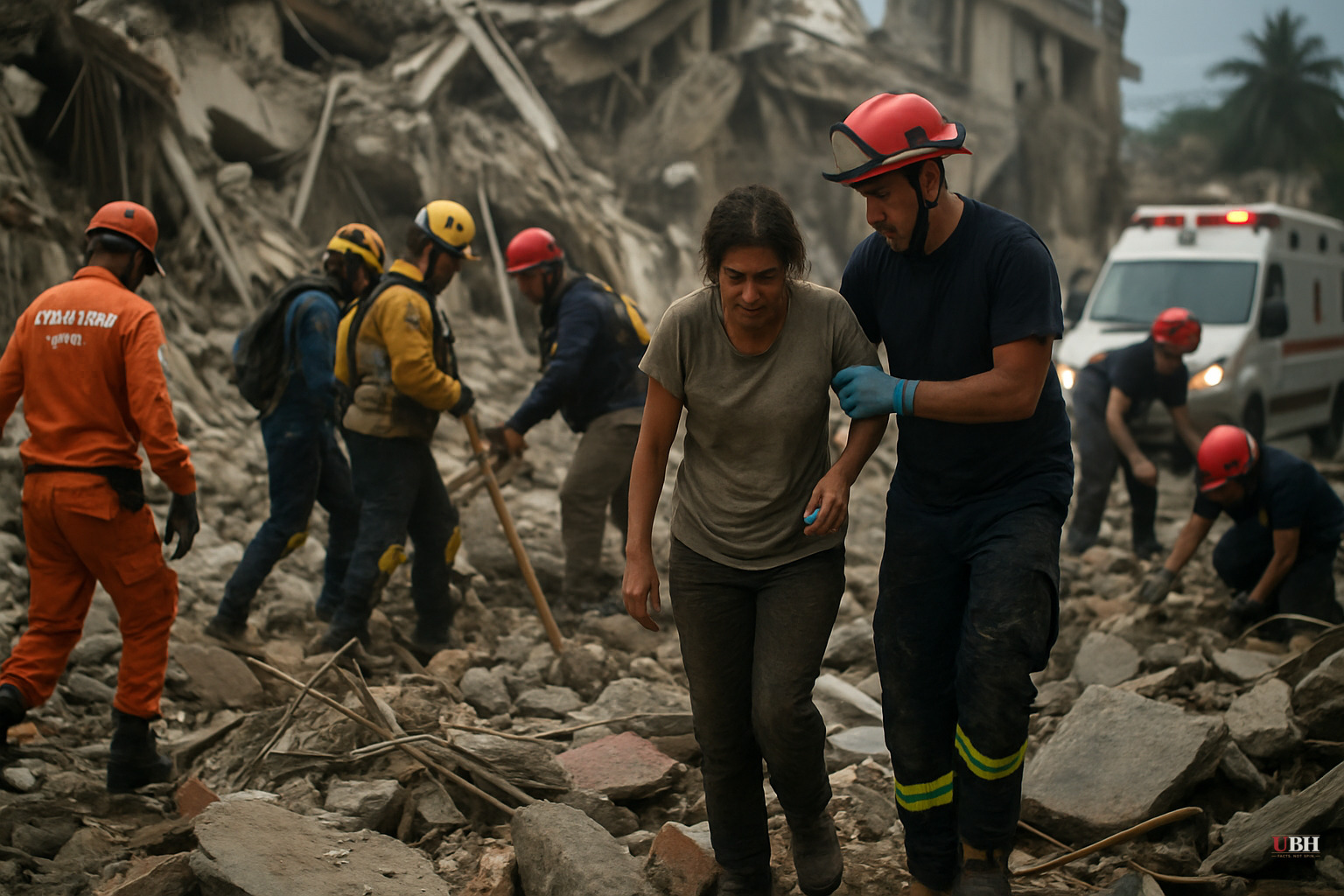
Since the twin earthquakes struck Venezuela's La Guaira coast on June 24, the confirmed death toll has climbed to 2,295, with more than 11,000 injured and the UN warning the final count could reach 10,000.
The two quakes, magnitudes 7.2 and 7.5, struck less than a minute apart and caused catastrophic structural failures across the northern coastal state. According to Venezuela's National Assembly, roughly 1,000 buildings have been damaged or destroyed, including hospitals. More than 400 schools and water systems were also knocked out.
The Hotel Santuario Collapse
The disaster carries a separate, painful dimension. On the morning of June 24, U.S. Immigration and Customs Enforcement deported a flight of over 100 Venezuelan nationals. Those deportees were transferred to Hotel Santuario in La Guaira. Hours later, the hotel collapsed in the earthquakes.
As of July 1, many of those deportees remain missing. Families have been checking hospitals and morgues with no results. Luis Armando Dasilva told CNN his sister Amanda Donizete, who had been working in Georgia after fleeing Venezuela's humanitarian crisis, was among the deportees. "They are not giving us answers about where she is," he said.
Survivor Ninoska Gutierrez, 45, described the collapse to CNN: "When I open the door of the room, I see a huge number of people running. The wall right next to me suddenly split apart; as it broke, I felt like I was floating in mid-air." She was able to pull debris off her legs and crawl out through a gap in the ceiling.
José Gregorio Rincón Ávila, grandfather of a deportee still missing, appealed directly to rescuers: "We have been waiting many days. We already know those bodies have been there for several days since Wednesday, but at least let us take our loved ones home."
A Department of Homeland Security spokesperson told CNN that once the deportees were delivered to Venezuelan soil, ICE's responsibility ended. "When an individual is no longer in ICE custody, ICE is no longer responsible for them," the spokesperson said. No investigation has been announced.
Critics argue that placing deportees in a specific government-assigned facility, one that then collapsed, raises legitimate questions about whether the U.S. bears some moral, if not legal, accountability for what happened next. The legal answer under existing U.S. policy is straightforward: once custody transfers, U.S. liability ends. Whether that policy is adequate given the circumstances is a separate debate that Congress has not taken up.
Government Response: Absent
Beyond the deportee situation, the Venezuelan state's broader disaster response has drawn sharp criticism. Al Jazeera reported from Catia la Mar that local authorities had still not arrived in some of the worst-hit areas days after the quakes. Carolina Jimenez, president of the Washington Office on Latin America, told Al Jazeera: "In a government in any other country, the first responder should be the state. In the case of Venezuela, the state has been the last responder."
Resident Andreina Velasquez, who escaped her apartment block in Catia la Mar hours before the quakes because she had gone out to get a key cut, returned to find the building had pancaked. "They fell like a pack of cards," she told Al Jazeera. She has since been distributing face masks to people picking through rubble, because others arriving to help lacked basic protective gear.
The vacuum has been filled by volunteers and neighbors. Experts quoted by Al Jazeera say that pattern—civilian-led disaster response in the absence of functional state action—has become the default in Venezuela, a country whose institutions have been hollowing out for years under the Maduro government.
International Aid Moving, but Needs Far Outpace Delivery
UNHCR stated this week that "needs are skyrocketing" as the death toll rises. According to UN News, more than 6,400 people have been rescued so far.
UNICEF has moved fast relative to the scale. A 47-tonne shipment of humanitarian supplies reached Venezuela on Tuesday, on top of a regional shipment from Panama that arrived June 28. Combined, the UN estimates those supplies will support more than 100,000 children and families over three months. The shipment, facilitated by the European Union via UNICEF's Copenhagen logistics hub, includes emergency health kits, water purification supplies, tents, and newborn care materials.
But UNICEF Regional Director for Latin America Roberto Benes was direct: "The needs on the ground are far greater than what's arrived." His agency estimates roughly 680,000 children are affected. UNICEF's Gabriel Vockel, speaking from La Guaira, called for additional donations: "With more funds, we can save more lives."
UNDAC teams are still mapping damage to determine exactly where aid is needed most. At least tens of thousands of people remain without adequate shelter as of July 1, according to UN News, with many sleeping outside for fear of aftershocks.
Whether the Maduro government will allow international aid operations to scale without political interference remains uncertain. That constraint has complicated humanitarian access to Venezuela in the past, and UN agencies have not publicly addressed it head-on in this response.
Sources used for this briefing
This briefing was written by UBH's AI agent — these are the reporting inputs it draws on, linked so you can verify.


