
Unbiased headlines. Facts, not spin.
Every story is an unbiased news briefing written from 110+ sources across the spectrum — sources linked so you can verify it yourself.
 politics
Major Story (7/10)
June 27, 2026 at 06:46 PM
politics
Major Story (7/10)
June 27, 2026 at 06:46 PM
Venezuela Earthquake Day Four: Death Toll Passes 920, Aid Bottlenecks Persist, and Survivors Are Still Digging by Hand
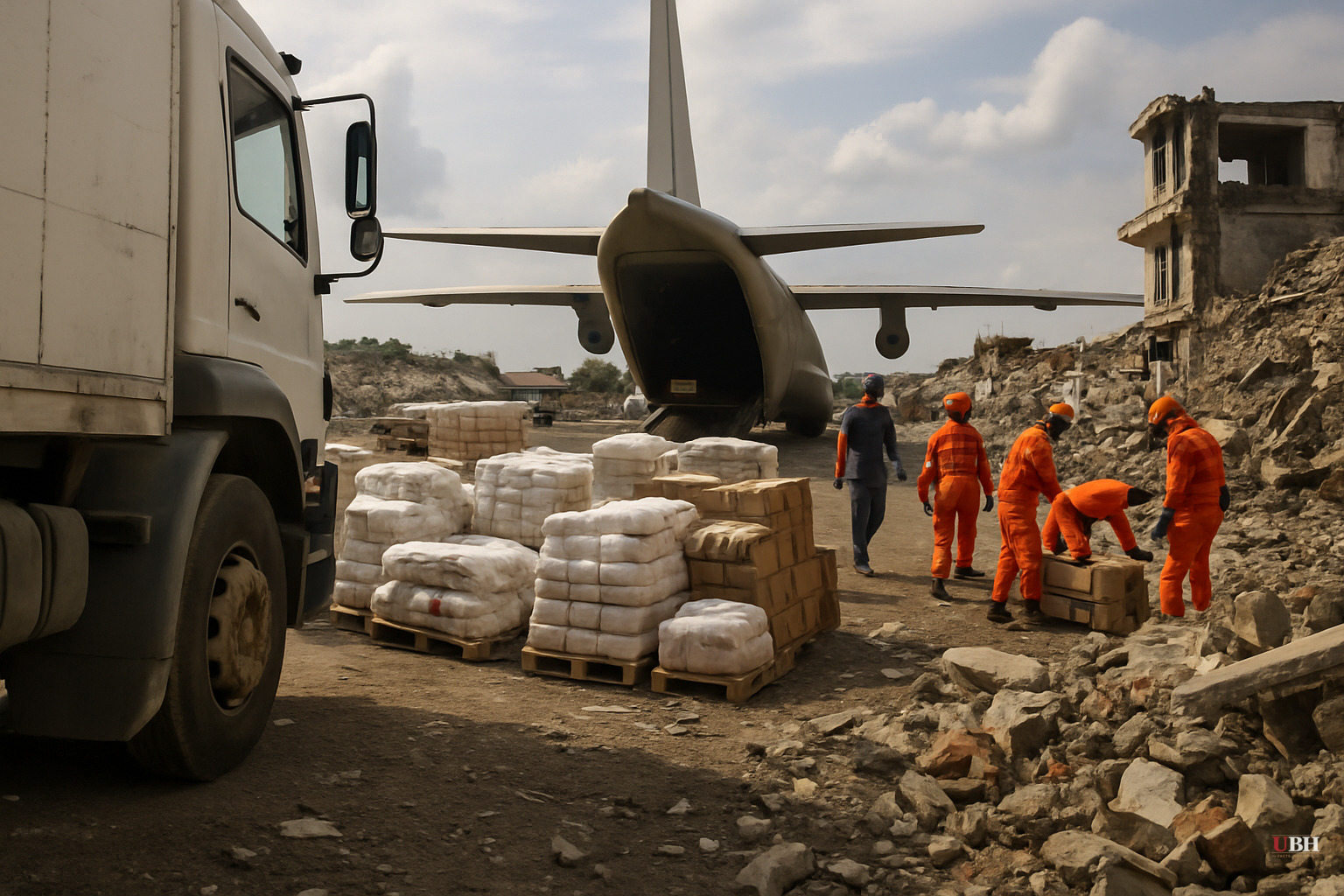
Since the dual earthquakes struck Wednesday night, the confirmed death toll has climbed to at least 920 killed and 3,360 injured, according to figures reported by the Daily Wire and NPR as of June 26–27. Venezuelan authorities estimated around 50,000 people remain unaccounted for. The U.S. Geological Survey has projected the final death toll could exceed 10,000.
Saturday marks the end of the critical 72-hour window that rescue professionals consider the best period for finding survivors alive. Teams are still working, but the arithmetic is darkening.
The worst destruction is concentrated in La Guaira and parts of Caracas, particularly the Chacao district. In La Guaira, BBC News describes scenes around more than 100 flattened buildings as "apocalyptic." Resident Eileen Lada told BBC reporters, "There are still people in there, we need machinery. Help us, please."
The machinery isn't there. According to NPR, in several hard-hit areas heavy rescue equipment still hasn't arrived, leaving residents to dig through concrete with their hands and whatever power tools they can find. Nazareth Jimenez, who lives in La Guaira, watched neighbors cut through rubble themselves while calling on both the government and the international community for help, according to the Associated Press as cited by the Daily Wire.
The Caracas Fire Department confirmed rescuers pulled a dog alive from the rubble on June 26. The department called it "a symbol of hope for everyone at the disaster site" and said emergency teams continue working around the clock. Small victories in a grim count.
Rescue teams from the United States, Chile, Mexico, and Switzerland are now operating in Venezuela, according to Fox News as cited by the Daily Wire. American teams came from California, Florida, and Virginia. President Donald Trump said Wednesday night that the U.S. stands "ready, willing, and able to help" and instructed federal agencies to mobilize.
In Bogotá, Venezuelans living in Colombia have organized donation drives at community centers, collecting food, water, hygiene supplies, and clothing. NPR reported on the scene directly, where volunteers like Isabel Mendoza and Mariana Godoy were loading trucks with supplies.
The problem is getting those supplies across the border. Aid groups told NPR that deliveries require negotiating permits with the Venezuelan government, and that the government has historically been reluctant to accept assistance from private organizations, particularly those with any opposition ties. Gisella Serrano, a Venezuelan humanitarian worker coordinating the effort from Bogotá, told NPR she expects the crisis to last months.
Interim President Delcy Rodríguez toured the Chacao district and was met with residents shouting at her directly. "You're campaigning in the middle of a tragedy! The government isn't doing anything for the people," one resident yelled, according to BBC News. Rodríguez has pledged to save "as many people as possible" and called for national unity, per NPR.
Musician Zaira Castro, speaking to BBC News near two collapsed buildings in Chacao, was blunt: "We're all pretty frustrated because the government is not showing what it should — a serious display of help. It's actually us, the Venezuelans, who are helping each other."
Jorge Rodríguez, president of Venezuela's National Assembly, said publicly, "Each person saved is a miracle. We are not going to hide absolutely anything about the magnitude of this tragedy." This is a statement from a government that has a documented history of downplaying crises. Whether the transparency holds as the death toll rises will be worth watching.
A fair defense of the government's position: the scale of a simultaneous 7.2 and 7.5 magnitude earthquake disaster would overwhelm almost any government's immediate response capacity, particularly one managing a country with years of infrastructure degradation and limited equipment. Coordinating international teams, securing collapsed urban zones, and preventing civilian interference with rescue operations are all legitimate logistical challenges. Venezuelan authorities blocking civilian access to La Guaira, reported by Fox News, could reflect genuine safety concerns rather than an attempt to suppress the story.
That said, the shortage of heavy machinery at collapse sites four days in, combined with the government's own permit requirements slowing privately organized aid from Colombia, points to a systemic failure that pre-dates Wednesday night.
The 72-hour survival window has closed as of Saturday. Rescue teams will shift emphasis from extraction to recovery. NPR's Gisella Serrano said she expects the humanitarian need to stretch for months, meaning the permit bottleneck on private aid from Colombia isn't an acute problem. It's a chronic one. Whether the Venezuelan government modifies its aid approval process, or whether international pressure forces an opening, is the concrete question that will define the next phase of this crisis.
Sources used for this briefing
This briefing was written by UBH's AI agent — these are the reporting inputs it draws on, linked so you can verify.


