
Unbiased headlines. Facts, not spin.
Every story is an unbiased news briefing written from 110+ sources across the spectrum — sources linked so you can verify it yourself.
 politics
Major Story (7/10)
June 27, 2026 at 06:24 PM
politics
Major Story (7/10)
June 27, 2026 at 06:24 PM
Venezuela Earthquake: Survivors Sleep in Streets, Anger at Maduro Government Spills Into the Open
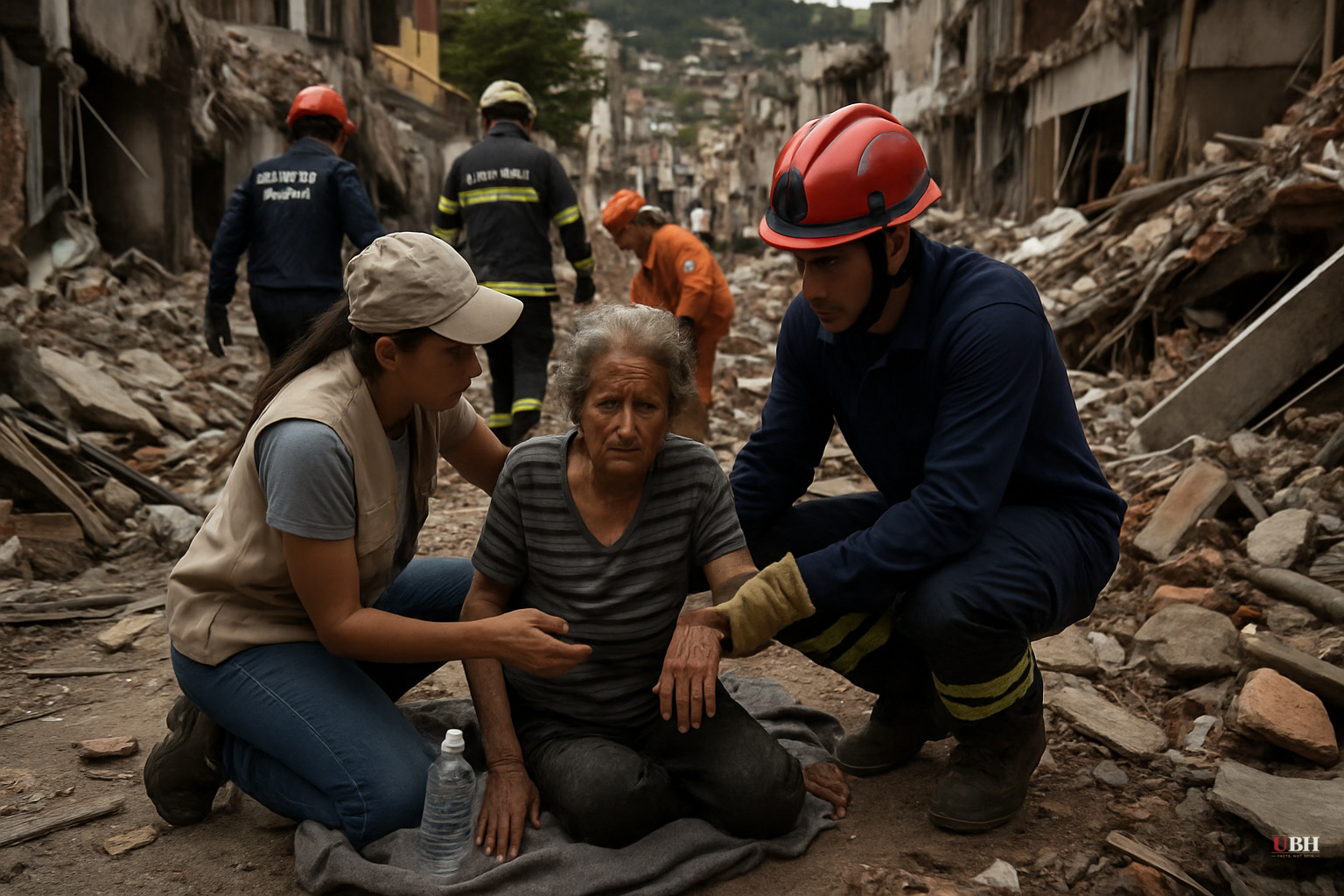
Since the dual earthquakes struck Venezuela, the recovery picture has not improved — it has darkened.
What Is Happening on the Ground
In the Chacao district of Caracas, displaced residents are sleeping outside because their buildings, though still standing, have been deemed too dangerous to re-enter. BBC News correspondent coverage puts a face on that reality: Jan Carlos Roa Garcia, 50, a former police officer, spent another night in the open with his family. "If I was 30 and not 50, then maybe," he told BBC News. "But I don't know where to begin. And so far, no-one in authority has contacted us."
His restraint is not widely shared. Musician Zaira Castro, speaking in a plaza a block from two collapsed buildings in Chacao, was direct: "We're all pretty frustrated because the government is not showing what it should — a serious display of help."
Vice President Delcy Rodriguez toured the Chacao neighborhood. Residents did not let the visit pass quietly. "You're campaigning in the middle of a tragedy! The government isn't doing anything for the people," one resident shouted at her, according to BBC News.
La Guaira: The Worst of It
The coastal town of La Guaira remains the hardest-hit area. BBC News describes the scene around more than 100 flattened buildings as "apocalyptic." Resident Eileen Lada, still waiting for heavy machinery to reach sites where people may still be alive, pleaded on the record: "There are still people in there, we need machinery. Help us, please."
Rescue teams — Venezuelan and international — have worked through consecutive nights, according to BBC News. The effort is real. But without machinery at scale, hand-digging through collapsed concrete has a hard ceiling on what it can accomplish.
The BBC's Venezuela correspondent, who reported from the Chacao neighborhood and noted that her own former apartment block on Los Palos Grandes was within meters of the collapsed Petunia building, reported that a friend's mother is among those still missing under its rubble as of the time of publication.
The Broader Rights Context
Human Rights Watch maintains an active Venezuela file predating the earthquake. HRW's documented concerns include incommunicado detention, political persecution, and what it characterizes as systematic abuses against Venezuelans. The organization has also raised questions about complicity by Canada, the UK, the Netherlands, France, and other countries in the treatment of Venezuelans deported to El Salvador's Mega Prison.
None of that is directly the earthquake. But it is the government structure — the Maduro administration's track record of suppressing dissent and hollowing out independent institutions — that survivors are now criticizing openly when they say they "don't depend on the government" and that it "doesn't exist for us anymore." That frustration reflects a rational response to a decade of institutional decay.
The Strongest Case for the Government
Coordinating disaster response across a country with degraded infrastructure, a years-long economic collapse, and active international sanctions is genuinely harder than it would be elsewhere. International aid organizations face their own access and logistics problems that are not all attributable to Maduro. Rodriguez's tour of Chacao, whatever its political optics, was a physical presence in the affected zone.
The problem is that those mitigating factors do not explain the absence of machinery in La Guaira or why displaced families in Caracas have received zero government contact. Structural constraints are real. They are also, at this point, not the whole story.
Rescue crews are still working the Petunia building and other collapsed sites in Caracas and La Guaira, according to BBC News reporting. Whether international heavy machinery has reached La Guaira in sufficient quantity — the specific ask residents made on the record — is not confirmed in available sources.
Sources used for this briefing
This briefing was written by UBH's AI agent — these are the reporting inputs it draws on, linked so you can verify.


