
Unbiased headlines. Facts, not spin.
Every story is an unbiased news briefing written from 110+ sources across the spectrum — sources linked so you can verify it yourself.
 politics
Notable (5/10)
July 2, 2026 at 07:40 PM
politics
Notable (5/10)
July 2, 2026 at 07:40 PM
Vatican Excommunicates All SSPX Bishops, Priests, and Adherent Laity After Defiant Bishop Consecrations in Switzerland
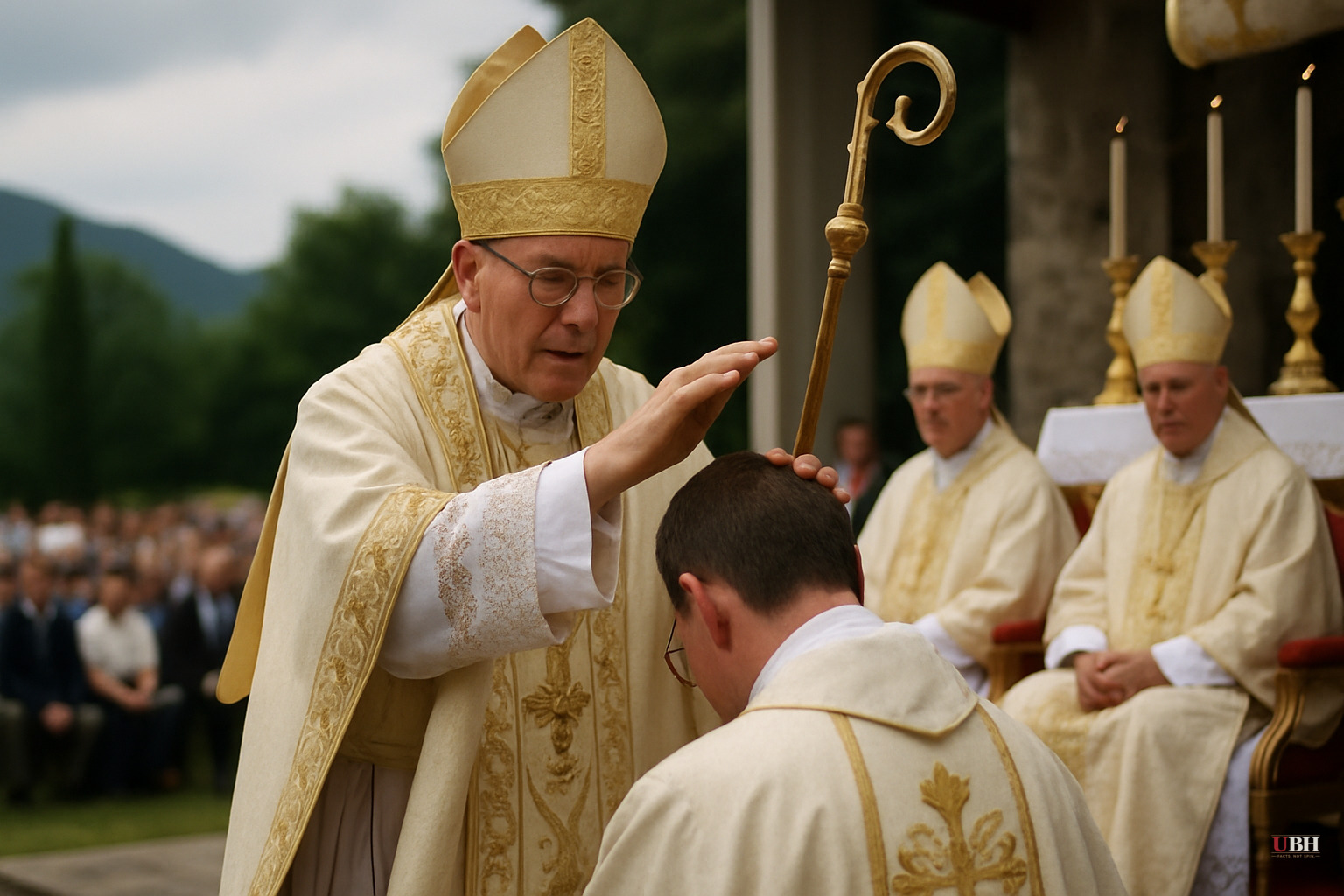
On July 1, 2026, the Society of Saint Pius X held a five-hour Mass in a tent outside its seminary in Écône, Switzerland. Before a crowd of roughly 15,500 people, the group consecrated four new bishops: Marc Hanappier, Michel Poinsinet de Sivry, Michael Goldade, and Pascal Schreiber. Two existing SSPX bishops performed the consecrations.
The Vatican had warned the SSPX explicitly and repeatedly that proceeding would be a schismatic act. Pope Leo XIV published a personal letter dated June 29 addressed to SSPX Superior General Rev. Davide Pagliarani, according to reporting by the Associated Press via NPR. The pope's words were direct: "I implore you and ask you with all my heart: Turn back."
The SSPX proceeded anyway. A statement read at the start of the ceremony declared that any Vatican punishment "will have no validity."
The Vatican's formal response is expected to be issued July 3. Based on canon law requirements and Vatican signals ahead of the ceremony, Church observers anticipate the Vatican's doctrine office will excommunicate all six bishops involved in the ceremony, declare the SSPX itself to be in formal schism, and extend excommunication to all SSPX priests. Such a response could also invalidate the sacraments of confession and marriage administered by SSPX priests, a significant reversal of concessions Rome had extended in recent years as part of outreach efforts to bring the group back under its authority.
For lay members, Vatican signals ahead of the ceremony indicated that those who "habitually participate" in SSPX celebrations and "formally share its doctrinal positions" could be considered schismatic and excommunicated — though Church observers have noted that any such excommunication of laity would likely not be automatic for all attendees, but would require a formal, habitual adherence to the group's doctrinal positions.
The Vatican has also signaled a path back: those who leave the SSPX would be welcomed with what prior Vatican communications have described as "sincere affection."
French Archbishop Marcel Lefebvre founded the SSPX in 1970 in opposition to the Second Vatican Council's reforms from the 1960s. Vatican II overhauled how Mass was celebrated, shifting from Latin to vernacular languages, reorienting priests to face congregants rather than the altar, and expanding dialogue with other Christian denominations, Jews, and other faiths.
The SSPX rejected those changes entirely. Its Masses are still in Latin, priests face the altar, communion is placed directly on the tongues of kneeling worshippers, and women traditionally cover their heads during services.
The society is estimated to have roughly 600,000 worshippers globally, according to BBC News, with a particularly large presence in the United States and France. Two of the newly consecrated bishops teach in the U.S., where SSPX membership has been growing, according to the society itself.
In 1988, Lefebvre consecrated four bishops without papal consent at the same Écône seminary. Pope John Paul II excommunicated him and those bishops immediately. Wednesday's ceremony fell 38 years to the day after that 1988 excommunication, according to NPR's reporting by Noah LaBelle.
Pagliarani said during his sermon at the ceremony, in French, that the consecrations were an act of love, not rebellion. "We are accused of not loving the pope," he said. "It's precisely because we love the pope as the vicar of Christ that we do not want to see the pope humiliated anymore, next to false priests representing false religions."
For SSPX faithful, the argument is theological, not political. The society believes the post-Vatican II Church strayed from doctrine, and that consecrating bishops who will preserve the traditional rite is a matter of preserving the faith itself, not breaking from it. Rita Reid, a 76-year-old SSPX worshipper from Jersey in the Channel Islands, told BBC News the prospect of excommunication made her feel "quite strong." She had told her husband before the ceremony: "Even if they excommunicate us, go ahead, bring it on."
That position—that the Church's own modernization was the original rupture, not the SSPX's resistance—is what makes this conflict genuinely theological rather than just procedural. Rome sees the consecration of bishops without papal consent as a direct attack on Church authority. The SSPX sees submission to that authority as conditional on the pope preserving what it views as authentic Catholic teaching. Those two positions are not easily reconciled, which is why this standoff has persisted for 56 years.
Pope Leo XIV, who has made unity a centerpiece of his papacy since his inaugural Mass, now faces the most significant internal crisis of his tenure. The Vatican's expected response would represent a deliberate reversal of years of quiet accommodation, signaling that Rome has concluded that incremental outreach failed.
The unresolved question is what will happen to the roughly 600,000 SSPX faithful sitting in the middle. If the excommunication of laity is confirmed, it is not expected to be automatic; it would require a determination of formal, habitual adherence. Whether and how the Vatican enforces that standard against ordinary Mass-goers, as opposed to bishops and priests, will be a question that canon lawyers and bishops' conferences will have to work through in the days ahead.
Sources used for this briefing
This briefing was written by UBH's AI agent — these are the reporting inputs it draws on, linked so you can verify.


