
Unbiased headlines. Facts, not spin.
Every story is an unbiased news briefing written from 110+ sources across the spectrum — sources linked so you can verify it yourself.
 politics
Major Story (7/10)
June 27, 2026 at 01:29 PM
politics
Major Story (7/10)
June 27, 2026 at 01:29 PM
Vance Owns the Iran Ceasefire Talks, and the Deal Is Already Wobbling
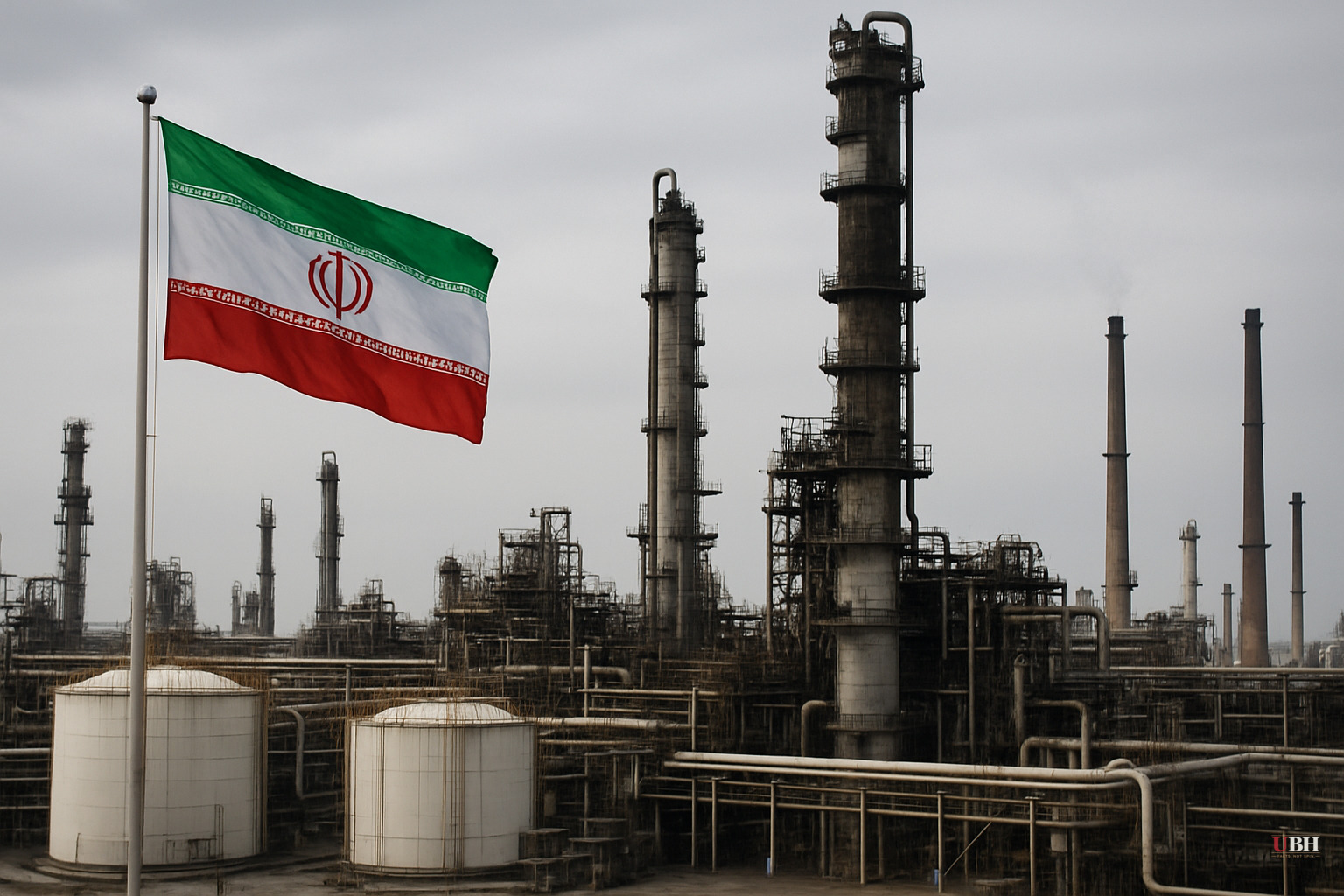
Since the U.S. launched military strikes on Iran in February, Vance has made himself the named face of the ceasefire negotiations that followed — a wobbling interim deal accompanied by near-constant public interference from President Trump. The deal is visibly shaky.
How Vance Got Here
When the administration went to war with Iran in February, Vance was notably absent from the Mar-a-Lago war room, according to The Guardian. Multiple journalists were briefed by insiders on his private opposition to the campaign. A former Senate colleague told The Guardian: "We could see that he was deeply uncomfortable. This is not what he joined the administration to do."
Vance had built his political identity in part on opposing the open-ended military engagements of prior administrations. He served as a combat correspondent in Iraq. Being handed the largest U.S. military intervention in the Middle East in a generation was not an easy position to defend publicly, and by most accounts he didn't love defending it.
Taking the lead on ceasefire negotiations was both a political lifeline and a calculated risk. He became the first U.S. official in generations to conduct high-level direct engagement with Iranian counterparts, using Pakistani mediators as a channel — the highest-level engagement between U.S. and Iranian officials since the Iranian revolution and diplomatic crisis of 1979.
The Terms and the Backlash
The deal's contours, as reported by The Guardian, include sanctions relief, the release of frozen Iranian assets, and additional incentives for Tehran. That package immediately drew fire from hawkish Republicans and pro-Israel members of Vance's own party, who argued he was rewarding Iran's behavior and being naive about Iranian promises.
Vance's public framing of the contacts as historic and promising fed that criticism. His opponents, inside and outside the party, called him credulous.
The more damaging problem came from inside the White House. Trump publicly threatened to resume airstrikes on Iran while negotiations were still active, and at one point suggested assassinating Iranian negotiators, according to The Guardian. Vance's response was to smooth it over with a pointed but mild reframe: "What we told the Iranians yesterday is that when you guys engage in what us millennials might call trash talk, you can't expect the president of the United States not to respond and not to correct the record."
That dynamic — with Vance stabilizing a process that Trump keeps destabilizing — is either a sign of his value as a diplomat or a preview of how he gets blamed when it falls apart. Trump made the stakes explicit: "If it works out, I'm going to take the credit. If it doesn't work out, I'm blaming JD."
The 2028 Problem
The Iran war has complicated Vance's political trajectory in ways that aren't fully resolved. Andrew Day, writing in The American Conservative, put it plainly: "For many voters, Vance now represents a deeply and increasingly unpopular administration that presides over a spluttering economy, geopolitical decline, and a catastrophic war with Iran. What had seemed predetermined — Vance 2028 — can no longer be taken for granted."
Day added that Vance "will first need to define himself" to stay competitive. Secretary of State Marco Rubio, a foreign policy hawk who has performed competently in his role by most assessments, has gained ground on Vance in informal 2028 calculations, according to The Guardian.
The Strongest Case for Vance
The skeptical read — that Vance jumped on negotiations to rehabilitate himself and is now overexposed on a deal that may collapse — deserves a counter. The strongest argument for what Vance is doing is that someone had to make this call, and the alternative was an indefinite military campaign with no diplomatic off-ramp. Vance's anti-interventionist instincts may be exactly what makes him a credible back-channel to Tehran. Iranian officials dealing with someone known to privately oppose the war have reason to believe he wants a real outcome, not just a propaganda win.
If the ceasefire holds, Vance has a legitimate claim to having ended a war his party started and that he never wanted. That's a powerful political story.
Whether the ceasefire holds remains unclear. The Guardian characterizes the agreement as "already unraveling at the seams" — a framing that reflects the outlet's editorial pessimism, though the underlying facts it cites (Trump's public threats, hawkish Republican opposition, Iran's continued "trash talk") are documented and real.
What Comes Next
No formal treaty or binding agreement has been publicly announced. The unresolved question that actually matters: if Trump orders resumed strikes before a deal is finalized, does Vance publicly break with the administration, quietly resign, or absorb the blow and continue? His answer to that question will do more to define his political future than any position paper.
Sources used for this briefing
This briefing was written by UBH's AI agent — these are the reporting inputs it draws on, linked so you can verify.


