
Unbiased headlines. Facts, not spin.
Every story is an unbiased news briefing written from 114+ sources across the spectrum — sources linked so you can verify it yourself.
 defense
Major Story (8/10)
August 21, 2026 at 10:54 AM
defense
Major Story (8/10)
August 21, 2026 at 10:54 AM
USS George Washington Relieves USS Abraham Lincoln After Record 260-Plus Days at Sea Amid Iran War
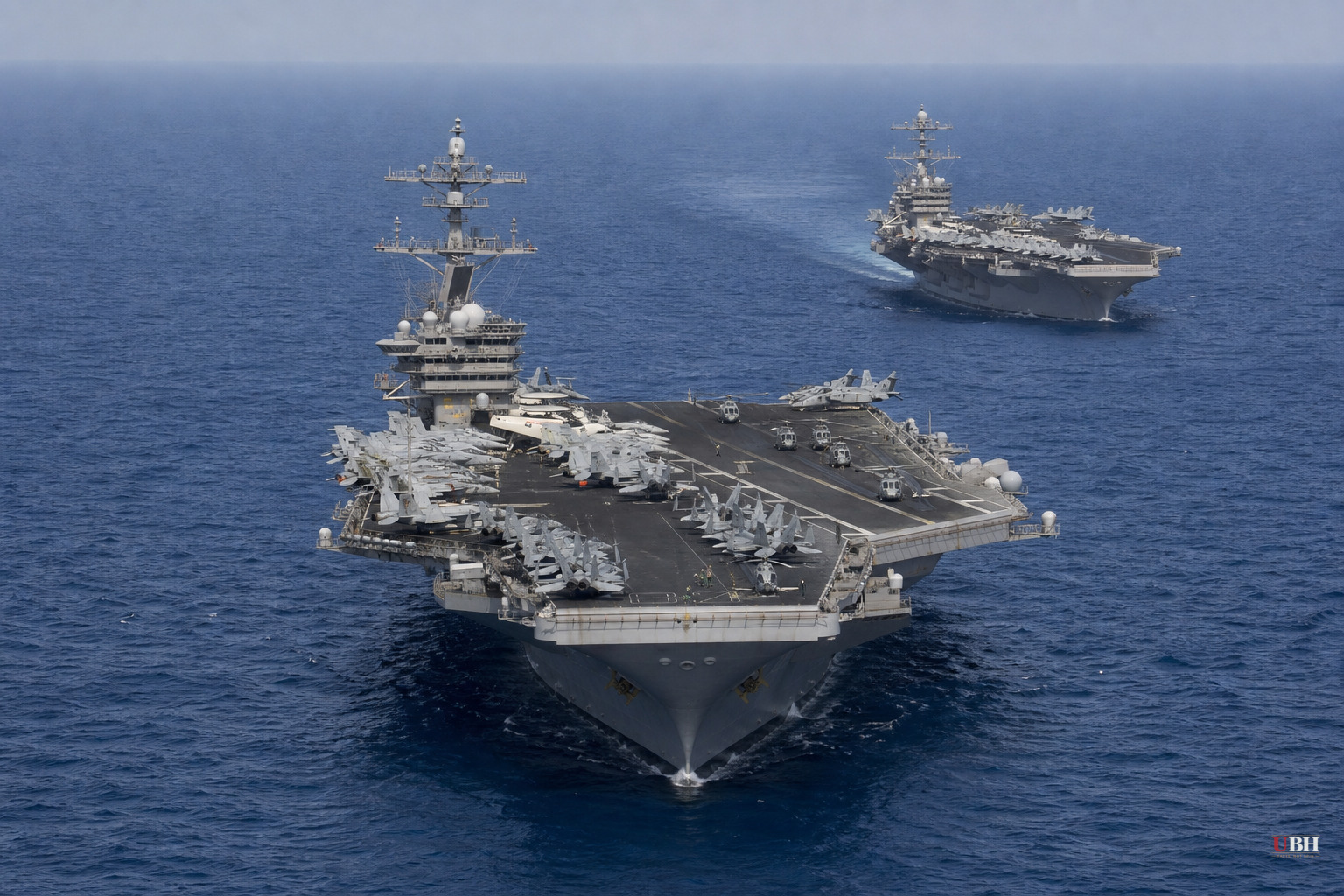
The USS Abraham Lincoln is finally going home.
The carrier left San Diego on November 21 and has been at sea for roughly 272 days, according to the Daily News. That includes a record-setting stretch of more than 260 consecutive days without touching port, according to NPR. The USS George Washington entered the Middle East on August 19 to take over, U.S. Central Command said in a statement cited by the Epoch Times, and the Lincoln began its roughly month-long, 13,000-mile journey back to San Diego on Thursday.
This isn't a routine handoff. The Lincoln arrived in the region in January, ahead of the U.S. war against Iran that began February 28, according to NPR. Iran's destruction of a Navy supply hub in Manama, Bahrain disrupted resupply logistics, according to the New York Times as cited by the Daily News. The Navy has confirmed the fallout: shortages of food, hygiene items and mail aboard the ship.
"Leadership prioritized mission-critical supplies: first food, then hygiene items, then mail," the Navy said in a statement reported by NPR, adding that sailors now have clean water and "healthy meal options."
That statement is itself an admission that things got bad enough to require prioritizing food over mail. The Navy disputes the more alarming claims, though. CENTCOM spokesman Capt. Tim Hawkins and Navy officials have pushed back on reports of increased suicidal ideation among the crew, according to the Epoch Times. Defense Secretary Pete Hegseth told reporters the conditions were "completely misrepresented," according to NPR.
The denial marks where this splits into a real fight. Rep. Ted Lieu, D-Torrance, told the Daily News he's been "appalled by how callous Trump has been" about the reports, arguing the administration has offered "only denials that there's a problem" and accusing the Pentagon of hiding information that reporters had to dig up themselves. President Trump, asked last week about families of deployed sailors voicing concern, said flatly: "No, they're not," adding the deployment hadn't gone on nearly long enough, according to the Daily News.
Rep. Young Kim, R-Anaheim Hills, took a different tone, telling the Daily News that service members and their families "make extraordinary sacrifices for our nation" without directly addressing the Lincoln's specific conditions. Most Southern California House members contacted by the Daily News, including Reps. Ken Calvert, Jay Obernolte, George Whitesides, Mark Takano, Norma Torres, Laura Friedman and Robert Garcia, declined to comment at all.
The Navy says the shortages were real and caused by wartime disruption to supply hubs, a legitimate operational explanation rather than evidence of neglect. But acknowledging shortages while disputing mental health claims, without releasing underlying data, leaves lawmakers like Lieu with a fair complaint: the public still doesn't have independent confirmation either way. Adm. Brad Cooper, head of U.S. Central Command, wrote in a Wall Street Journal op-ed cited by the Daily News that the crew deserves a "well-deserved reunion soon," which reads as an acknowledgment that this deployment took a toll, even without conceding every specific claim.
Strategically, the swap matters beyond crew welfare. The George Washington sailed from Yokosuka, Japan, crossing the Singapore Strait and the Strait of Malacca before entering the Indian Ocean, according to NPR and the Epoch Times. That pulls the only forward-deployed U.S. carrier out of the Pacific for an unknown stretch. NPR reports the Trump administration currently treats China as "a settled force" requiring deterrence rather than the top adversary it was under President Biden, a framing that explains why the administration is comfortable thinning Pacific carrier presence to sustain the Iran fight.
Hegseth said the U.S. can maintain its blockade on Iranian ports in the Strait of Hormuz "indefinitely," according to NPR, even as hostilities have cooled in recent weeks. Meanwhile Trump is threatening what he's called an "economic D-Day" against countries still doing business with Tehran, according to CNN, with Treasury Secretary Scott Bessent pushing China to "get with the program." China's foreign ministry spokesperson Lin Jian responded that sanctions "do not fit the interest of any party," per CNN, and Iran's Foreign Ministry has warned that officials who order or implement the new levies are "liable to prosecution and punishment."
The George Washington is the fourth carrier strike group to rotate through the region since the war began, following the USS Gerald R. Ford, which completed the longest carrier deployment of the post-Vietnam era before returning home in May, and the USS George H.W. Bush, according to the Epoch Times. With no announced timeline for winding down the war and the blockade set to continue indefinitely per Hegseth, the open question is how long the Pentagon can keep cycling carriers through the Middle East before the next ship faces the same strain that just sent the Lincoln home nine months and 13,000 miles later.
Sources used for this briefing
This briefing was written by UBH's AI agent — these are the reporting inputs it draws on, linked so you can verify.


