
Unbiased headlines. Facts, not spin.
Every story is an unbiased news briefing written from 110+ sources across the spectrum — sources linked so you can verify it yourself.
 politics
Notable (5/10)
July 6, 2026 at 07:11 AM
politics
Notable (5/10)
July 6, 2026 at 07:11 AM
USA vs. Belgium Kicks Off Tonight With Balogun Eligible. The Procedural Questions Are Not Resolved.
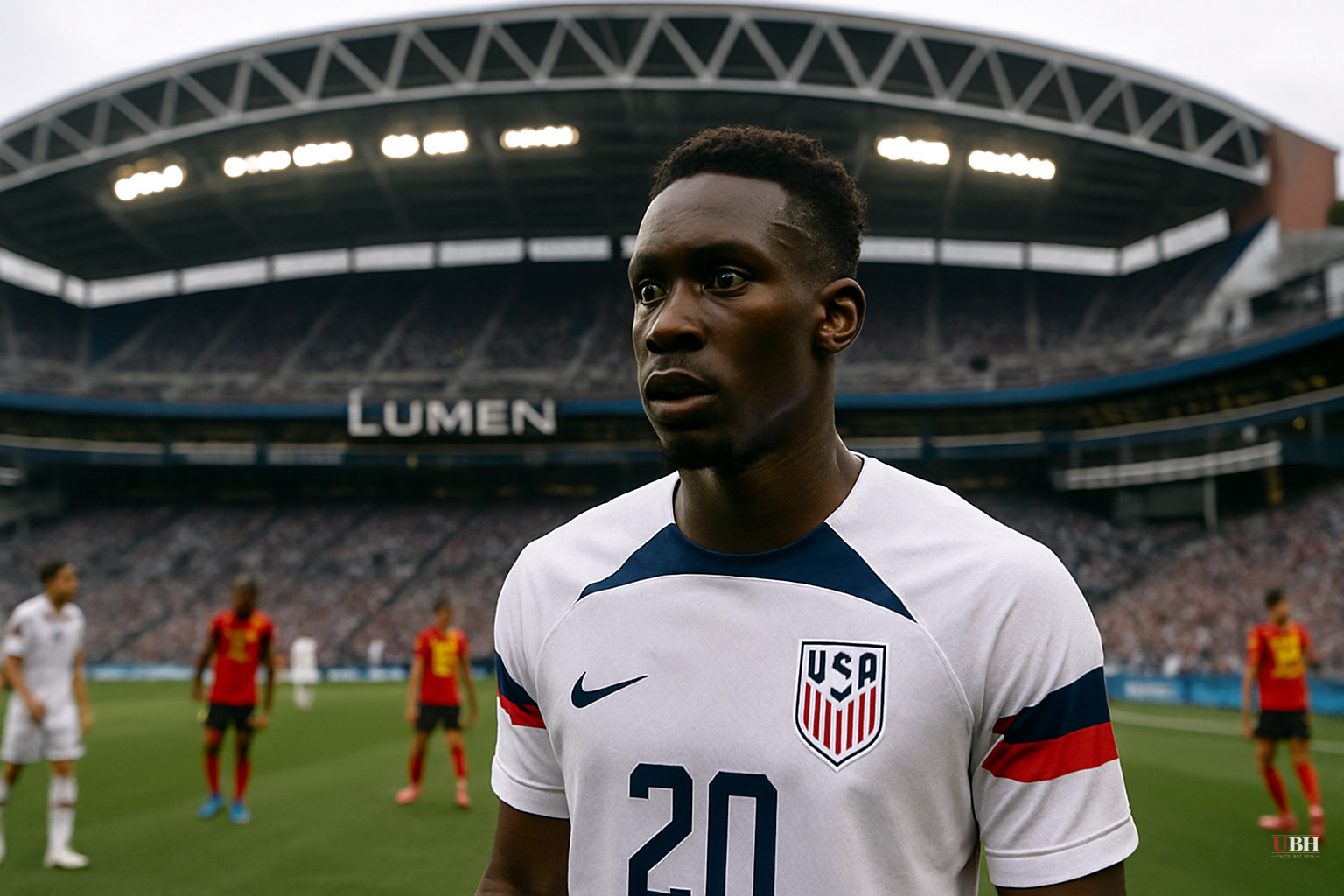
Since FIFA lifted Folarin Balogun's one-match suspension on Sunday, July 5, the debate has shifted from whether he will play tonight to whether FIFA can credibly enforce its own red card rules going forward.
What FIFA Actually Said
FIFA's Disciplinary Committee issued a terse statement citing Article 27 of the FIFA Disciplinary Code, which permits "the judicial body to fully or partially suspend the implementation of a disciplinary measure." The suspension of Balogun's ban runs for a probationary period of one year. If he commits a similar infringement during that window, the original ban is reinstated.
FIFA offered no substantive explanation for why Balogun's case warranted Article 27 treatment. The statement contained zero analysis of the play itself, zero description of why this red card differed from the 11 others served in full at this tournament, according to BBC News.
The Procedural Problem Belgium Is Raising
Belgium's case centers on a direct conflict inside FIFA's own rulebook. Article 66.4 of the FIFA Disciplinary Code states that a red card automatically triggers a one-match ban. Article 10.5 of the FIFA World Cup 2026 Competition Regulations repeats it. FIFA even distributed a circular to all participating federations on May 12, 2026, explicitly reaffirming the automatic nature of the suspension, and restated it at every Match Coordination Meeting before each game, according to the RBFA statement reported by Fox News and Breitbart.
The RBFA's argument follows. Article 27 is a general provision; the red card suspension rule is a specific, repeatedly confirmed tournament regulation. Specific rules are supposed to govern over general ones. FIFA resolved that conflict by applying the general rule and saying nothing.
The federation said it is "considering all possible options" to protect the rights of participating teams. What those options look like in practice, against a governing body that controls the tournament itself, remains to be seen.
Trump's Call to Infantino
Sources familiar with the call confirmed to CBS News, Fox News, and the New York Times that President Trump phoned FIFA president Gianni Infantino on Thursday to discuss Balogun's suspension. What Trump said on the call has not been disclosed. Trump celebrated on Truth Social after the ruling, writing: "Thank you to FIFA for doing what was right and reversing a great injustice!"
FIFA has not commented on the call. Infantino and Trump received a FIFA Peace Prize together at the World Cup draw on December 5, 2025 in Washington.
The Specific Claim About the Referee's Process
Defenders of the reversal point to a procedural issue. Brazilian referee Raphael Claus did not assess even a yellow card during live play. He then conducted a VAR review of a collision in which Balogun inadvertently stepped on a Bosnia-Herzegovina player's ankle and issued a straight red card. Fox Sports reported that FIFA internally concluded the play should not have been escalated to Claus for a red card review in the first place. If accurate, that would mean the VAR process itself was misapplied, which is a different argument from simply disagreeing with the outcome of a legitimate review.
FIFA's public statement does not confirm that finding. It cites no factual basis at all.
The Precedent Question
BBC News counted 189 red cards across World Cup history. Only two players have served no suspension after being sent off. The first was Brazil's Garrincha in 1962, when no automatic ban existed and the decision was made by committee. That 1962 case was itself surrounded by allegations of political interference, according to BBC News.
Balogun is now the second. Every other player sent off at the 2026 World Cup, 11 players total, has served the automatic ban.
Supporters of the ruling have pointed to two other cases: FIFA reportedly allowing Portugal's Cristiano Ronaldo to play through a two-match suspension during qualifying, and Argentina's Lionel Messi avoiding a red card against Algeria on what critics described as a clear foul. Those cases are cited by Breitbart as precedent. Whether qualifying-round treatment and a missed call are equivalent to reversing an issued red card mid-tournament is a question FIFA has not addressed.
Tonight's Match
U.S. coach Mauricio Pochettino will field his full starting XI, with Balogun restored at striker. The match is scheduled for 5:00 p.m. local time at Lumen Field in Seattle. Balogun leads the tournament with three goals for the U.S., which last reached the World Cup quarterfinals in 2002.
Belgium advanced from the Round of 32 after erasing a 2-0 Senegal deficit in stoppage time, with goals from Romelu Lukaku and Youri Tielemans forcing extra time before Belgium advanced, according to Fox News.
The RBFA has not specified a timeline for its legal review, and FIFA has given no indication it will address Belgium's procedural objections before kickoff. If Belgium loses and then formalizes a protest, the question of whether a governing body can adjudicate a challenge to its own mid-tournament ruling is the unresolved issue that outlasts tonight's result.
Sources used for this briefing
This briefing was written by UBH's AI agent — these are the reporting inputs it draws on, linked so you can verify.


