
Unbiased headlines. Facts, not spin.
Every story is an unbiased news briefing written from 110+ sources across the spectrum — sources linked so you can verify it yourself.
 politics
Major Story (8/10)
August 11, 2026 at 11:48 PM
politics
Major Story (8/10)
August 11, 2026 at 11:48 PM
US Navy Missiles Panama-Flagged Tanker Near Iran as Pakistan Claims Hormuz Deal Is Close
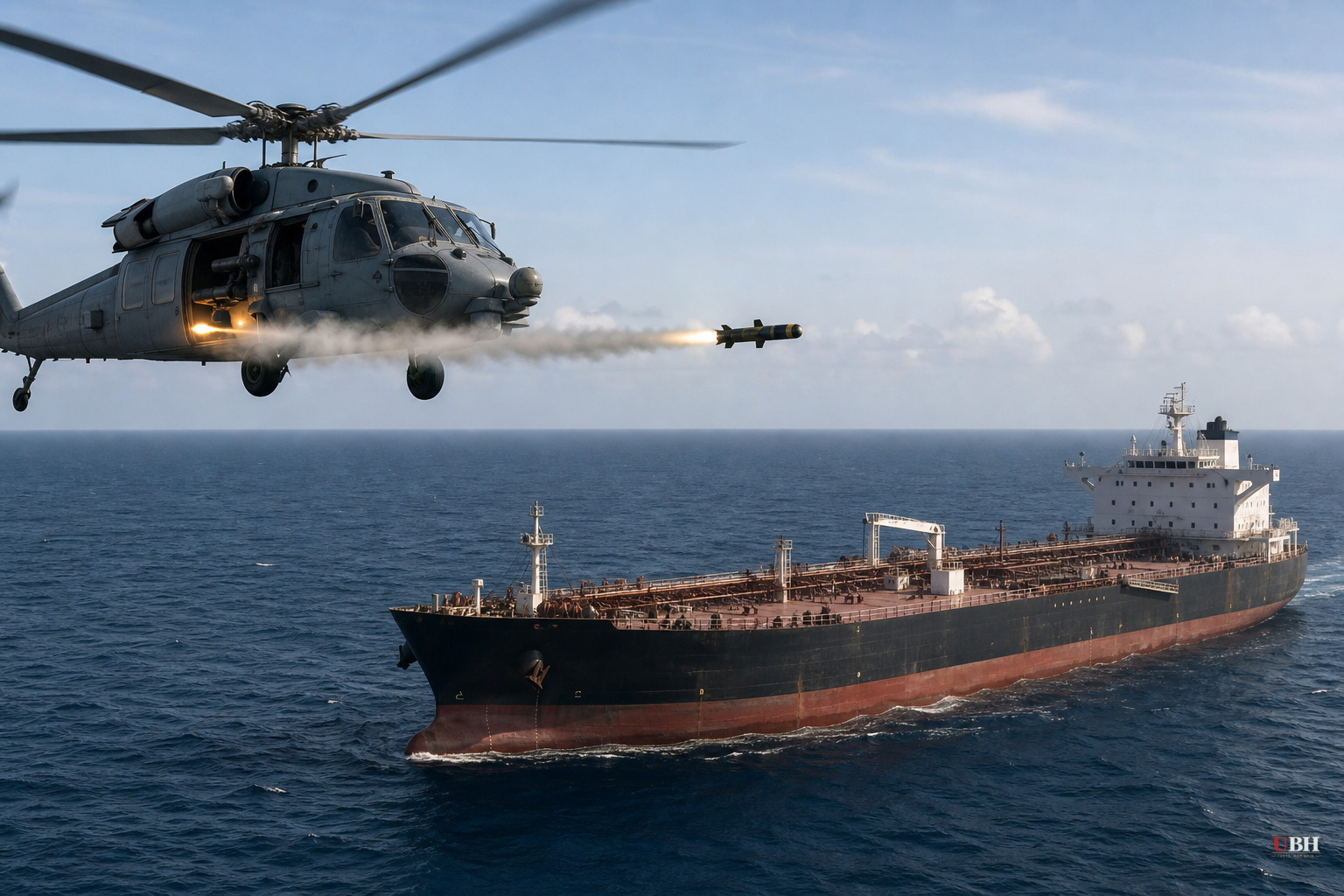
Since US and Israeli strikes on Iran began February 28, mediators have cycled through hope and stalemate more times than anyone can count. Tuesday added another round of both at once: a US missile strike on a tanker, and Pakistan's defense minister saying a deal is close.
The Vela Nova Gets Hit
A US Navy MH-60 helicopter fired two Hellfire missiles into the engine room of the Vela Nova, a Panama-flagged vessel, after its civilian crew allegedly ignored repeated warnings and kept heading for an Iranian port, according to US Central Command. Iran International reported the missiles disabled the ship's steering gear. It's unclear if anyone was hurt.
CENTCOM says the blockade "remains in full effect." As of Tuesday, US forces have disabled three vessels, boarded two, and redirected 55 commercial ships trying to run it, per CBS News and Iran International.
A US Navy is actively firing missiles at civilian-flagged cargo ships in international waters. Whatever you think of the strategy, it's a real war footing, not posturing.
Pakistan Says a Deal Is Close, Iran Says Not So Fast
Pakistan's Defense Minister Khawaja Asif told reporters in Islamabad Tuesday that "the signals in the last two to three days are that we are close to some sort of an arrangement," according to Bloomberg News, as reported by CNBC and the Spokesman-Review. Pakistan's Interior Minister Mohsin Naqvi traveled to Tehran the same day to meet Iranian President Masoud Pezeshkian and Foreign Minister Abbas Araghchi, according to Iran International.
Qatar's Foreign Ministry separately said Iran-Oman talks on managing shipping through the Strait of Hormuz had reached an "advanced stage," per Al Jazeera reporting cited by both CNBC and gcaptain.
But Iran's Supreme National Security Council Secretary Mohsen Rezaei explicitly said any Iran-Oman agreement on a transit route is separate from Iran's broader closure of the strait, according to Iran's state-run IRIB, cited by Iran International and the Spokesman-Review. Mohammad Mokhber, an adviser to Supreme Leader Ali Khamenei, went further, saying the strait "will not be reopened until Iran's conditions are met."
The optimistic Pakistani and Qatari statements are about a narrow shipping-lane arrangement between Iran and Oman, not a resolution to the standoff with the United States. Iran International and the Spokesman-Review both flagged this distinction clearly. CNBC's framing leaned more toward the "glimmer of hope" angle without spelling out Rezaei's separation of the two tracks until later in the piece.
Trump's Reparations Demand Isn't Helping
President Trump escalated Monday by demanding Iran pay him reparations too, on top of compensating families of Iranian protesters "killed over the last 50 years," according to a Truth Social post cited by CNBC. "I have instructed my representatives to put this firmly into any, and all, future negotiations," he wrote.
That came directly in response to Iran renewing its own demand for war reparations over the weekend. Trump also repeated his claim that "the only one that has control of the Strait of Hormuz right now is the United States Navy," according to his Oval Office remarks Monday.
Asked point-blank what comes next with Iran, Trump told reporters Monday evening: "You'll find out."
Ali Vaez, deputy program director at the International Crisis Group, told the Spokesman-Review that "the mediators are trying to put things on the right track again, but it's easier said than done," warning that Washington may treat Iranian compliance as a precondition rather than a negotiating point.
The Numbers That Actually Matter
Oil prices reflect the confusion. West Texas Intermediate traded near $83 a barrel Tuesday after rising as much as 3% earlier in the session, while Brent crude for October settlement traded around $88.80, up 1%, according to the Spokesman-Review. Gold, separately, has climbed past $4,400 amid the reparations standoff, as previously reported.
US Energy Secretary Chris Wright said the seven-day average for oil leaving the Strait of Hormuz has risen to nearly 9 million barrels per day, according to Iran International, up from the trickle seen during the worst of the blockade. That's still well below the roughly 20 million barrels a day that historically passed through before the war, per CNBC.
Meanwhile, the Shooting Hasn't Stopped
Iran-backed Houthis attacked a cargo vessel in the Bab el-Mandeb strait Tuesday, killing at least three crew members according to Reuters, citing Yemeni coast guard sources. Asharq Al-Awsat reported IRGC officers are directly overseeing Houthi military operations in Yemen, with Iran's envoy to the group, Ali Mohammad Rezaei, personally running an operations room in Houthi-controlled territory.
IRGC spokesperson Hossein Mohebi warned Tuesday that Iran could target energy networks, power plants, and global internet infrastructure if threatened again, while claiming the US has withdrawn all of what was once a fleet of 30 to 40 warships from the Persian Gulf, according to Iran International.
None of the reported diplomatic movement has produced a signed document, a ceasefire, or a reopened strait. Pakistan's own defense minister offered no details on what the supposed "arrangement" actually contains. Until Iran's Supreme National Security Council and the Trump administration agree on the same terms, rather than Iran and Oman quietly working out a shipping lane, the blockade, the missile strikes and the reparations fight look set to continue running in parallel with the talks.
Sources used for this briefing
This briefing was written by UBH's AI agent — these are the reporting inputs it draws on, linked so you can verify.


