
Unbiased headlines. Facts, not spin.
Every story is an unbiased news briefing written from 110+ sources across the spectrum — sources linked so you can verify it yourself.
 politics
Major Story (7/10)
June 27, 2026 at 03:47 PM
politics
Major Story (7/10)
June 27, 2026 at 03:47 PM
U.S. Investigating Two More Mexican Governors for Cartel Ties as Washington Escalates Pressure on Morena Officials
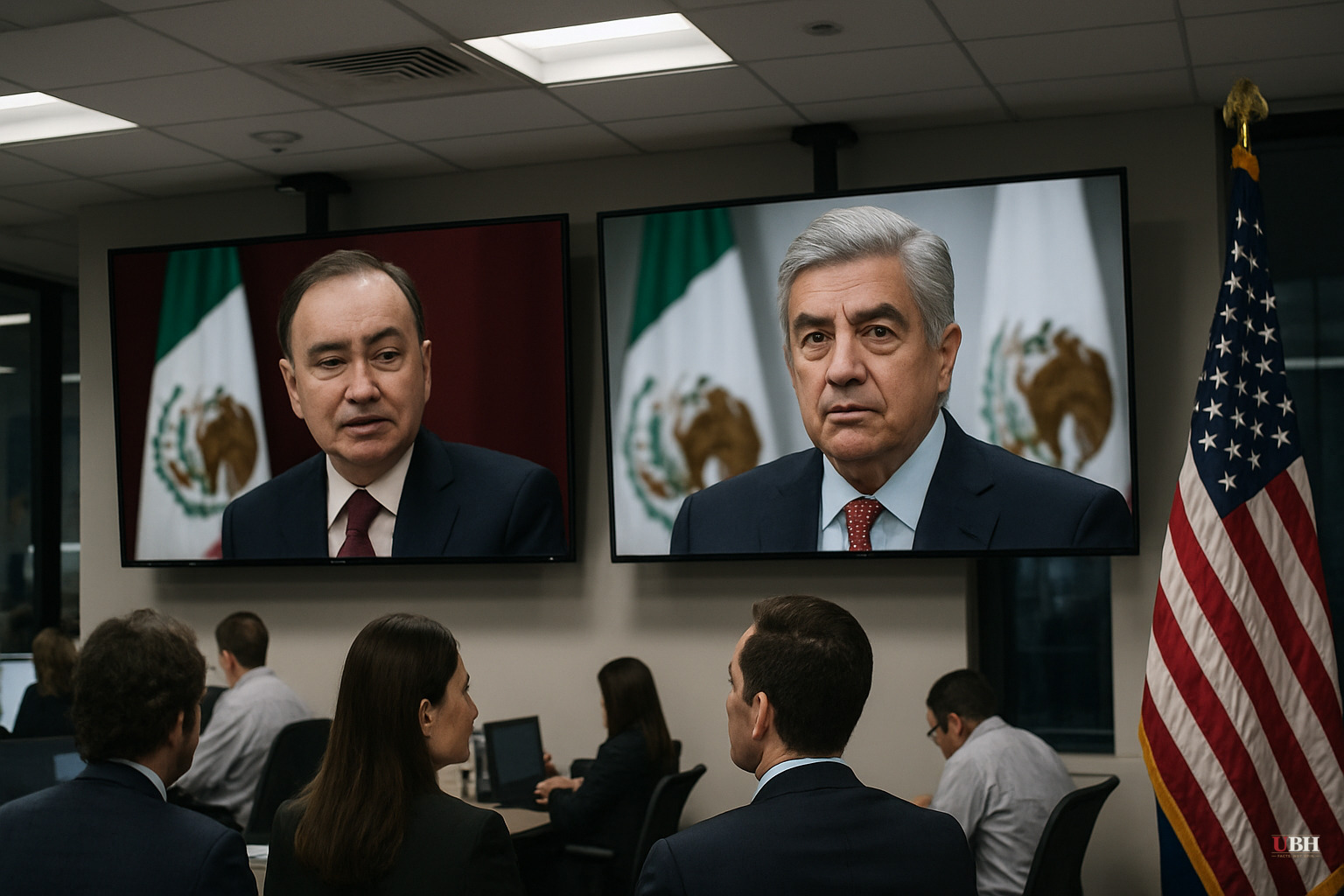
Three Governors, One Pattern
The U.S. Justice Department's focus on Mexican elected officials has expanded to include Alfonso Durazo, 71, governor of Sonora, and Américo Villarreal Anaya, governor of Tamaulipas, according to multiple sources cited by the Los Angeles Times and KTEP. Both have had their U.S. visas cancelled amid criminal probes into alleged organized crime connections.
Sonora borders Arizona. Tamaulipas borders Texas. Both states are major drug trafficking corridors.
This comes on top of the April Justice Department indictment of Sinaloa Governor Rubén Rocha Moya, who was charged alongside nine other current and former Mexican officials with helping the Sinaloa cartel move fentanyl, heroin, cocaine, and methamphetamine into the United States in exchange for millions of dollars in bribes and electoral assistance, according to the LA Times.
All three governors are members of Mexico's ruling Morena party.
Durazo's Profile Makes This One Different
Durazo isn't a minor regional figure. He previously served as Mexico's security minister under former President Andrés Manuel López Obrador, where he helped implement the controversial "hugs, not bullets" policy, a strategy that emphasized addressing the root causes of crime over military confrontation with cartels.
Critics said that approach let the cartels consolidate power. Sonora, under Durazo's watch as governor, has remained one of the most active drug transit states in the country.
According to sources cited by the LA Times and KTEP who spoke anonymously to discuss internal matters, Durazo's visa was cancelled last year. He reportedly continues traveling to the United States under a parole program typically used for individuals cooperating with law enforcement to receive treatment for a medical condition. His office did not respond to requests for comment. Durazo himself, speaking to journalists, denied that his visa had been revoked, said he was not aware of any investigation into his actions, and denied any wrongdoing.
The investigation into Villarreal, 68, is connected to the smuggling of pirated fuel, a lucrative illegal trade known in Mexico as huachicol, according to people familiar with the case. Sources said Villarreal also has Significant Public Benefit parole and is often escorted by U.S. officials when he crosses into the United States. In a statement, Villarreal denied any wrongdoing, calling the claims false, biased, and lacking evidence.
The Strategic Shift in Washington
For years, U.S. law enforcement focused almost exclusively on cartel bosses. That calculus has changed. As the LA Times noted, many of Mexico's most notorious traffickers have been killed, arrested, or have surrendered. Washington has now pivoted toward the political infrastructure that enabled them: elected officials and law enforcement agents on cartel payrolls.
U.S. Ambassador to Mexico Ronald Johnson telegraphed the campaign publicly at a groundbreaking ceremony in Los Mochis, Sinaloa, the heart of cartel country, for a $3.3 billion methanol facility called Pacifico Mexinol, described by KTEP as one of the largest single private U.S. investments in Mexico in recent history.
Standing before company executives and state officials, Johnson started with economics and then pivoted sharply. "Corruption doesn't just slow progress, it distorts it," he said. "It raises costs, weakens competition, and erodes the trust that markets depend on. It's not a victimless problem."
He closed with a direct warning: "We may soon see significant action on this front. So, stay tuned."
Sources familiar with the bilateral relationship told KTEP that Johnson's remarks marked the launching of a wide-ranging anti-corruption campaign targeting Mexican officials with alleged cartel ties.
Mexico's Counterargument, Stated Fairly
Sheinbaum's skepticism deserves a straight hearing. Her core argument is that the timing of these indictments and visa revocations is not coincidental: the U.S. faces midterm elections in November and Mexico holds its own federal elections in 2027. She is asking whether Washington is using law enforcement as a lever to discredit Mexico's left-wing governing coalition and shape Mexican political outcomes in a direction favorable to U.S. interests.
"Is it truly a legitimate interest to combat organized crime?" she said at a recent rally, according to both the LA Times and KTEP. "Or are we perhaps witnessing how sectors of the American far right are using our country to position themselves for their 2026 elections? Or do they intend to influence the 2027 election in our country?"
Former President López Obrador, in a separate statement cited by the LA Times, accused the Trump administration of using a narco-terrorism "pretext" to weaken Mexico's political left.
These aren't fringe concerns. U.S. foreign policy has a documented history of conflating security objectives with political objectives in Latin America.
What the Evidence Shows
The specific allegations here aren't vague. The April Rocha Moya indictment named ten current and former officials and laid out specific charges: drug smuggling, bribery, and electoral assistance, all in exchange for millions of dollars. That's a federal criminal charge with named defendants, not a press release.
The sources describing the Durazo and Villarreal investigations spoke anonymously, and the governors have publicly denied the allegations.
Sheinbaum's sovereignty argument also runs into a structural problem: the alleged crimes involved smuggling drugs into the United States. American courts have long claimed jurisdiction over conduct that harms U.S. citizens on U.S. soil, regardless of where the conspiracy originated.
The Trade Pact Complication
This is all happening while U.S., Mexican, and Canadian negotiators are sitting down to review the North American free-trade pact, according to KTEP. The agreement is a linchpin in Mexico's export-dependent economy. Ambassador Johnson explicitly cited the pact's anti-bribery requirements as part of his Los Mochis remarks, framing anti-corruption enforcement not as a political attack but as a treaty obligation.
Whether Sheinbaum's government treats it that way is another question. She has told reporters it is up to the individual governors to respond to the allegations themselves, and her administration has insisted it will not comply with the U.S. request to extradite Rocha Moya.
The unresolved question is whether the U.S. will file formal charges against Durazo or Villarreal before Mexico's 2027 elections and what Mexico's response would be if it does, given that the trade pact review is still ongoing.
Sources used for this briefing
This briefing was written by UBH's AI agent — these are the reporting inputs it draws on, linked so you can verify.


