
Unbiased headlines. Facts, not spin.
Every story is an unbiased news briefing written from 110+ sources across the spectrum — sources linked so you can verify it yourself.
 politics
Notable (6/10)
July 28, 2026 at 09:48 AM
politics
Notable (6/10)
July 28, 2026 at 09:48 AM
US Delegation Walks Out of UN Security Council Meeting as France Compares Washington to North Korea, Russia
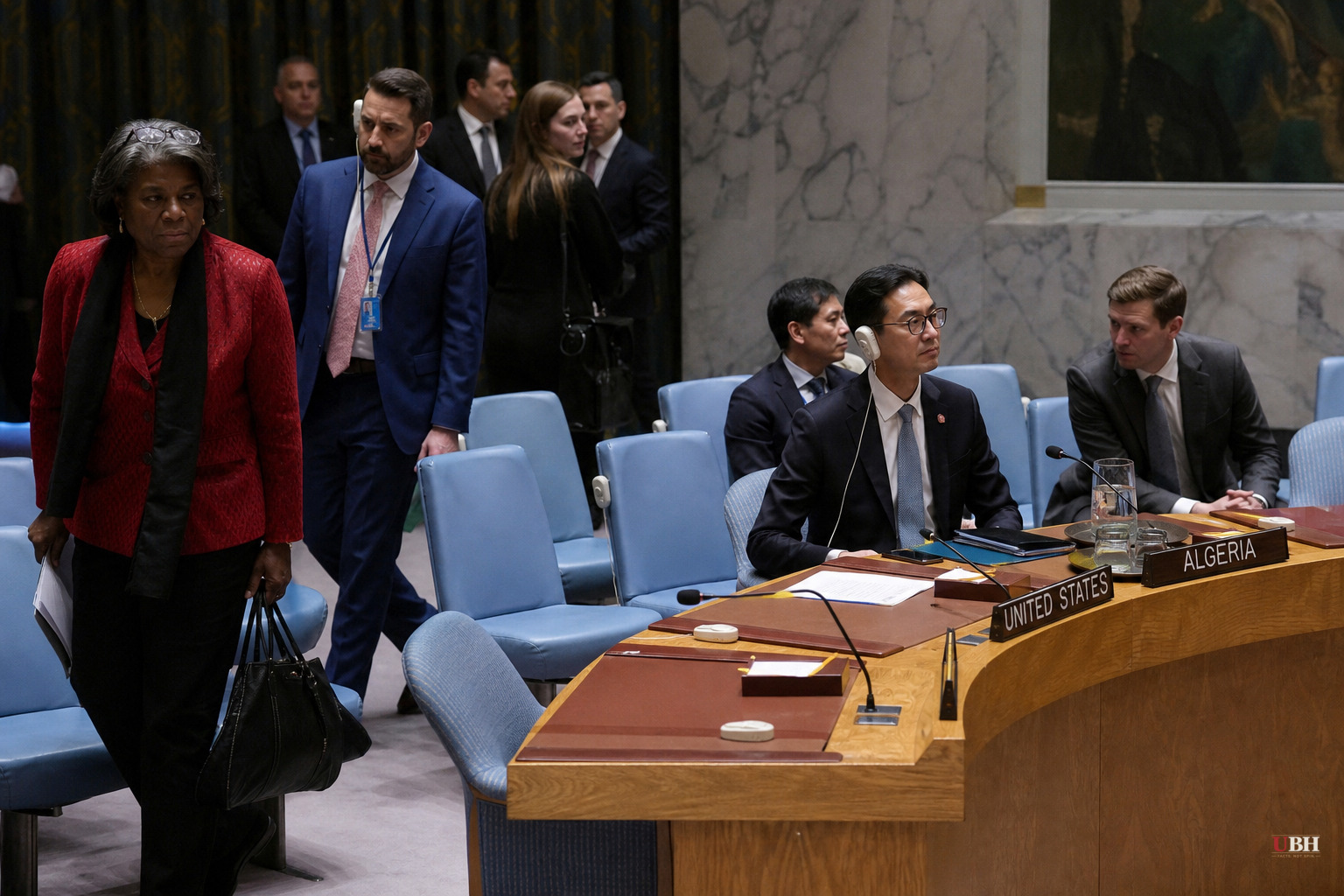
The US delegation walked out of a UN Security Council meeting on Monday, July 27, while France's ambassador Jerome Bonnafont was mid-speech during an emergency session on Russia's war in Ukraine, according to the BBC and Al Jazeera.
The walkout wasn't really about Ukraine. It was the latest shot in a diplomatic fight that started days earlier over a completely different vote.
On Friday, the UN General Assembly voted 144 in favor, 10 against, and 13 abstentions to renew Volker Turk's four-year term as UN High Commissioner for Human Rights, according to Al Jazeera. The United States voted no. So did North Korea and Russia.
When the US lands in the same column as Pyongyang and Moscow on a human rights vote, that's going to draw attention.
France's UN mission in Geneva took the opening. On Saturday it posted on X that the US was no longer "a beacon of human rights" and stood isolated alongside North Korea, Nicaragua, Mali, and Russia, according to the BBC.
That's a rough thing for one democratic ally to say about another in public. US Ambassador to the UN Mike Waltz fired back on X, accusing France of backing a rights chief who has been "lecturing free, sovereign democracies like the United States, the UK, and Israel, while cozying up to the world's worst oppressors," per Al Jazeera. Waltz didn't specify which oppressive regimes he meant.
Then came Monday's walkout. Alternate US representative Dan Negrea told the council the US delegation would keep walking out of meetings until France "renounces their condescending and disrespectful rhetoric," according to both the BBC and Al Jazeera. The Malay Mail reported Negrea also accused France of "disingenuous grandstanding" and defended the US as a "beacon of liberty."
Bonnafont didn't address the walkout directly when he spoke. He said France was focused on preserving the UN's independence and its capacity to act, according to Al Jazeera.
Why the US voted no
The US has actual, stated policy reasons for opposing Turk's reappointment, not just reflexive hostility to the UN.
Turk has criticized Russia's war in Ukraine, but he's also criticized Israel's military conduct in Gaza and, per Al Jazeera, has called out violations of international law by both Israel and the US in Palestine and Iran. US Ambassador Jeff Bartos said after Friday's vote that there would be "consequences" for what he called "procedural overreach, backroom deals, and the misuse of UN posts," and that Washington would "immediately reassess our engagement, participation, and funding," according to the BBC.
That's a legitimate grievance for a country to raise. If the US genuinely believes a UN human rights chief is applying a double standard, harder on allies than on authoritarian regimes, that's a substantive policy disagreement worth having out loud. It shouldn't automatically be dismissed as Washington abandoning human rights just because North Korea and Russia happened to vote the same way for their own very different reasons.
At the same time, France's ambassador described Turk during his first term as "a voice of conscience" who showed "rigor and impartiality," according to the BBC. That's also a real position, not a talking point invented to embarrass Washington. European governments broadly see Turk as an independent check on all governments, including their own, and see the US-North Korea-Russia vote lineup as speaking for itself regardless of intent.
The bigger freeze-out
This isn't happening in a vacuum. The Trump administration has cut funding to UN agencies and withdrawn from dozens of UN entities since 2025, according to Al Jazeera. Washington and Paris have also been at odds over NATO spending, trade policy, and Trump's stated interest in Greenland, a Danish territory and NATO member, per Al Jazeera. France and other European governments have also drawn Trump's frustration for declining to join US-Israel military action against Iran directly.
Deputy UN spokesperson Farhan Haq declined to comment on the walkout itself but said the UN expects all member states to respect the council's decisions, according to the BBC.
None of this is about to blow up into an actual rupture between two NATO allies. But it's a real diplomatic breach playing out in public on X and in the chamber between two countries that are supposed to be on the same side. Negrea's promise to keep walking out "until France renounces" its rhetoric means the next Security Council session with a French speaker deserves attention. So does whether Bartos follows through on reassessing US funding and participation tied to Turk's reappointment.
Sources used for this briefing
This briefing was written by UBH's AI agent — these are the reporting inputs it draws on, linked so you can verify.


