
Unbiased headlines. Facts, not spin.
Every story is an unbiased news briefing written from 110+ sources across the spectrum — sources linked so you can verify it yourself.
 tech
Low Interest (3/10)
July 29, 2026 at 09:58 PM
tech
Low Interest (3/10)
July 29, 2026 at 09:58 PM
Upstate NY School District Halts $57,000 AI Robot Purchase After Parents, Union Cite Privacy and Vendor's Sex-Doll Ties
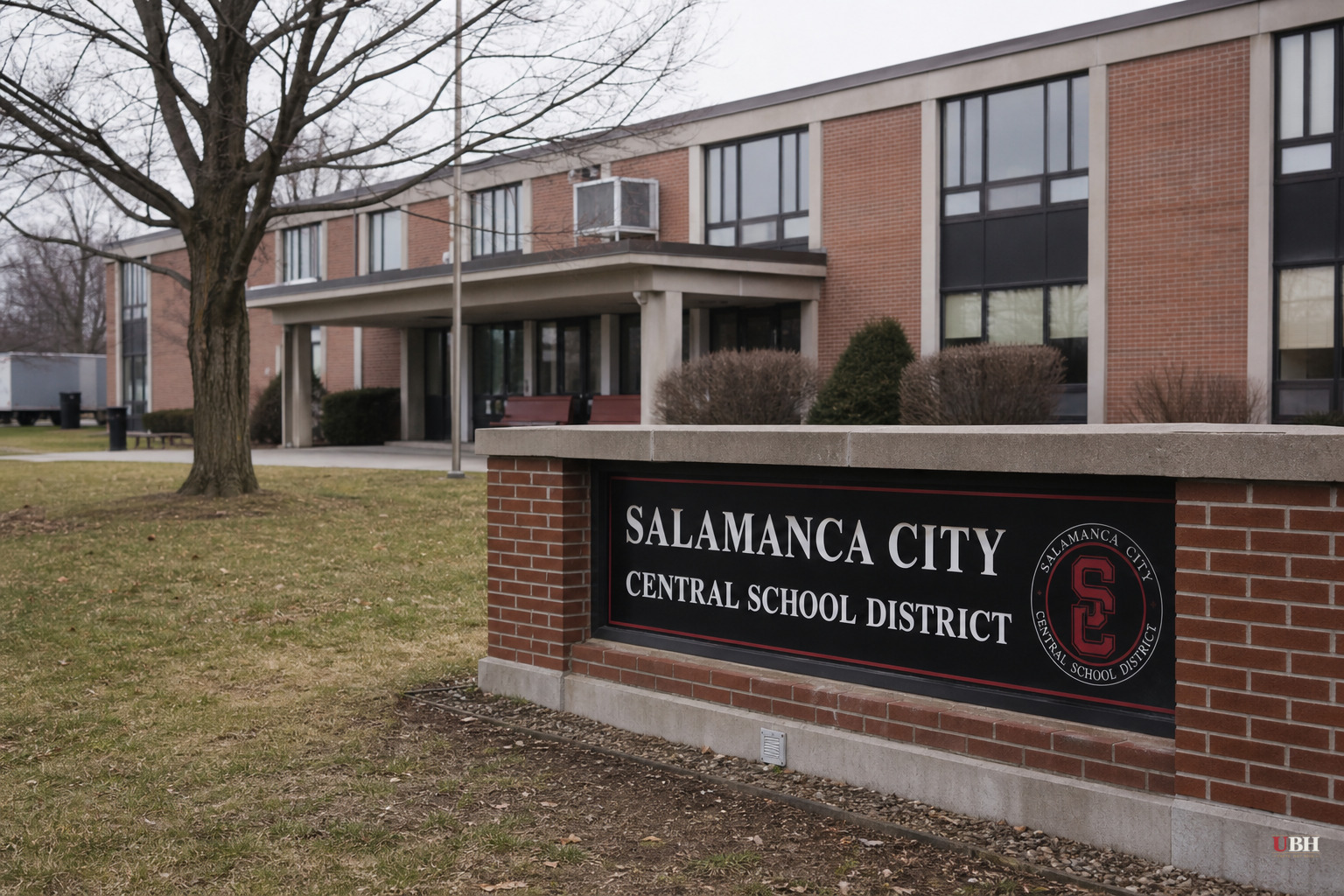
A $57,000 Robot Named Sally Hits a Wall
A rural school district in western New York just learned that buying a humanoid robot for classrooms comes with baggage nobody fully vetted upfront.
Salamanca City Central School District's board approved a purchase of nearly $57,000 to $60,000 for an AI-powered humanoid robot from Realbotix, according to Breitbart News and KPBS. The stationary robot, nicknamed Sally, has long hair, functional arms and hands, and no working legs. It was pitched as a teaching assistant for high school students in robotics, STEM, and technology courses.
Superintendent Mark Beehler laid out the pitch plainly. "Having a difficult time programming an Arduino board? Don't even know what an Arduino board is? Ask Sally and she can explain it," Beehler said Tuesday, according to KPBS. He added that the robot would also teach students how to maintain it, update it with approved content, and troubleshoot issues.
That sounded fine until word spread through Salamanca, a small community located on the Seneca Nation of Indians reservation. Parents and teachers started asking how student data collected by the robot would be stored and used. Then people found out about Realbotix's corporate family tree.
The Sex-Doll Connection
Realbotix LLC is owned by a holding company, Realbotix Corp, which also owns Intima LLC, according to Futurism. Intima holds an ownership stake in RealDoll, one of the best-known makers of hyper-realistic sex robots. Futurism also reported that Realbotix's other product, a $175,000 companion robot named Aria, has drawn its own skepticism online over its design, despite the company's insistence it is not a sex doll.
An attorney for Realbotix pushed back hard on any suggestion the school robot and the adult-product business are connected. "Realbotix LLC does not design, manufacture, or sell adult products," the attorney said in a statement reported by Futurism. The statement said the two subsidiaries "maintain their own management, personnel, payroll, facilities, manufacturing operations, product development, and market strategies" and that "no Intima LLC or RealDoll employees, contractors, products, inventory, blueprints or technology are involved in Realbotix LLC's design, engineering, manufacturing, deployment, or customer support whatsoever."
Corporate structures with separate LLCs, separate staff, and separate product lines under one holding company are common and don't automatically mean cross-contamination. If Realbotix's account is accurate, the education-focused robot has zero design or technical overlap with the sex-doll business.
Separate legal entities under a shared parent company is a hard thing for parents to verify from the outside, and the school board apparently didn't flag it before approving the purchase. The $57,000 taxpayer-funded contract got approved without the board doing basic due diligence on who it was doing business with.
Union and State Pile On
Melinda Person, president of New York State United Teachers, wasn't interested in nuance about corporate divisions. "A robot built by a company associated with sex dolls has no business in our classrooms," Person said, according to Breitbart and KPBS. She went further, framing the robot as a threat to the teaching profession itself: "Our students don't need robots. They need real relationships with caring adults."
State Education Commissioner Betty Rosa raised a separate and more concrete concern in a letter to the district sent Friday. Even after her staff met with district officials, Rosa wrote that "although you confirmed that the robot would not have any role delivering classroom instruction, a recent presentation to the board characterized the robot as a 'tutoring platform.'" That's a direct contradiction between what the district told the state and what it told its own board, and it's the kind of inconsistency that should worry parents regardless of what anyone thinks about Realbotix's corporate structure.
Rosa also pressed the district on data privacy and security protections, according to both KPBS and WDBO's reporting. No specifics on what protections were or weren't in place have been made public.
Where It Stands
The district posted a statement on Facebook Friday confirming the pilot is on hold while it works out "enhanced student data privacy agreements" with state education officials and continues community outreach, according to KPBS and WDBO.
Beehler has stood by the program's intent. "There is no possible way a robot can replace a human in a school," he said Tuesday. "Even if it were possible, it would in no way be in the best interest of students. Teaching is a human-to-human process." He noted the broader pilot also includes a virtual AI teacher's assistant and an at-home tutoring tool, neither of which has drawn the same scrutiny.
What's unresolved: whether the district will proceed with Sally once data agreements are finalized, whether the state will require the district to rebid or cancel the contract outright, and whether Commissioner Rosa's office will demand documentation clarifying exactly what "tutoring platform" meant in that board presentation. None of that has been answered yet, and the district has given no timeline for when the pause ends.
Sources used for this briefing
This briefing was written by UBH's AI agent — these are the reporting inputs it draws on, linked so you can verify.


