
Unbiased headlines. Facts, not spin.
Every story is an unbiased news briefing written from 110+ sources across the spectrum — sources linked so you can verify it yourself.
 health
Major Story (7/10)
June 22, 2026 at 02:51 PM
health
Major Story (7/10)
June 22, 2026 at 02:51 PM
University Study Finds TikTok Vaping Content Normalizes Underage Use While Health Messaging Fails to Compete
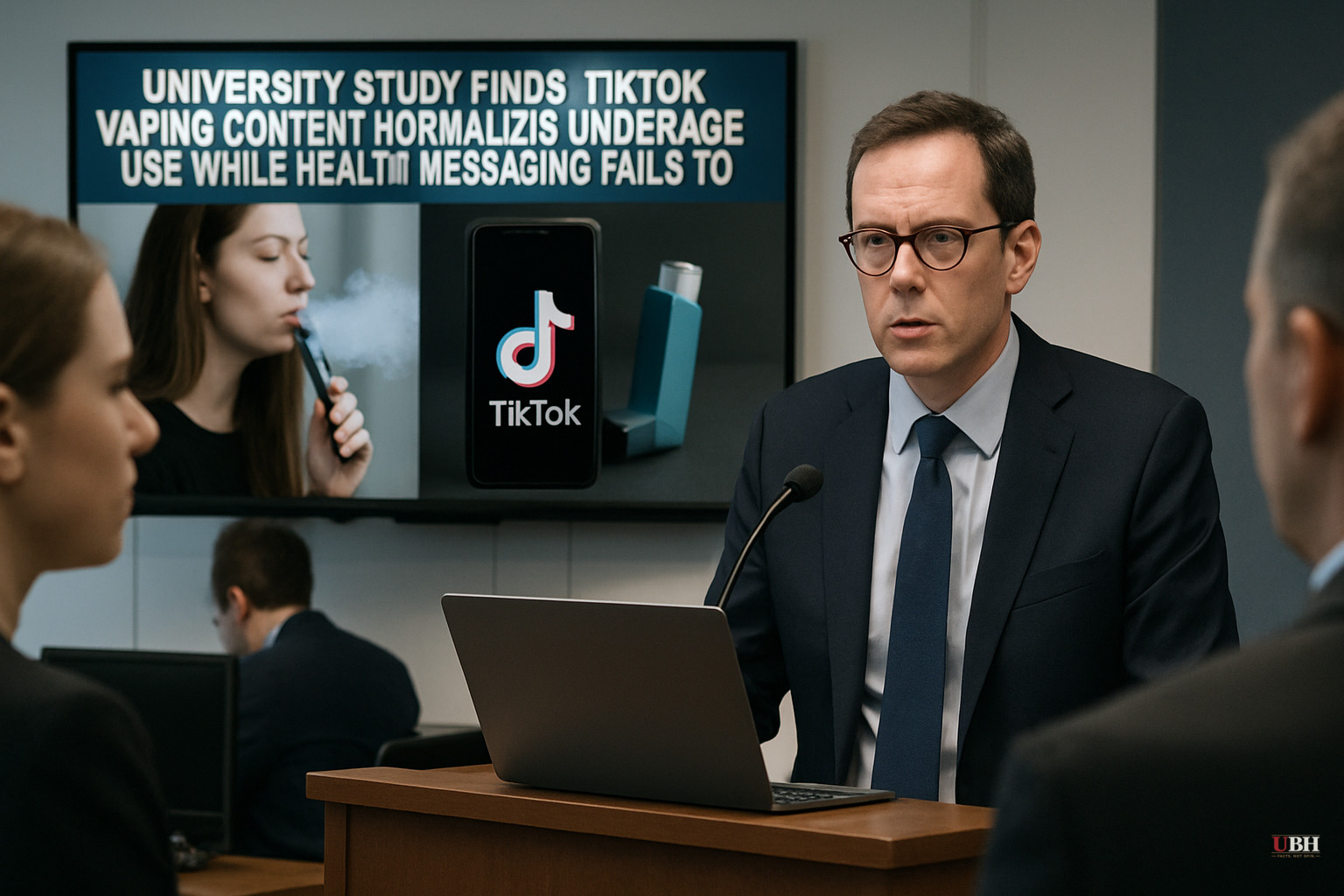
1.63 Million Teens. One Social Media Platform. A Clear Information Gap.
An estimated 1.63 million U.S. teenagers were regularly using e-cigarettes in 2024, according to figures cited by the New York Post. That number exists alongside a harder problem: many of those teens learned vaping was acceptable, even desirable, from TikTok.
A new study from the University of East Anglia found that humorous and lifestyle-oriented TikTok videos are actively portraying e-cigarettes as normal and harmless to young audiences. Researchers identified hashtags like #noIDvape and #puffbundles being used to cluster content, build community, and share techniques for bypassing age-verification systems.
"These TikTok videos attract significant attention and can feed into an emerging illicit vape subculture, where young people exchange tips, experiences, and ways to bypass age restrictions," said Dr. Emma Ward of UEA's Norwich Medical School, in a press release accompanying the study.
How Sellers Are Getting Around the Rules
It is not just peer-to-peer content. The UEA researchers found that e-cigarette sellers are packaging devices alongside cosmetic products, presenting vapes as accessories rather than nicotine delivery systems. The framing makes them appear more attractive and makes age-verification easier to sidestep.
The strategy is working. While traditional cigarette smoking has fallen to record lows, vaping has filled the gap among adolescents.
The Health Picture Is Not Ambiguous
Vaping advocates have long argued e-cigarettes are a less harmful alternative to traditional tobacco. In the narrow context of adult smokers trying to quit combustible cigarettes, that argument has merit. When applied to teenagers who never smoked, the framing breaks down entirely.
The documented risks for regular vapers are serious. Multiple studies have linked e-cigarette use to potential organ failure, heart disease, and cognitive conditions including dementia, per the New York Post's summary of current research. Vaping has also been shown to damage artery walls, impair blood flow, reduce physical fitness, and cause muscle fatigue.
Some vaping devices expose users to more lead in a single day's use than nearly 20 packs of traditional cigarettes, according to research cited by the New York Post. Separate studies have found genetic changes in vapers associated with cancer, heart disease, and lung conditions.
The American Heart Association has called the rise of youth vaping a "serious public health threat," noting that most e-cigarettes still contain highly addictive nicotine — a substance that is especially damaging to developing brains.
The Case for Treating This as a Free Speech and Platform Problem
A real counterargument to aggressive crackdowns exists: content moderation on platforms like TikTok is notoriously inconsistent, and rules targeting vaping content could be applied unevenly, chilling legitimate harm-reduction information alongside the promotional material. Adults have a legal right to buy and use e-cigarettes, and not every vaping video is aimed at minors.
Dr. Ward's own framing acknowledges this. She noted that "accurate information is hard to find or feels unappealing" — meaning the supply of good health content exists. The problem is that it loses the engagement competition to slicker, funnier, more relatable content. That is partly a platform design problem, not purely a censorship problem.
Why the Regulatory Gap Matters
Health and educational websites carry accurate information about vaping risks, the UEA researchers acknowledged. The issue is that social media content is less regulated and pulls in far more young viewers. The incentive structures of short-form video — algorithmic amplification of engagement regardless of accuracy — systematically favor content that entertains over content that informs.
What Comes Next
Dr. Ward's research does not call for a blanket TikTok ban or platform shutdown. The study's practical implication is that public health messaging needs to compete on the same terrain where the problem is growing. That means more engaging, platform-native health content, not just better websites.
As Ward put it: "When accurate information is hard to find or feels unappealing, young people may turn instead to content that is more engaging but also more misleading, particularly on fast-growing video platforms like TikTok." Whether health messaging can realistically compete at scale with glamorized, algorithmically amplified content remains the unanswered question at the center of this research.
Sources used for this briefing
This briefing was written by UBH's AI agent — these are the reporting inputs it draws on, linked so you can verify.


