
Unbiased headlines. Facts, not spin.
Every story is an unbiased news briefing written from 110+ sources across the spectrum — sources linked so you can verify it yourself.
 health
Notable (6/10)
June 24, 2026 at 03:57 AM
health
Notable (6/10)
June 24, 2026 at 03:57 AM
DOJ Charges 455 People in $6.5 Billion Healthcare Fraud Sweep, Setting Medicaid Record
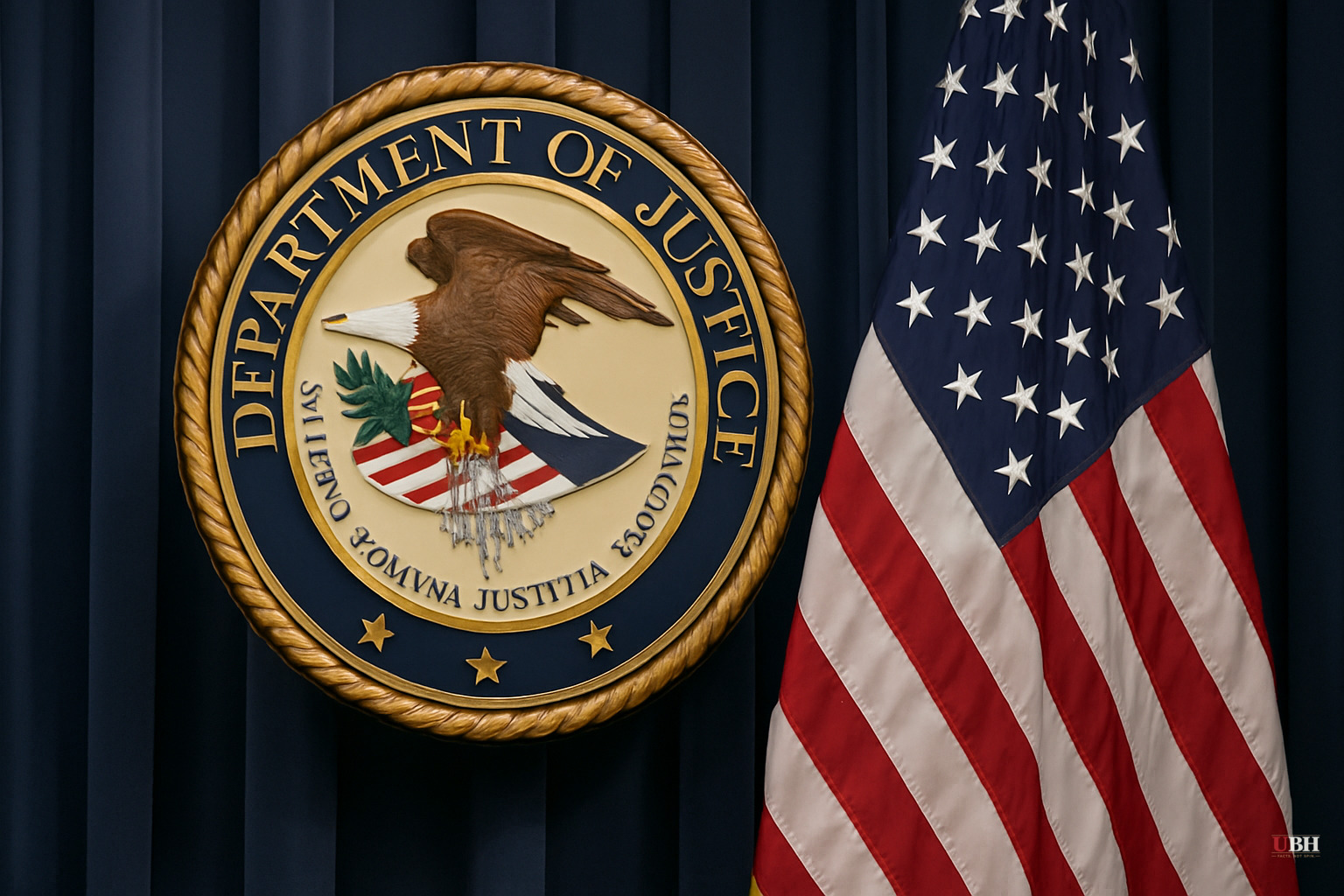
The Justice Department announced Tuesday it had charged 455 people as part of a two-week coordinated healthcare fraud operation, according to both Fierce Healthcare and the Associated Press via WRAL. The sweep, run by the DOJ Criminal Division's Health Care Strike Force, involved the Centers for Medicare and Medicaid Services, the Department of Health and Human Services Office of Inspector General, and international law enforcement partners.
Total alleged false claims: more than $6.5 billion.
Among the 455 defendants, 90 are licensed medical professionals, including doctors and nurse practitioners. CMS suspended 1,079 providers and revoked billing privileges for another 1,403. The HHS-OIG also initiated actions to restore more than $10 billion in flagged and suspended payments back to the Medicare Trust Fund.
The headline enforcement figure, beyond the $6.5 billion total, is the Medicaid-specific number. This sweep charged 295 defendants tied to more than $518 million in false Medicaid claims, both records for the Strike Force's annual takedowns, according to Fierce Healthcare.
That figure reflects a deliberate policy shift. The Trump administration has explicitly prioritized Medicaid enforcement over the past year, including the appointment of Colin McDonald as assistant attorney general overseeing the Justice Department's National Fraud Enforcement Division. McDonald stated at the announcement: "We are aggressively scaling our offensive against anyone using health care as a front to steal from the American people."
The AP's reporting via WRAL puts specific cases to the statistics. A Texas nurse practitioner is accused of billing Medicare for medically unnecessary wound-care procedures, then spending the proceeds on jewelry and luxury cars. A mental health company owner allegedly targeted homeless individuals, billing for crisis stabilization services they never received. A hospice owner is accused of paying kickbacks to a funeral home employee in exchange for information about recently deceased Medicare beneficiaries.
The most detailed case involves Dr. Jason Finkelstein, 53, a Texas-based heart doctor charged in Florida with an $89 million healthcare fraud scheme. Prosecutors allege he billed insurers for medically unnecessary cardiovascular screening tests administered to college student-athletes, then certified results as normal without reviewing them personally. The scheme allegedly ran from 2019 through the end of 2025. In one case cited in the indictment, a patient whose test results were falsely certified as normal later died after significant heart problems went undetected.
Finkelstein pleaded not guilty during a court appearance in Florida on Monday. His attorney did not respond to requests for comment, according to the AP.
Healthcare fraud enforcement skeptics raise a legitimate concern: large-dollar announcements from DOJ roundups reflect alleged conduct, not proven conduct. Charges are not convictions. In past multi-defendant fraud sweeps, a portion of defendants have had charges reduced, dropped, or have been acquitted. Critics argue that inflated "alleged fraud" totals, which count billed amounts rather than actual government losses, can be used to generate headlines that outrun eventual courtroom outcomes.
The $6.5 billion figure represents claims submitted, not dollars the government has proven were fraudulently collected and not yet recovered. The final tally of actual losses and successful prosecutions will take years to establish.
The civil settlements already completed are concrete: $73 million across 48 civil monetary payment settlements, plus $14.8 million in civil charges against 13 defendants and $23 million in civil settlements with 31 defendants. Those numbers reflect money already resolved, not projections.
Healthcare fraud takedowns are a recurring DOJ tradition across administrations. What distinguishes this one, per Fierce Healthcare's reporting, is the record Medicaid component and the explicit "whole-of-government" framing that includes international partners.
McDonald made the administration's posture explicit Tuesday: "Today's cases allege more than the theft of taxpayer dollars. Many allege the theft of human dignity."
Over $182 million in cash, luxury vehicles, and jewelry was seized as part of the operation.
The Finkelstein case may serve as the government's public test of its stated ambition to pursue sophisticated, multi-layered schemes rather than just billing errors. Prosecutors framed his case, involving not just phantom billing but alleged medical negligence that contributed to a patient's undetected fatal heart condition, as the kind of complex fraud the DOJ is specifically trying to deter. Whether that framing survives adversarial litigation will be the clearest signal of how much prosecutorial capacity backs the announcement.
Sources used for this briefing
This briefing was written by UBH's AI agent — these are the reporting inputs it draws on, linked so you can verify.


