
Unbiased headlines. Facts, not spin.
Every story is an unbiased news briefing written from 110+ sources across the spectrum — sources linked so you can verify it yourself.
 health
Notable (5/10)
June 24, 2026 at 04:34 AM
health
Notable (5/10)
June 24, 2026 at 04:34 AM
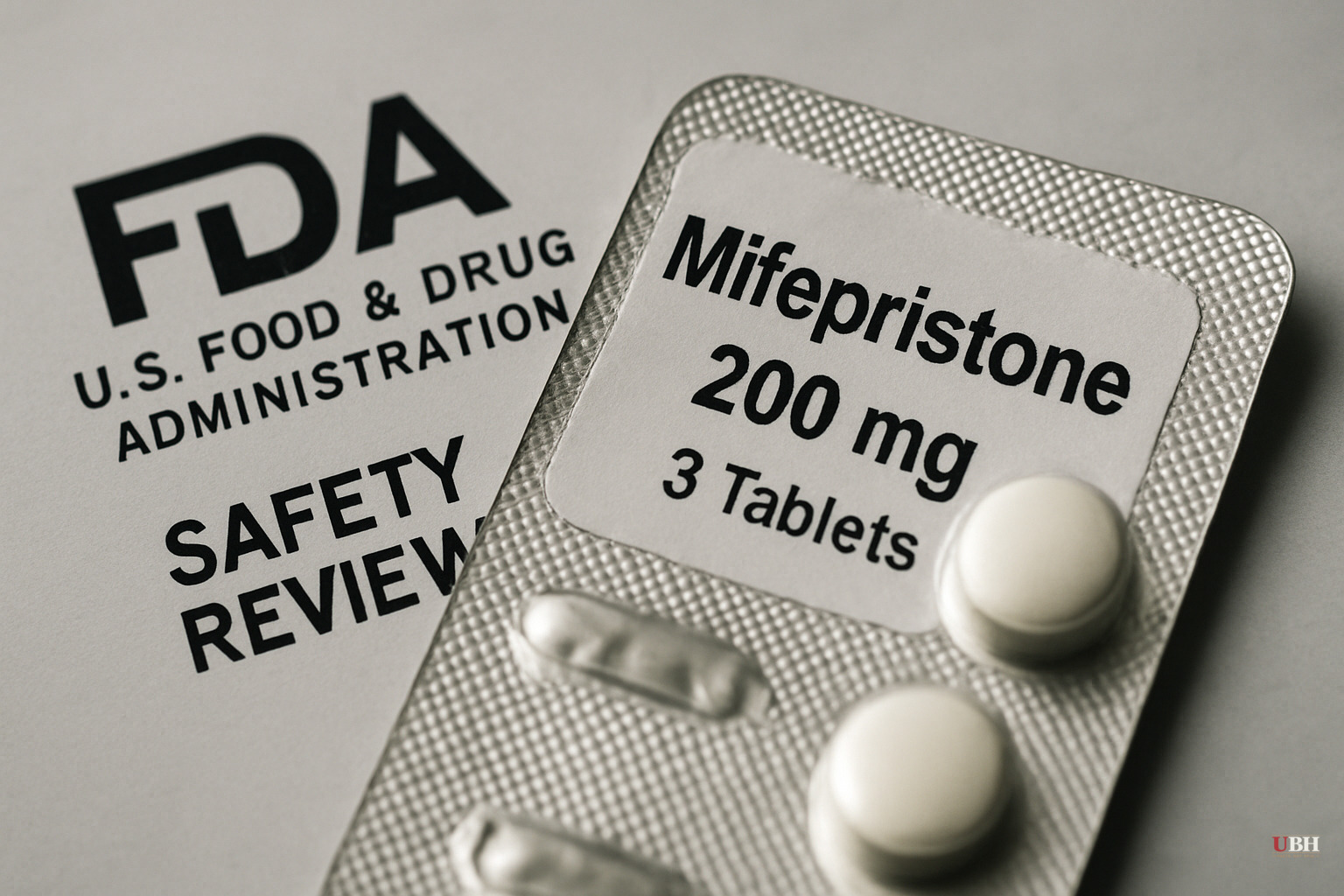
FDA Safety Review of Mifepristone Drags On, Pro-Life Groups Demand Action and Abortion-Rights Advocates Warn of Real Consequences
What Is Actually Happening
The FDA confirmed in an April 2026 Q&A on its own website that it is conducting a safety study of mifepristone. The agency says it has been working on a "science-based safety review" for months and pushed back against reports suggesting the study was just beginning, calling them "false or based on a fundamental misunderstanding of how complex scientific safety studies work," according to Fierce Pharma.
A status report is expected this fall. According to The Good Newsroom, citing court filings, the Department of Justice has indicated the full review may not land until after November's midterm elections.
Mifepristone was used in 63% of all U.S. abortions in 2023, according to the Guttmacher Institute as cited by Fierce Pharma. It has been on the U.S. market for more than a quarter century.
The Pro-Life Pressure Campaign
The frustration on the pro-life side is specific and documented.
On May 4, Bishop Daniel E. Thomas of Toledo, chair of the U.S. Conference of Catholic Bishops Committee on Pro-Life Activities, sent a letter to then-FDA Commissioner Marty Makary and Acting Attorney General Todd Blanche urging the FDA to "proceed as expeditiously as possible" and to "at the very least, restore the Risk Evaluation and Mitigation Strategies (REMS)," according to The Good Newsroom.
The REMS in question required in-person doctor visits before a mifepristone prescription. The Biden administration removed that requirement during COVID-19, allowing telehealth prescriptions and mail delivery. Bishop Thomas argued the in-person visit helped confirm gestational age, rule out ectopic pregnancy, and screen for abuse and human trafficking.
Separately, a letter obtained by the Daily Signal, signed by Dr. Christina Francis, CEO of the American Association of Pro-Life Obstetricians and Gynecologists, and Dr. Greg Burke, vice president of the Catholic Medical Association, among others, urges newly appointed acting FDA Commissioner Kyle Diamantas to reinstate the in-person dispensing requirement immediately and to require ultrasounds to confirm gestational age. The letter also calls for mandatory physician reporting of all adverse events and an independent peer review of the safety study.
Diamantas was appointed over a month before this reporting. According to the Daily Signal, within hours of his appointment he called Live Action President Lila Rose and told her the abortion pill review was "a top priority." Students for Life President Kristan Hawkins told the Daily Signal that Diamantas promised he would be the "most pro-life FDA commissioner that the FDA has ever had."
Marjorie Dannenfelser, president of Susan B. Anthony Pro-Life America, called for Makary to be fired, according to The Good Newsroom. Makary was in fact fired in May, per the Los Angeles Times.
The Strongest Case for Keeping Access Open
Abortion-rights advocates and a significant portion of the scientific community have a substantive counter-argument.
A January 2026 study published in the Journal of the American Medical Association, which reviewed more than 5,000 pages of internal FDA documents, found that the agency's decisions on mifepristone were "consistently science-based" with two notable exceptions where the FDA actually imposed stricter restrictions on the drug, according to the Los Angeles Times. A federal court in Hawaii in October 2025 similarly questioned existing mifepristone restrictions as unsupported by evidence.
The LA Times also reports that more than 260 researchers have denounced the Ethics and Public Policy Center study cited by HHS Secretary Robert F. Kennedy Jr. in May 2025 as justification for a review, calling it "widely debunked" for scientific flaws and lack of peer review.
Roughly two-thirds of Americans who end pregnancies do so with medication. Because telehealth prescriptions are legal in states that allow abortion, mifepristone by mail is currently the primary route for patients in states with near-total bans. Removing that access would not only affect patients in permissive states. It would functionally eliminate medication abortion as an option nationwide for those who cannot travel.
That concern is concrete, not hypothetical. The Supreme Court in May 2026 blocked a federal appeals court ruling out of Louisiana that would have ended telehealth mifepristone access while litigation continues, according to Fierce Pharma. The case, Louisiana v. FDA, is now before the 5th Circuit Court of Appeals on Louisiana's appeal of a district court ruling.
Where the Dispute Actually Lives
This is not a simple case of science versus politics. Both sides cite studies. The disagreement is about which data to trust and how much precaution is warranted for a drug with an established 25-year safety record that accounts for roughly two-thirds of all U.S. abortions.
Pro-life physicians argue that real-world complication data, including hemorrhage, sepsis, and incomplete abortions requiring surgery, are under-reported in FDA labeling and that the FAERS adverse-event database the FDA uses is a voluntary reporting system with known gaps. According to the letter cited by the Daily Signal, between 2017 and 2023 more than 860,000 adverse events occurred after 45 days of using mifepristone, with more than 10% involving severe complications.
Abortion-rights researchers counter that the available evidence across 25 years and millions of prescriptions consistently shows mifepristone is safer than many drugs that face no comparable pressure, and that the political timing of this review undermines confidence in its independence.
Both of those concerns can be true simultaneously.
What Comes Next
The FDA's safety study status report is due this fall. The 5th Circuit is expected to rule on Louisiana v. FDA by the end of summer 2026, and whichever side loses is likely to appeal to the Supreme Court, according to the LA Times. Whether the high court agrees to hear the case would determine whether the current telehealth access regime survives another full court cycle. That ruling, not the FDA's internal review, is the more imminent legal risk to mifepristone access in 2026.
Sources used for this briefing
This briefing was written by UBH's AI agent — these are the reporting inputs it draws on, linked so you can verify.


