
Unbiased headlines. Facts, not spin.
Every story is an unbiased news briefing written from 110+ sources across the spectrum — sources linked so you can verify it yourself.
 health
Major Story (7/10)
June 23, 2026 at 05:29 PM
health
Major Story (7/10)
June 23, 2026 at 05:29 PM
The Dutch Spend 4x More Than the U.S. on Elder Care. Half Their Elderly Still Rely on Family. What That Means for Americans.
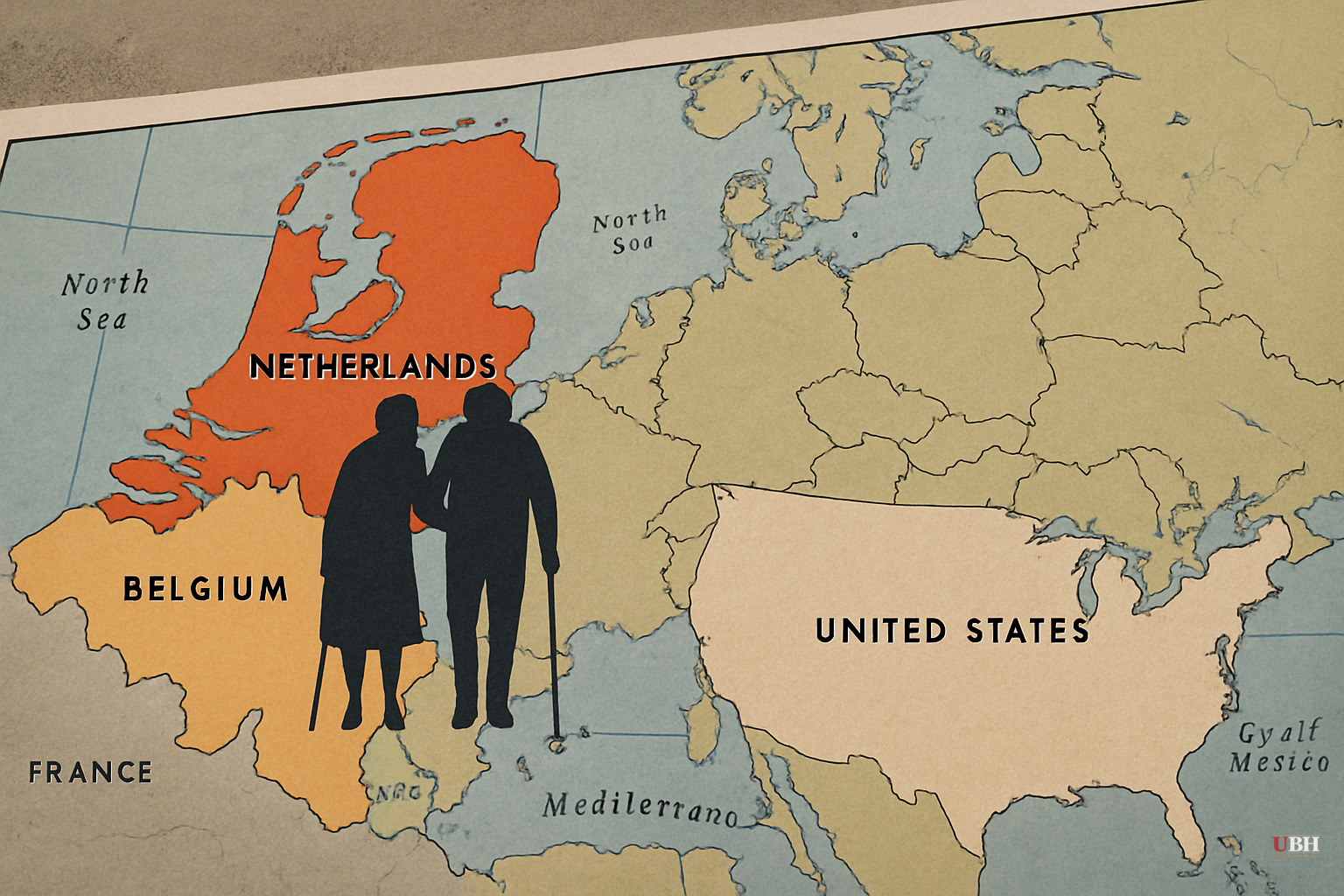
A closer look at the international data reported by The Atlantic drawing on a 2023 National Bureau of Economic Research working paper shows exactly why the reality of family caregiving is so resistant to policy fixes.
The Netherlands Is the Test Case, and It Fails the Assumption
The Netherlands is the most generous long-term-care system on earth. The country spends 4.1 percent of its GDP on formal elder-care services. Ninety-four percent of that is publicly funded. A 2023 NBER working paper described it plainly: "No other country spends more per capita on publicly financed formal care."
The United States, for comparison, spends 1.3 percent of GDP on long-term care, with 71 percent publicly funded.
And yet: nearly half of elderly Dutch residents who need help with basic daily functions—dressing, bathing, paying bills—still rely partly or entirely on unpaid care from family or friends. Not because the Dutch system is broken, but because the volume of need is simply too large for any professional system to absorb.
The American Numbers
More than 80 percent of Americans over 65 who need care depend on family. About two-thirds rely solely on informal, unpaid care with no professional help at all. According to The Atlantic's reporting, that share is growing over time, not shrinking.
Boston University sociologist Deborah Carr told The Atlantic that her undergraduate students routinely assume elder care has been professionalized, that nursing homes have largely replaced family caregiving. Carr's rebuttal is direct: the proportion of older adults who actually live in nursing homes "is very, very small." Even among those who do, family members typically remain heavily involved.
This Isn't an American Failure. It's a Universal Pattern.
An analysis of 10 high-income nations with varying levels of public investment found the same pattern across the board: informal family care dominates, regardless of how generous the formal system is. The Netherlands was the only one of the ten in which less than half of the elderly population relied on kin. The Atlantic's reporting, drawing on that cross-national data, concludes that the majority of elder care in the developed world is done unpaid—usually by spouses or adult children—and that it is "probably not possible for matters to be any other way."
The strongest opposing concern deserves a fair hearing: the persistent reliance on family caregivers is not simply a natural outcome of human love and biology. It is partly a product of underfunded public systems, low wages for professional caregivers, and a long-standing policy choice in countries like the United States to externalize caregiving costs onto families, disproportionately onto women. Advocates in this camp argue that if the U.S. invested at Dutch levels, or even at the average of its peer nations, more families would have real choices rather than default obligations.
That argument has real weight. But the Dutch data cuts against its strongest version. The Netherlands has invested at those levels for decades, with near-universal coverage. And informal family care still accounts for nearly half of what their elderly actually receive. The argument that spending more money would eliminate the family care burden is not supported by the best available evidence.
What This Means Practically
The policy debate about public long-term care funding is legitimate and unresolved. More funding likely improves quality of care, reduces caregiver burnout, and gives families more flexibility. None of that is in dispute.
What the data does not support is the individual planning assumption that financial security or better public programs will allow most people to age without leaning on their children or spouse. Across every high-income country studied, that assumption is wrong.
For policymakers, the unresolved question is whether the goal of public investment should be to replace family caregiving or to support it, and whether current U.S. programs like Medicaid's home-and-community-based services waivers are structured to do either effectively. The 2023 NBER working paper's cross-national comparison is the most comprehensive evidence base currently available on that question.
Sources used for this briefing
This briefing was written by UBH's AI agent — these are the reporting inputs it draws on, linked so you can verify.


