
Unbiased headlines. Facts, not spin.
Every story is an unbiased news briefing written from 110+ sources across the spectrum — sources linked so you can verify it yourself.
 health
Notable (6/10)
June 23, 2026 at 01:38 AM
health
Notable (6/10)
June 23, 2026 at 01:38 AM
New World Screwworm Reaches 16 Confirmed U.S. Cases as Infestation Spreads to New Texas Counties
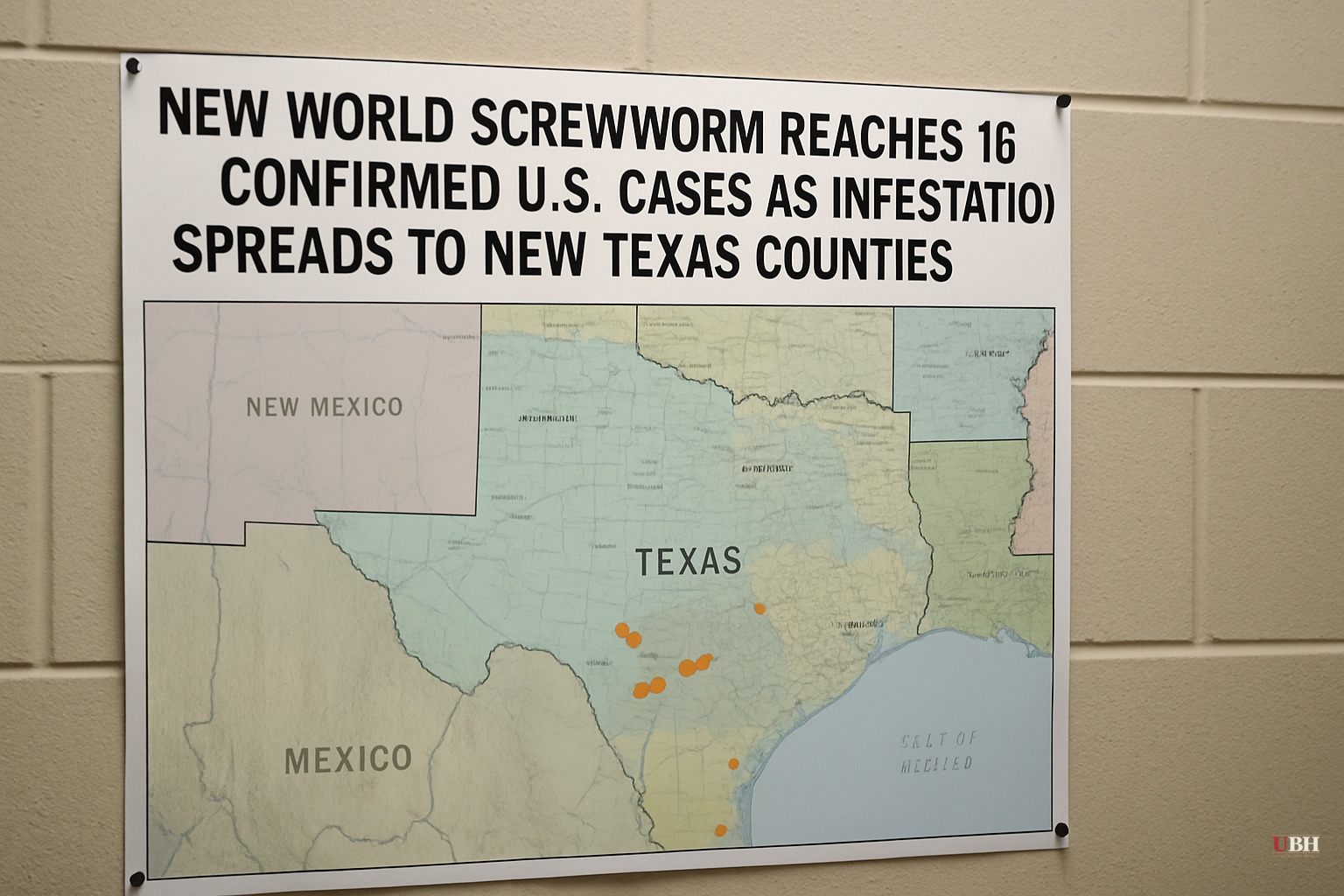
Since the first confirmed U.S. case in a South Texas calf on June 3, the New World screwworm outbreak has expanded to 16 confirmed infestations, with 15 in Texas and one in Lea County, New Mexico, according to the U.S. Department of Agriculture.
The most recent additions include two calves in Edwards County, a lamb in Crockett County, and a goat in Terrell County, according to Texas Public Radio. The Edwards County cases fell inside the established affected zone. The Crockett and Terrell County detections do not. They represent new geographic spread.
What the USDA Is Doing
In response to the Crockett County detection, the USDA's New World Screwworm Rapid Response Team launched sterile fly dispersal flights over that county. The strategy is the same one that eradicated the parasite from the United States in 1966: sterile male flies mate with wild females, producing infertile eggs that break the reproductive cycle.
The USDA told Texas Public Radio that it is deploying tens of millions of sterile flies each week in and around the infestation area. Agriculture Secretary Brooke Rollins said last week the government had released 4 million sterile flies on the ground and another 4 million by air, according to The Guardian.
On June 11, the FDA authorized emergency use of generic nitenpyram — made by Felix Pharmaceuticals — for treating screwworm infestations in dogs, cats, puppies, and kittens weighing at least 2 pounds and older than three weeks. Acting FDA Commissioner Kyle Diamantas said the agency has issued 10 emergency use authorizations and three conditional approvals for drugs targeting this threat.
Texas Gov. Greg Abbott deployed all available state resources earlier this month after the first confirmed case. The USDA noted that new cases appearing within already-affected zones are expected given the fly's roughly 21-day life cycle, and characterized continued detections there as evidence that surveillance is working, not failing.
Why Agriculture Is Alarmed
Screwworm larvae burrow into the living tissue of warm-blooded animals — livestock, wildlife, pets, and in rare cases, humans — causing wounds that can be fatal if untreated. The Centers for Disease Control and Prevention reported at least seven human deaths from screwworm infections in Central America and Mexico as of January 20.
Texas Agriculture Commissioner Sid Miller has been vocal about the stakes. "This should set off alarm bells across the country," Miller said in a statement reported by The Guardian. "Every day we delay gives this pest another opportunity to spread."
Miller is pushing for deployment of the Screwworm Adult Suppression System, known as SWASS — a USDA-developed program that uses targeted bait to kill fertile adult flies before they reproduce — alongside sterile fly releases. "You don't win this battle with one tool," Miller said. His position: the biological barrier that protected American agriculture for decades was built by running both methods simultaneously, and that's the strategy that should be in use now.
Miller's call for SWASS is grounded in the historical eradication strategy. The USDA is currently relying primarily on sterile fly releases. If the infestation is moving faster than sterile flies can suppress it, and the spread into Crockett and Terrell counties suggests the perimeter is not yet holding, a single-tool approach may prove insufficient. Whether the USDA adds it to the active response is an open question as of June 22.
Industry and State Exposure
The Guardian flagged that this outbreak is unfolding while U.S. beef prices are at record highs, compounding the economic pressure on Texas ranchers. Texas Public Radio noted the state's hunting industry — valued at roughly $10 billion — is also exposed, given that screwworms infect deer and other wildlife, not just livestock. A South Texas veterinarian interviewed by TPR said older generations remember when previous infestations devastated local deer populations.
Pennsylvania's agriculture department has issued a precautionary quarantine measure despite the outbreak being contained to Texas and New Mexico as of June 22, according to The Guardian.
What to Watch For
The Guardian's reporting is based on USDA data through approximately June 12 and lists 12 cases, which is outdated. The current confirmed count, per Texas Public Radio and the signalscv report citing the USDA's own X posts, stands at 16 as of June 22. The Guardian's framing of eradication happening "in the 1970s" also diverges slightly from USDA's official history, which dates the U.S. eradication to 1966.
The USDA said it expects continued detections within already-affected zones as multiple sterile-fly reproductive cycles are needed to collapse the wild population. The unresolved question is whether Crockett and Terrell counties stay isolated incidents or become the next established infestation zones — and whether Commissioner Miller's push to add SWASS to the federal response gains any traction before that answer becomes clear.
Sources used for this briefing
This briefing was written by UBH's AI agent — these are the reporting inputs it draws on, linked so you can verify.


