
Unbiased headlines. Facts, not spin.
Every story is an unbiased news briefing written from 110+ sources across the spectrum — sources linked so you can verify it yourself.
 health
Major Story (7/10)
June 23, 2026 at 10:44 AM
health
Major Story (7/10)
June 23, 2026 at 10:44 AM
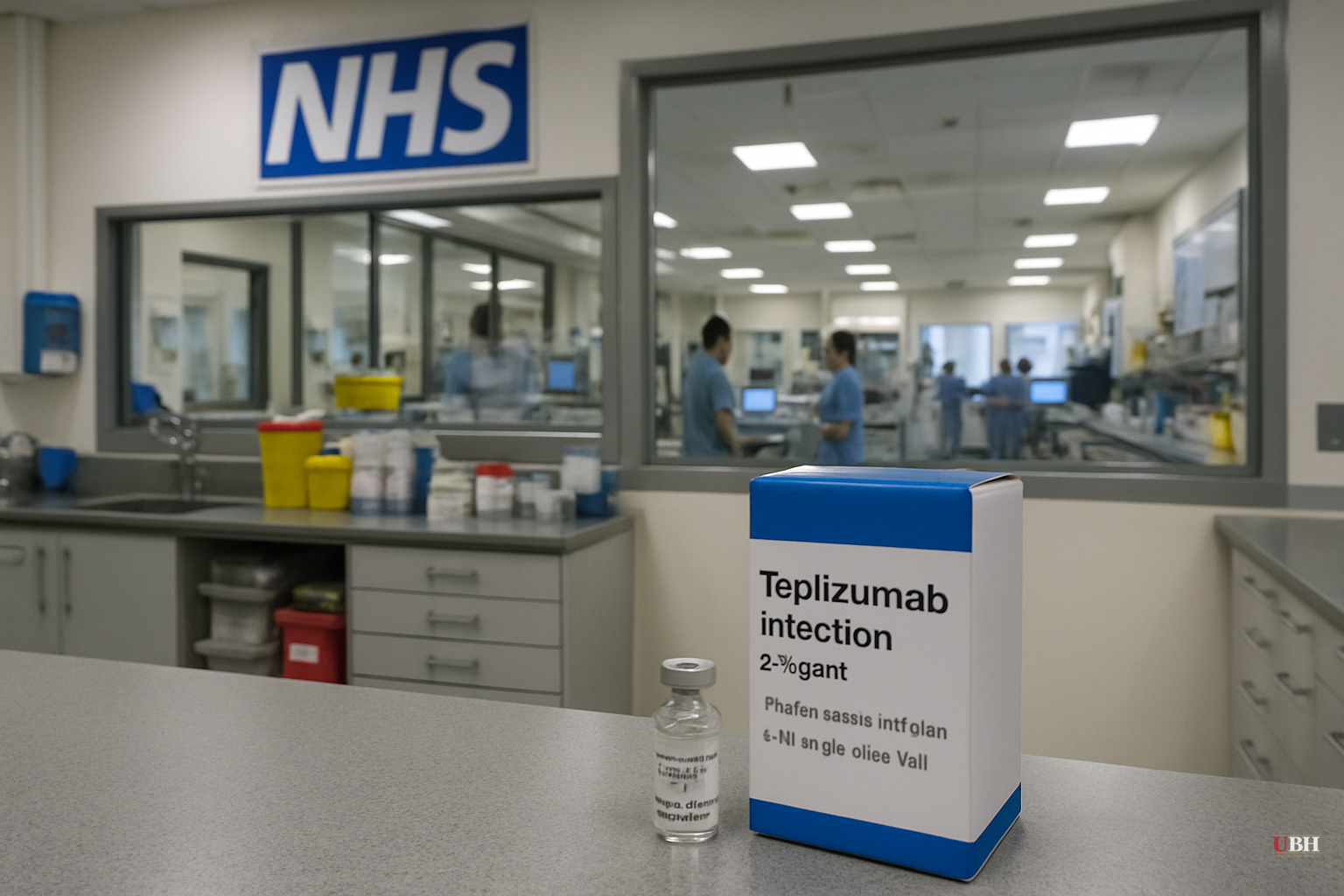
NHS Approves Teplizumab, the First Drug That Can Delay Type 1 Diabetes Onset by Three Years
What the Drug Does
Teplizumab is not a cure for type 1 diabetes. It does not stop the disease. What it does is slow the immune system's destruction of insulin-producing pancreatic cells, buying patients — most commonly children in their early teens — approximately three additional years before they need lifelong insulin management.
The drug is delivered as an infusion, not a pill. It must be administered before symptoms develop, which creates an immediate practical problem.
The Approval
The National Institute for Health and Care Excellence (NICE), which advises the NHS in England and Wales, has recommended teplizumab for use on the NHS. NICE described the decision as "genuinely exciting." Karen Addington, chief executive of the charity Breakthrough T1D, said: "We now have a treatment that can help make that possible" — referring to giving families years free from the daily burden of managing the condition. Patient groups have described the potential impact of the drug as "momentous."
NICE estimates that around 1,100 adults and children could be eligible in the drug's first year, with around 820 per year offered it in the longer term once a backlog in demand has cleared.
Type 1 diabetes affects people of all ages but most commonly strikes in early adolescence. Managing it is relentless: constant blood glucose monitoring, carbohydrate counting at every meal, insulin injections or pump therapy, and the ever-present risk of dangerously low blood sugar. Vicky Sebastian-Jenkins, whose son Theo was diagnosed at age four, described it to BBC News plainly: "It's something which you can never switch off from."
The Screening Problem
Teplizumab only works pre-symptom. That means patients must first test positive for the specific immune markers showing their pancreas is under attack, before they feel anything wrong.
Routine testing for the disease is not yet available on the NHS. Italy is the only country in the world that runs a national screening programme for children and young people, according to BBC News. Without routine population screening, the pool of eligible patients in England and Wales will be limited largely to those who discover their risk through blood tests carried out for other medical reasons or because the condition runs in their family.
Diabetes charities are campaigning for NHS screening to be expanded, but no timeline has been announced.
The Strongest Counterargument
Skeptics, including some health economists, raise a legitimate concern about approving a drug for a patient population that can barely be identified under current NHS infrastructure. If widespread screening doesn't follow, teplizumab's real-world reach will be far smaller than the headlines imply. The drug's approval is the easy part. Building the diagnostic pathway to actually find eligible patients at the right moment is a separate, harder problem that the approval decision does not solve.
That concern is fair, but it is also an argument for accelerating screening investment rather than withholding a proven therapy from the families who can currently access it.
What It Means for Patients Now
Children as young as eight qualify for the drug. Theo Sebastian-Jenkins, now eight and diagnosed at four, was too young to have been eligible when the disease took hold. His father Ben told BBC News: "It would be huge for any family to have those three years of childhood back without the worry and the things he's had to deal with."
The drug won't help Theo now. But for a sibling of a type 1 diabetes patient who tests positive for immune markers, that family can today ask their NHS GP about a referral pathway.
The Fiscal Reality
The published price of teplizumab works out at around £150,000 per course of treatment, although the NHS has negotiated a confidential discount with the drugmaker Sanofi. Three years of delayed insulin dependence reduces long-term NHS costs — fewer years of insulin supply, pump hardware, glucose monitoring equipment, and diabetic complication management. Whether the upfront infusion cost is offset by those downstream savings remains an open question.
What Comes Next
The immediate open question is whether NHS England will announce a funded expansion of type 1 diabetes screening beyond high-risk family members. Without it, teplizumab's approval will help a fraction of the children it could theoretically reach. Breakthrough T1D and other patient groups are campaigning for screening expansion, according to BBC News. NICE guidance does not automatically apply in Northern Ireland, while in Scotland the Scottish Medicines Consortium handles drug approval decisions separately and expects to issue advice on teplizumab in early 2027. Whether the NHS responds with concrete funding or an extended review process will determine whether this approval becomes a genuine public health advance or a milestone that benefits mostly those lucky enough to already be in the system.
Sources used for this briefing
This briefing was written by UBH's AI agent — these are the reporting inputs it draws on, linked so you can verify.


