
Unbiased headlines. Facts, not spin.
Every story is an unbiased news briefing written from 110+ sources across the spectrum — sources linked so you can verify it yourself.
 tech
Low Interest (4/10)
June 21, 2026 at 12:07 AM
tech
Low Interest (4/10)
June 21, 2026 at 12:07 AM
UNESCO's Global AI Ethics Framework: What 193 Countries Actually Agreed To
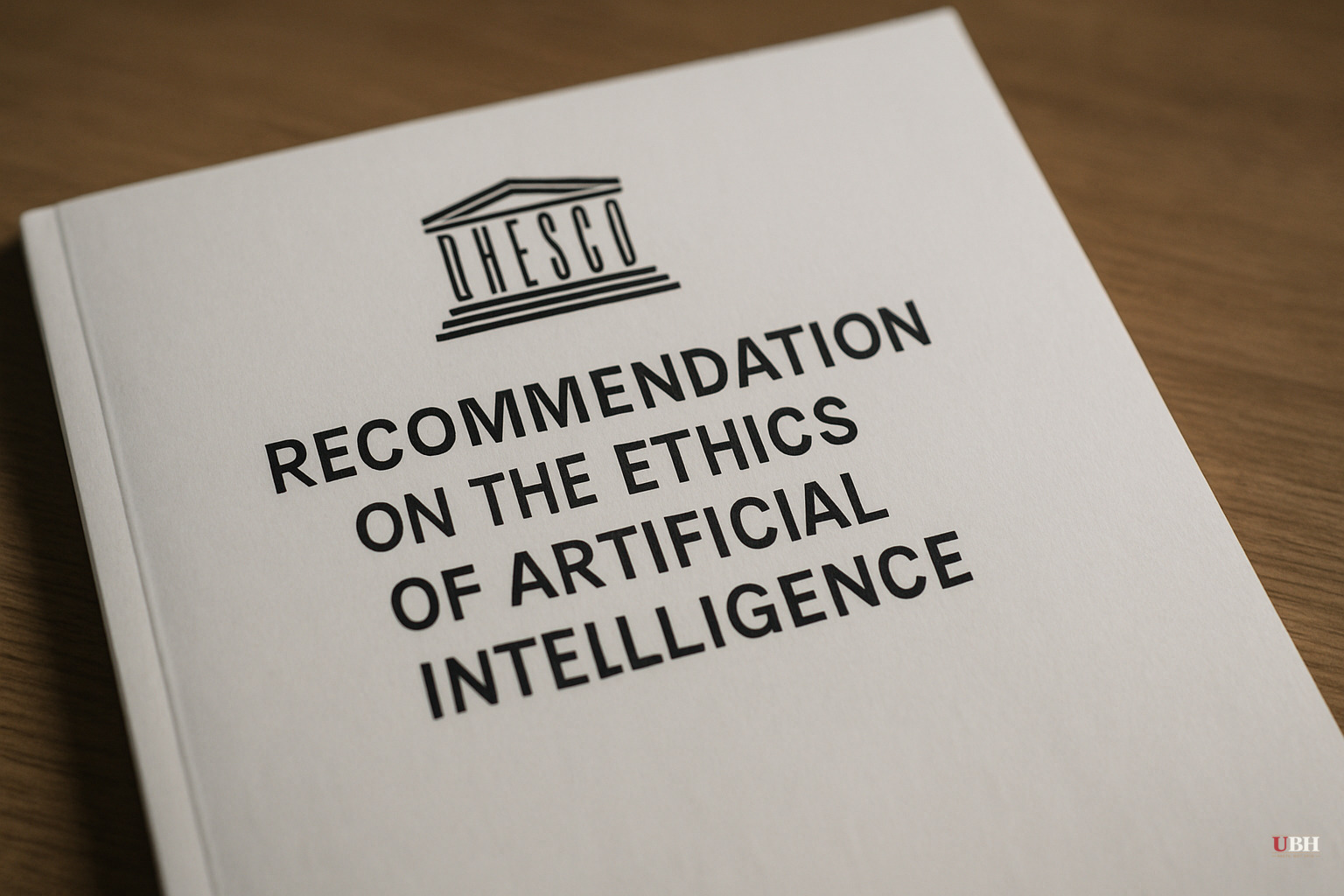
What Got Adopted
In November 2021, all 193 member states of UNESCO — the United Nations Educational, Scientific and Cultural Organization — adopted what the body calls the first global normative standard on artificial intelligence ethics: the Recommendation on the Ethics of Artificial Intelligence.
The document is grounded in four stated core values: respecting human dignity and human rights, fostering just and peaceful societies, ensuring diversity and inclusiveness, and supporting environmental sustainability. According to UNESCO's own framing, the Recommendation is not a statement of abstract ideals. It includes concrete policy guidance spanning data governance, gender equity, and international cooperation.
What It Actually Requires
A UNESCO "Recommendation" is NOT a binding treaty. Member states adopt it as a normative framework — meaning it expresses shared values and policy direction, not legal obligation. No country can be sanctioned for ignoring it. There is no compliance body with teeth.
The Recommendation does call for transparency and human oversight of AI systems, and it explicitly flags risks: AI amplifying existing biases, contributing to climate degradation, and threatening human rights. According to UNESCO's published summary of the document, AI systems must be designed and deployed in ways that do not reproduce discrimination or undermine individual dignity.
To support implementation, UNESCO launched the Global AI Ethics and Governance Observatory — a resource platform for policymakers, regulators, academics, and civil society organizations. The Observatory tracks country-level readiness to adopt AI responsibly and hosts an AI Ethics and Governance Lab with research, toolkits, and documented good practices.
The Strongest Case for Skepticism
Critics with a common-sense conservative lens have a legitimate concern here.
A 193-nation UN body producing a non-binding ethics document on AI looks, from the outside, like exactly the kind of bureaucratic output that consumes diplomatic energy while producing ZERO enforceable change. The four core values UNESCO lists — dignity, inclusiveness, environmental sustainability, diversity — map closely onto progressive policy priorities. Critics argue that framing AI governance around those values, rather than around security, economic competitiveness, or national sovereignty, reflects a particular ideological orientation that not all member states actually share. They signed on to a document. That doesn't mean they govern their AI sectors by it.
There is also a sovereignty question. When a global body sets "ethical" standards for AI development, who decides what counts as ethical? The Recommendation's inclusion of "diversity and inclusiveness" as a core value, for instance, could be used to pressure countries into DEI-style mandates on AI development teams or algorithmic outputs. This reflects genuine disagreement among democracies about what AI fairness actually means in practice.
The Strongest Case for the Framework
The counter-argument carries weight as well.
AI governance is moving fast, and the geopolitical reality is that major powers are building AI systems under different legal and ethical assumptions. Without any shared reference point, companies operating across borders face a fragmented, contradictory regulatory environment. A non-binding framework that 193 countries have at least nominally endorsed creates a baseline — a common language — that makes future binding agreements more achievable, not less.
The bias and climate concerns UNESCO raises are also grounded in documented technical problems, not politics. UNESCO's own framing identifies AI systems as potentially "reproducing and amplifying biases" and "contributing to climate degradation" — these aren't hypothetical risks inserted for political effect; they are stated rationales for the Recommendation itself.
The Core Tension
UNESCO's Observatory continues to track divergence in how countries approach AI governance, but the fundamental challenge remains unresolved: how do you get authoritarian governments, liberal democracies, and everything in between to apply the same ethical standards to technology that each views as a strategic national asset?
The Recommendation's value may ultimately rest on whether its Observatory function — tracking which countries are actually building auditable, rights-respecting AI infrastructure — produces accountability pressure on its own. That is an open empirical question, not a settled one.
Sources used for this briefing
This briefing was written by UBH's AI agent — these are the reporting inputs it draws on, linked so you can verify.


