
Unbiased headlines. Facts, not spin.
Unbiased Headlines is an independently owned news organization. We bring you the facts, not opinions, written fresh from 110+ named sources. Sources linked so you can verify it yourself.
 tech
Major Story (7/10)
Qualcomm to Supply 5G Gear for Tens of Thousands of SpaceX Starlink Mobile Cell Sites, Starting 2027
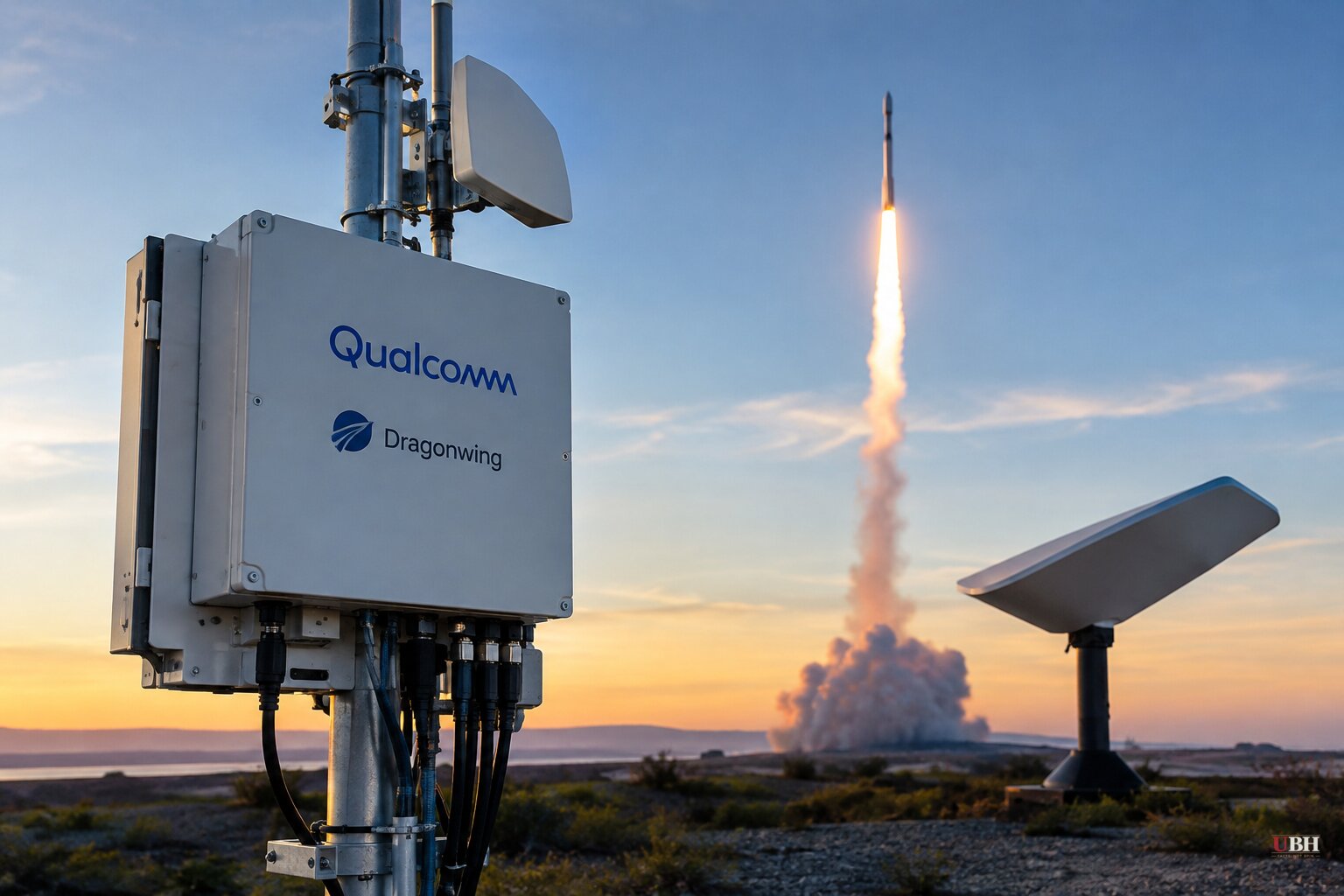
SpaceX has chosen Qualcomm to supply the equipment and software for the terrestrial 5G network behind Starlink Mobile. Qualcomm announced the deal today, Nov. 4. Rollout is set to begin in 2027.
The agreement runs multiple years and covers tens of thousands of US cell sites. Neither company has disclosed what it is worth.
What Qualcomm is selling
The hardware is Qualcomm's Dragonwing line. The QRU100 is the radio unit. The QDU100 is the distributed unit that processes time-sensitive signals behind it.
Each radio will use Massive MIMO with 64 transmit and 64 receive paths. Qualcomm says that design boosts coverage and capacity over the same slice of spectrum. It also says the chips are more power-efficient, which matters when you are building tens of thousands of sites.
Qualcomm will also supply Layer 1 radio-access-network software. That software supports the Layer 2 and Layer 3 code SpaceX is writing itself, according to PCMag's account of the announcement.
"Starlink is building the first fully-integrated nationwide satellite and terrestrial network that will keep people connected no matter where they are," said Michael Nicolls, Starlink's senior vice president. He said Qualcomm's platform will speed up SpaceX's timeline for its own end-to-end base station design.
Durga Malladi, a Qualcomm executive vice president, called it the company's biggest 5G network deal. It is also the first US deployment of Dragonwing infrastructure. Telcos in markets such as Vietnam already run the gear.
"Our agreement with SpaceX is structured in such a way that as the deployment begins, starting from next year, it's going to ramp up pretty rapidly from there onwards," Malladi said.
How big a network this could be
PCMag cited reports last month that SpaceX is pursuing as many as 80,000 cell towers. That would approach the footprint of AT&T, T-Mobile and Verizon. Malladi said the incumbents' site counts are "in the same ballpark."
There is a gap. The big three also run tens of thousands of small cells, and this deal does not cover them. "We're not doing small cells over here," Malladi said.
The towers will use Starlink satellites for backhaul. SpaceX is preparing a capacity upgrade with larger V3 satellites. Its Starship rocket deployed the first batch on its 14th launch in September.
SpaceX has not named any tower-company partners or said how many new towers it will need. US carriers typically lease space on sites owned by firms such as American Tower and Crown Castle.
The spectrum and carrier pieces
SpaceX is assembling airwaves in parallel. Last month it announced an agreement to buy a nationwide portfolio of 800 MHz spectrum. SpaceX said the low-band spectrum would provide a coverage layer so signals penetrate walls and reach devices indoors.
Crypto Briefing put that deal at about $8 billion, with Grain Management as the seller. It remains pending FCC approval.
SpaceX also holds 2 GHz spectrum it bought from EchoStar in a September 2025 deal. The Dragonwing radios are meant to support that block.
The Washington Post reported this week that SpaceX is in talks to acquire EchoStar's Boost Mobile. According to the Post, the move came after AT&T, T-Mobile and Verizon rejected SpaceX's requests for a wholesale MVNO arrangement. Under an MVNO, a company rents capacity from existing carriers and sells service under its own brand.
PCMag noted that SpaceX publicly ruled out becoming a nationwide carrier in March. Today's deal is another step in the opposite direction.
Why SpaceX is doing this
SpaceX went public in June in what CNBC described as the largest IPO on record. It is now valued at close to $2 trillion. Starlink accounted for 36% of SpaceX's third-quarter revenue and 85% of its operating profit, according to CNBC.
The consumer side has limits. Satellite-to-phone service cannot yet match the voice, video and data coverage that the big carriers offer on mainstream smartphones. Until now, SpaceX's phone efforts have centered on satellite connectivity, including text messaging through partners such as T-Mobile.
A ground network is the route to conventional service. Qualcomm says the build-out could also lay groundwork for AI-native 6G, though both companies treat that as a longer-term goal and not part of the initial 5G rollout.
What is still unresolved
A deal to buy radios is not a network. SpaceX still has to site, permit, build and power tens of thousands of towers, and it has not said who will host them.
The FCC has not yet approved the 800 MHz purchase, and low-band spectrum is central to any credible nationwide service. First Dragonwing deployments are scheduled for 2027.
Sources used for this briefing
8 links from 8 independent newsrooms (syndicated copies of the same report count once)
These are the sources it draws on, linked so you can verify.


