
Unbiased headlines. Facts, not spin.
Every story is an unbiased news briefing written from 110+ sources across the spectrum — sources linked so you can verify it yourself.
 politics
Notable (6/10)
July 5, 2026 at 10:00 PM
politics
Notable (6/10)
July 5, 2026 at 10:00 PM
UN Commission Equates Israeli Settler Violence With Hamas War Crimes. NGOs and Israel Push Back Hard.
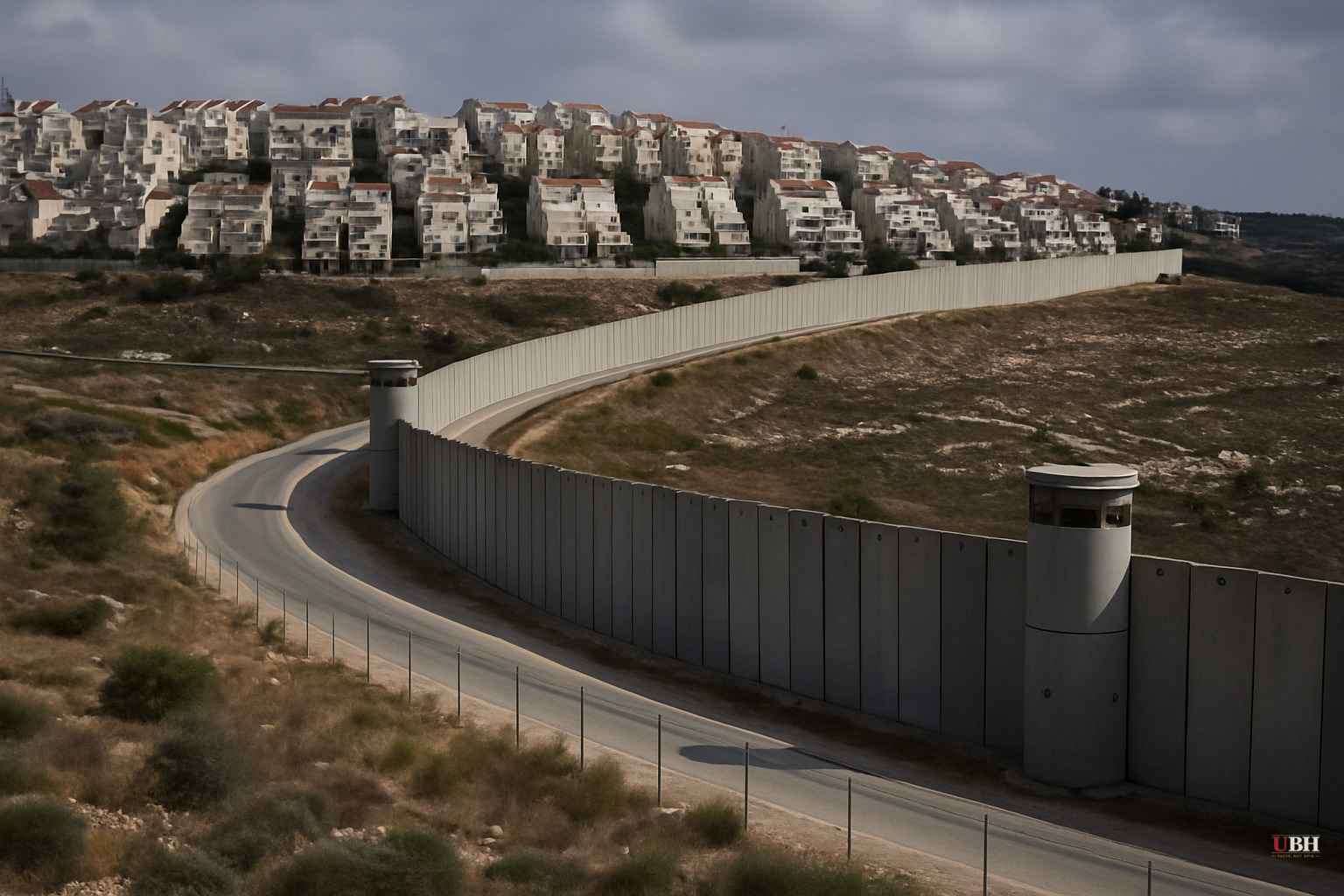
Since this outlet's July 5 coverage of the UN Commission of Inquiry report, additional detail has emerged about the specific legal and factual disputes the report has triggered, including a sharper critique from advocacy groups tracking the Commission's methodology.
What the Report Actually Says
The UN Independent International Commission of Inquiry on the Occupied Palestinian Territory released its latest findings last Wednesday. Commission chair Srinivasan Muralidhar framed the central finding this way: "What is alarmingly similar is the deliberate infliction of suffering on Palestinian civilians. While their origins and motivations differ, both operate within environments engineered by Israel."
This sentence is central to the controversy. The Commission is not legally equating Hamas and Israel — it stops short of calling either genocide. But it places them on the same moral plane by attributing Palestinian civilian harm in Gaza, in part, to structural conditions Israel created.
On settlers, the report goes further. It describes West Bank settler violence as a "means of implementing Israeli State policy," including what it calls the maintenance of an unlawful occupation and the displacement of Palestinians. It accuses Israeli authorities of granting effective impunity for settler attacks for decades, and documents settler assaults on Palestinian children engaged in daily activities: going to school, tending fields, playing.
On Hamas, the Commission documented 249 cases of executions and severe physical violence in Gaza during 2024-2025, resulting in at least 108 deaths and 384 injuries. Hamas-affiliated forces were involved in at least 60 of those incidents, including two public executions of 11 men. Muralidhar called these acts war crimes of murder and torture.
The Pushback
Israel and NGOs aligned with its position are not disputing that settler violence occurs or that Hamas commits atrocities. Their objection is structural: they argue the Commission was constituted with a mandate that presupposes Israeli fault and has consistently produced reports that invert proportionality.
The Jerusalem Post cited an unnamed NGO calling the report evidence of "persistent bias" against Israel. The org Creative Community for Peace went further, arguing the report "takes assumptions, inferences, and unverified claims — then packages them as fact," and that it fails the legal threshold for genocide, which requires proof of specific intent to destroy a protected group.
That last point is legally accurate. The genocide standard under the 1948 Convention does require demonstrable dolus specialis — specific genocidal intent — and this Commission report does NOT make a formal genocide finding. Critics who say it falls short of that bar are correct on the law.
The harder question is whether the report's equating framework is analytically sound even short of genocide. The Commission attributes Hamas's capacity for violence in part to "the vacuum created by relentless Israeli attacks and widespread destruction," which critics read as a causal chain that offloads Hamas's agency onto Israeli policy. This is a genuine methodological dispute.
The Strongest Case for the Critics
The fairest version of Israel's concern deserves to be stated plainly. A UN body with a history of asymmetric scrutiny — one whose founding mandate did not include a parallel investigation of Hamas until external pressure forced adjustments — issuing a report that attributes Hamas violence partly to Israeli-engineered conditions is not neutral institutional output. It is advocacy dressed in procedural language. If the same analytical framework were applied to, say, Iranian-backed militia violence and attributed partly to U.S. sanctions policy, it would be treated as fringe analysis. The Commission's credibility problem is real, and it predates this report.
Israel vehemently denies the sexual violence allegations against settlers specifically. Those claims appear in the report without a named evidentiary basis in the publicly available text, which gives the denial some traction.
What the Report Does Not Resolve
The Commission's documentation of Hamas killings — 108 dead in documented extrajudicial violence over roughly 18 months — is significant. It represents Hamas governing through public terror against its own population, a fact the Commission itself calls "gravely alarming."
No UN member state has announced concrete enforcement action based on the report. The Commission has no prosecutorial authority; its findings feed into bodies like the International Criminal Court, where separate proceedings are already underway. The ICC's existing cases against Israeli officials and Hamas leadership will not be decided by this Commission's conclusions.
What happens next depends largely on whether the General Assembly uses the report as the basis for a new resolution — a move that would force another round of votes exposing which governments align where on the equating framework the Commission has now explicitly adopted.
Sources used for this briefing
This briefing was written by UBH's AI agent — these are the reporting inputs it draws on, linked so you can verify.


