
Unbiased headlines. Facts, not spin.
Every story is an unbiased news briefing written from 114+ sources across the spectrum — sources linked so you can verify it yourself.
 defense
Major Story (8/10)
Event date: August 16, 2026
defense
Major Story (8/10)
Event date: August 16, 2026
Ukraine Deploys AI-Guided Drones That Pick Targets Without a Human Pulling the Trigger
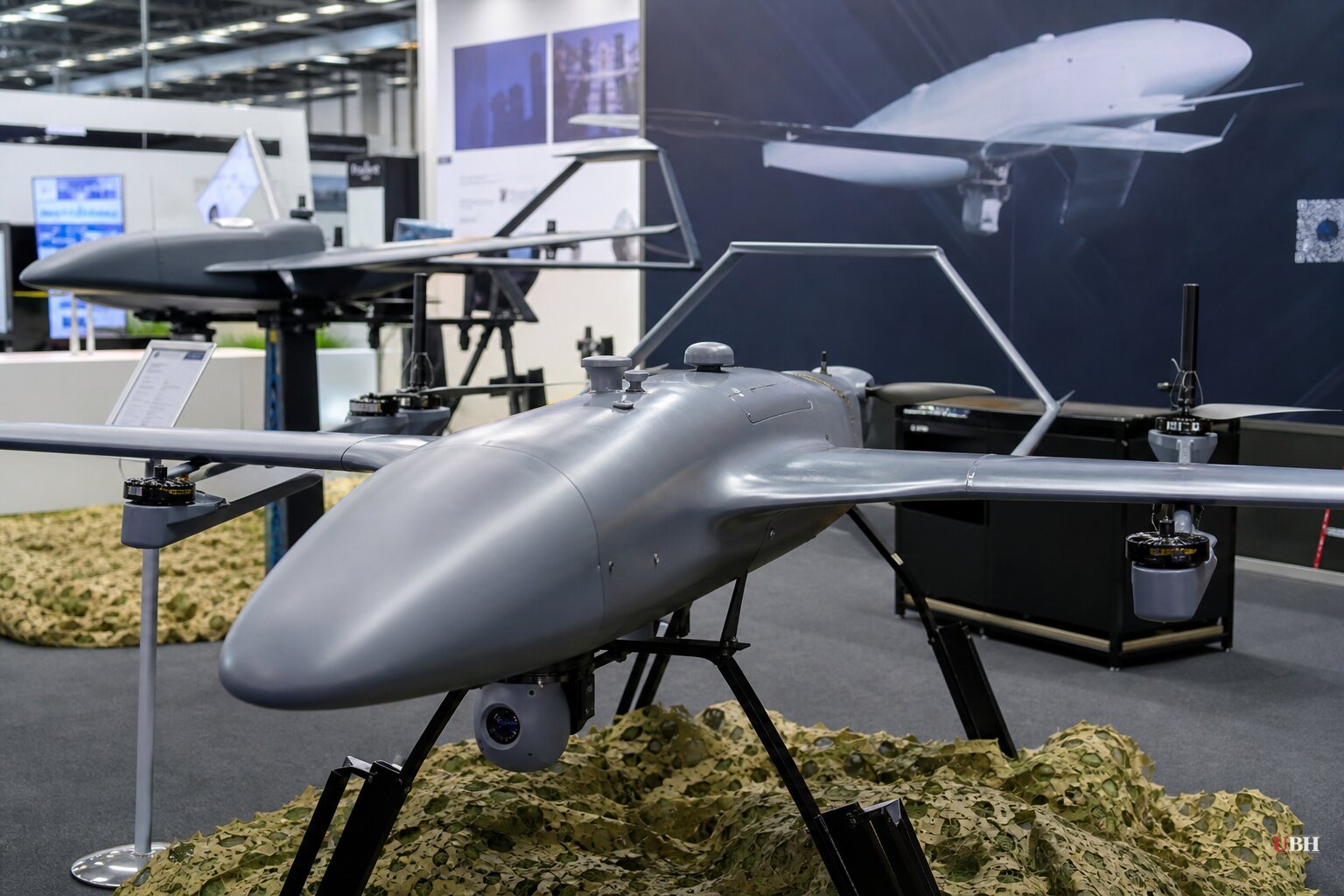
A Ukrainian-made quadcopter called the Saker Scout is now finding and killing targets without a human pulling the trigger, according to New Scientist. That report, cited widely including by Breitbart, describes what appears to be history's first documented use of a fully autonomous lethal weapon in combat.
A Saker representative told New Scientist the drones have been deployed in autonomous mode "on a small scale," with human operators taken out of the loop entirely. Separately, a New York Times report cited by Crypto Briefing said an AI-guided drone killed three Ukrainians, though Ukrainian officials told the Times their own systems do not permit autonomous target selection without human oversight. This claim sits in direct tension with what Saker itself told New Scientist about its own product.
Two different reports present two different claims about who controls the kill decision. Ukraine's government position is that humans stay in the loop. A drone maker's own spokesperson says otherwise, at least for some missions. Nobody has reconciled that contradiction publicly.
How the Saker Scout works
Saker is a Ukrainian company founded in 2021, originally for commercial AI and drone work, according to Breitbart. It pivoted to military production after Russia's February 2022 invasion. The Scout first deployed in September 2023. It's a cheap, foldable quadcopter that carries an explosive charge and can identify 64 types of Russian military equipment on its own, feeding that data into Delta, Ukraine's battlefield situational-awareness computer system, Breitbart reported.
In normal operation, the AI flags targets and a human operator approves the strike. In autonomous mode, that human step is gone. Defense Express has noted the AI system is expensive to develop but the drones themselves are cheap to build, which is the entire point. Swarms of autonomous drones are far more cost-effective than guided missiles, and they're much harder to jam because there's no signal to intercept once the AI takes over targeting.
Humanitarian groups worry autonomous systems will be less careful about civilian casualties than a human operator would be, since a machine can act on a false-positive target with nobody double-checking. That's a legitimate concern and a reasonable one. Machines don't hesitate, don't second-guess a shape in the dust, don't have a conscience. If an AI misidentifies a school bus as a military vehicle, there's no human in the chain to catch it before the charge detonates.
At the same time, the battlefield reality driving this is not abstract. Ukraine has spent four and a half years absorbing Russian missile and drone strikes on civilians. NPR reported that Russian attacks killed at least 377 civilians and injured 2,129 more in July alone, the deadliest month of the war by that measure. A Russian strike on a shopping center in Zelenskyy's hometown killed at least 16 people and wounded more than 130, including 22 children, according to the Post and Courier. Nobody fighting that kind of war is going to slow-walk technology that gives them an edge.
The war is also targeting the people who build the drones
Fox News reported that drone company executives and engineers on both sides are now being targeted directly. Vladimir Tkachuk, head of Russian drone maker Uraldronzavod, was critically injured and his driver killed in an Aug. 4 car bombing near Yekaterinburg, according to Russian state agency TASS via the Associated Press. Andrei Cherezov, head of another Russian drone firm, was shot three times in Tula in late July, Ukrainian outlet Pravda reported. German authorities have arrested two suspected operatives accused of spying for Russian intelligence on a Bavarian drone manufacturer, with reports the plot included targeting an executive there.
Draganfly CEO Cameron Chell told Fox News Digital the logic is simple. Drone tech evolves every 10 to 30 days, so killing or disabling one key engineer can set a weapons program back months. No government has publicly attributed either Russian assassination attempt to Ukraine, and no charges have been filed in connection with them.
American forces got outclassed in war games
The Daily Wire reported that Ukrainian drone operators from the 412th Regiment, known as Nemesis, wiped out a full U.S. armored brigade during the Combined Resolve exercise in Hohenfels, Germany, this spring. About 3,500 troops from the Army's 3rd Armored Brigade Combat Team faced off against the Ukrainians, who spotted and destroyed American armor so quickly that fresh U.S. units had to be rotated in just to keep the drills running, according to the Wall Street Journal. American units improved over the two-week exercise as they learned to disperse and use electronic warfare, and an Army official noted newer Mobile Brigade Combat Teams with updated gear have performed better in similar drills.
Drone strikes are killing civilians on both sides in real time. CNN reported at least seven people died, four of them children, when debris from a Ukrainian drone hit a crowded beach in Gelendzhik, Russia, though it's unclear whether Russian air defenses shot the drone down or it crashed on its own. Ukraine's Center for Countering Disinformation blamed Russian air defense forces for the deaths. NPR separately reported Ukraine launched hundreds of drones at Russia in one of its largest strikes of the war, killing at least six people including an 83-year-old man.
The unresolved question is whether any international body will set rules for autonomous lethal drones before more of them are deployed at scale. Right now, there's no treaty, no binding standard, and no clear line between a Ukrainian government that says humans stay in the loop and a drone maker that says, for some missions, they don't.
Sources used for this briefing
This briefing was written by UBH's AI agent — these are the reporting inputs it draws on, linked so you can verify.


