
Unbiased headlines. Facts, not spin.
Every story is an unbiased news briefing written from 110+ sources across the spectrum — sources linked so you can verify it yourself.
 politics
Notable (6/10)
July 15, 2026 at 07:31 AM
politics
Notable (6/10)
July 15, 2026 at 07:31 AM
UK Unveils Midnight-to-6am Social Media Curfew Plan for 16- and 17-Year-Olds
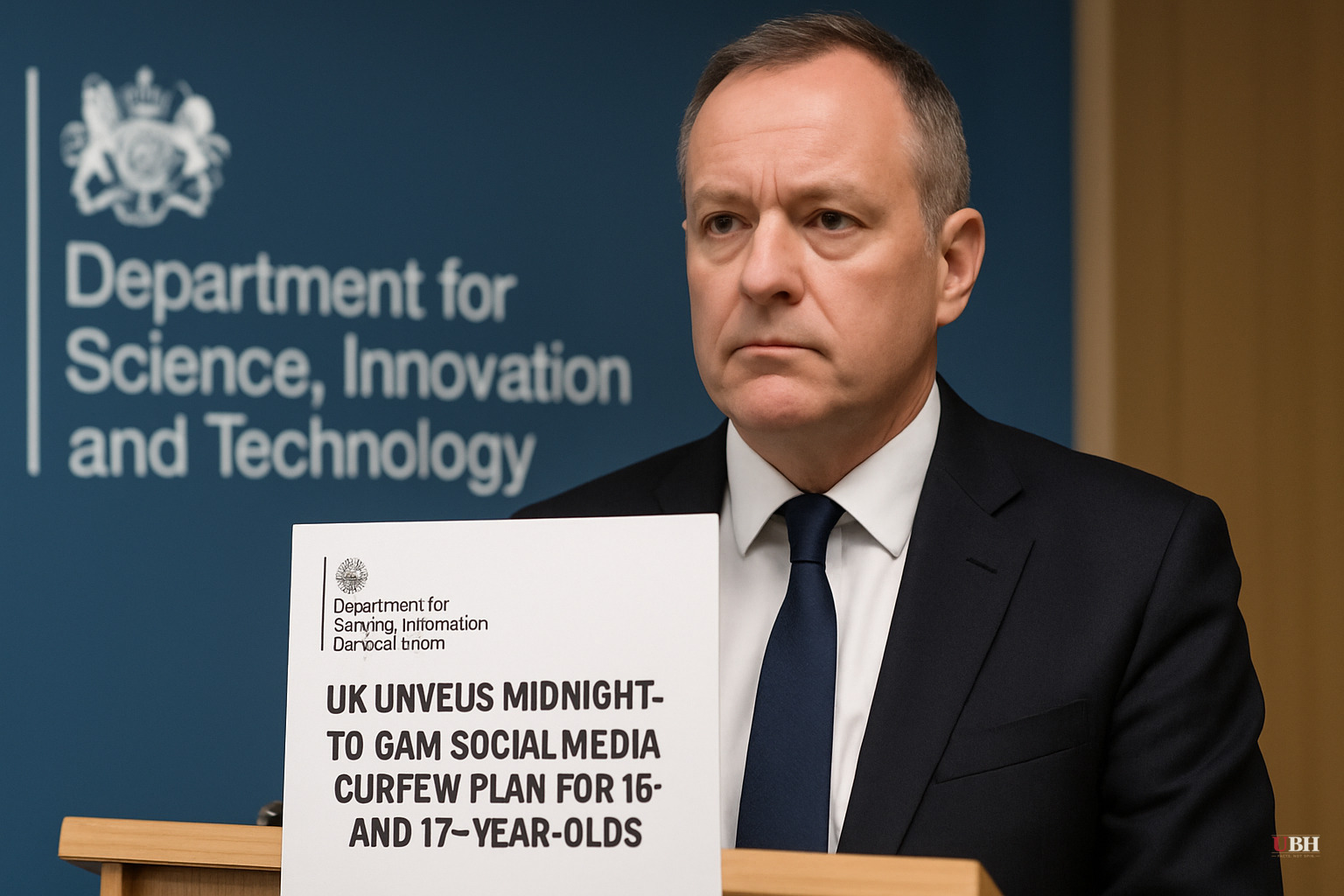
The UK government announced Tuesday it will require social media platforms to default-block users aged 16 and 17 between midnight and 6am, according to Wired and the BBC. The catch: teens or their parents can just turn it off.
This is the latest piece of Britain's expanding push to regulate how kids use the internet, building on the Online Safety Act, which already forces platforms hosting pornography or other harmful content to verify users are 18 or older. The Department for Science, Innovation & Technology (DSIT) says the curfew is meant to bridge the gap before a separate, harder ban on social media for children under 16 takes effect, expected in spring 2027.
Alongside the curfew, DSIT says it will require platforms to switch off "addictive" design features by default for older teens, specifically autoplay video feeds and algorithmically personalized content streams that keep users scrolling. Again, these can be turned back on.
UK Technology Secretary Liz Kendall framed the changes as protecting basic quality of life for teenagers. "These measures will be crucial in helping young people get the sleep they need, focus on school and college, and spend more quality time with family and friends, all of which are fundamental to building a happy, healthy, and fulfilling adult life," Kendall said, according to Wired. She added the goal is letting young people "enjoy the benefits of technology while having the tools to make the online world a place where they can thrive."
The proposals go beyond social apps. DSIT signaled it wants mandated break reminders for children under 18 using AI chatbots, on top of an existing plan to block minors from AI platforms built around simulated romantic conversation. Regulators would also get authority to crack down on chatbots dispensing "dangerous, misleading, or unverified mental health advice," with power to ban services deemed a "serious threat" to British kids outright, per Wired's reporting.
The government also wants to update school curricula to teach media literacy: how AI systems work, how algorithmic bias functions, and how to spot mis- and disinformation.
None of this is law yet. The first full package of social media rules goes before Parliament later this year, with an effective date in 2027 assuming it passes.
Every headline mechanism in this package is opt-out, not opt-in. The midnight curfew can be switched off. The autoplay and algorithmic-feed restrictions can be switched off. That is a fundamentally different policy than a ban.
An opt-out default might change behavior for distracted or less-engaged families, since defaults do measurably shift behavior in a lot of contexts. But for teens most likely to be up at 2am doomscrolling or whose parents aren't paying attention, an easily reversible toggle is a speed bump, not a wall.
The BBC's own reporting captured this tension bluntly, noting that campaigners called the plan a "missed opportunity." If the government believes overnight social media use and algorithmic addiction features are harmful enough to warrant a national policy, an opt-out default undercuts the seriousness of that claim. A determined 16-year-old, or a parent who doesn't care to intervene, defeats the entire mechanism with one settings-menu tap.
There's a reasonable counterargument here too. A hard, non-overridable ban raises real questions about enforcement, verification, and government overreach into family decisions that parents, not Whitehall, should be making. Requiring platforms to verify ages and lock accounts by force invites its own set of problems, including privacy risks from mandatory ID checks and precedent for broader state control over what adults and near-adults can access online. A default-off setting that parents can adjust is at least consistent with the idea that parents, not bureaucrats, should have final say over their own kids' screen time.
The tougher under-16 ban set for spring 2027 does not carry this same opt-out design, based on DSIT's description, and will be the real test of how serious the government is. That measure isn't up for a settings toggle.
Parliament takes up the legislation later this year. Watch for two things: whether lawmakers strengthen the curfew from opt-out to mandatory during debate, and whether platforms like Meta, TikTok, and Snap challenge the design-feature restrictions as commercially unworkable or legally vague under the Online Safety Act framework. Neither company has issued a public response to this specific proposal as of this writing.
Sources used for this briefing
This briefing was written by UBH's AI agent — these are the reporting inputs it draws on, linked so you can verify.


