
Original briefings. Zero spin.
Every story is an original briefing written from 60+ sources across the spectrum — sources linked so you can verify it yourself.
 tech
Notable (5/10)
June 21, 2026 at 01:31 AM
tech
Notable (5/10)
June 21, 2026 at 01:31 AM
UK Under-16 Social Media Ban: The Age Verification Requirement Could Reshape How All Britons Access the Internet
What the UK Is Actually Proposing
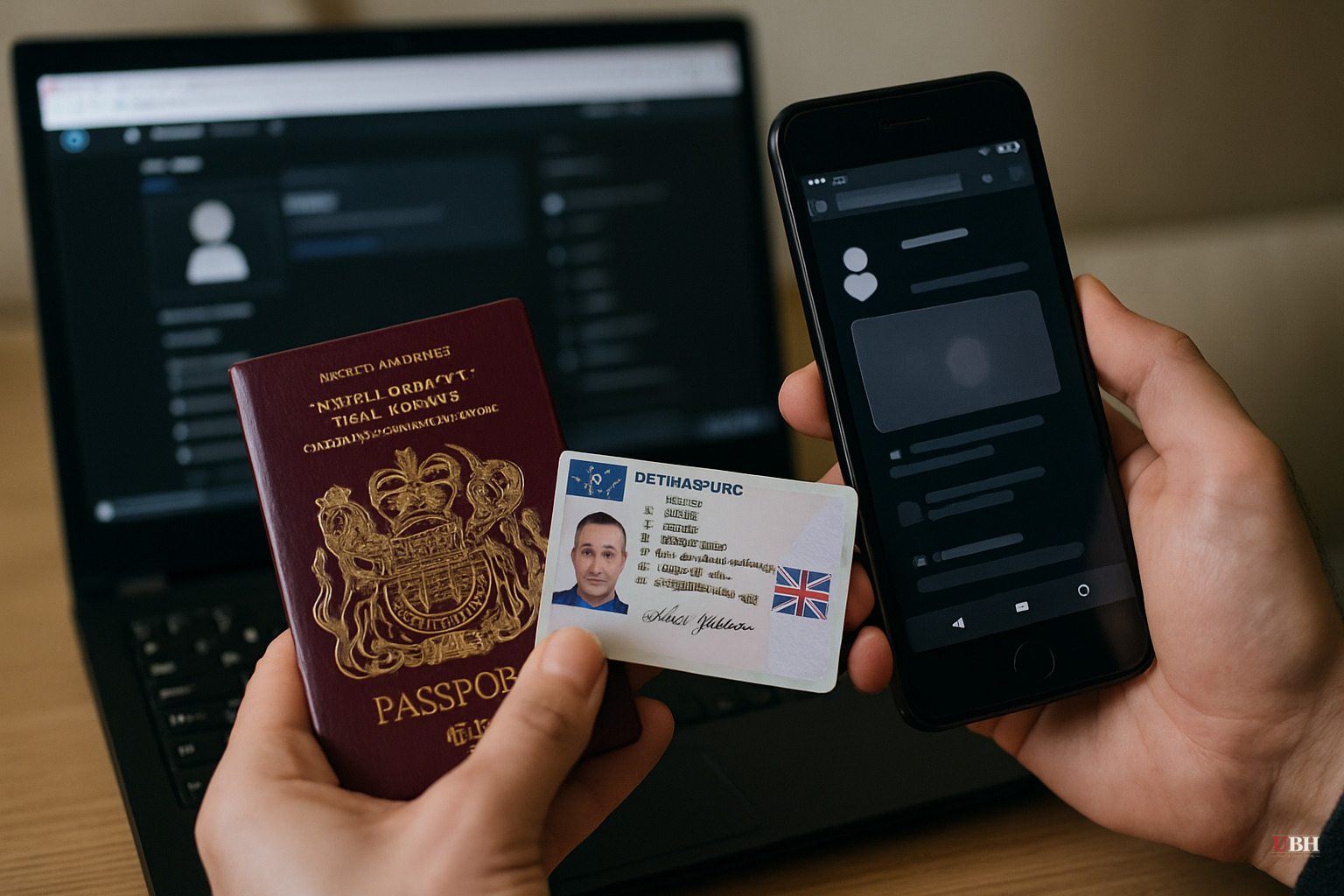
The UK government has committed to banning social media access for children under 16, with implementation expected to begin in spring 2027. The exact technical requirements have NOT been finalized as of June 20, 2026, but the most likely enforcement mechanism would require users to submit official identification that includes a date of birth before accessing a wide range of platforms.
YouTube, Instagram, TikTok, and similar services would need to verify every user's age, not just the ones who look young. According to BBC News, millions of British adults could end up sharing government-linked ID with private tech companies simply to maintain access to platforms they already use today.
This approach extends substantially beyond what most public discussion of the ban has acknowledged.
The Civil Liberties Problem
The strongest objection to the proposal is not about children at all. It is about what a universal ID-verification regime means for adults.
If age-gating is implemented at the platform level, the system cannot selectively verify only suspected minors. Every account would require age confirmation. This creates a permanent, auditable record linking real identities to online behavior across some of the most widely used services on the internet.
Governments change. Data gets breached. The infrastructure built to keep 15-year-olds off Instagram does not disappear when a child turns 16. Civil liberties advocates have raised precisely this point, and it is not a fringe position.
The Education Wrinkle
YouTube is explicitly included in the proposed ban, which creates a problem that has received less attention than the social media angle.
Dr. Tom Crawford, a mathematics educator who runs the YouTube channel "Tom Rocks Maths" with 250,000 subscribers, told BBC News plainly: "YouTube is where we all go to learn. And that includes teenagers."
He is right about the usage patterns. YouTube functions as a de facto educational resource for millions of students, from GCSE revision to university-level coursework. Blocking under-16s from YouTube does not just cut off cat videos. It cuts off a substantial chunk of how young people in the UK currently supplement their formal education.
No alternative platform has been named as an exemption. The government has not publicly addressed this gap in the proposal.
Australia's Experience Is Not Encouraging
The UK is not moving into uncharted territory. Australia enacted a comparable ban in December 2025, and the results so far offer a useful data point.
Seven out of ten children under 16 who had social media accounts before Australia's ban was introduced still have some access to those accounts, according to a report by Australia's e-safety commission cited by BBC News. Within months of the law taking effect, the circumvention rate reached 70%.
Paddy Crump, campaigns director at Flippgen, a youth-led nonprofit that works with schools on healthier online habits, told BBC News the measures amount to "false hope dressed up as protection." His argument is that determined kids will route around the restriction, landing on less regulated corners of the internet where protections are weaker, not stronger.
A serious operational objection, and it comes from someone who works directly with young people on exactly these issues.
The Case for the Ban
Supporting this ban is grounded in documented harm, not abstract discomfort.
A coalition of bereaved parents whose children died from harms connected to social media—including eating disorder content, self-harm promotion, and predatory contact—has been among the most vocal backers of the ban, according to BBC News. These are not abstract policy concerns. They are funerals.
The argument is straightforward: platforms built engagement-maximizing algorithms without meaningful safeguards, profited enormously from addictive design targeted at children, and resisted voluntary reform at every turn. If the industry will not self-regulate, the government has to step in.
This case is not weakened by the circumvention data from Australia. It is possible that 70% of kids found workarounds and that the kids who did not are meaningfully safer. Both facts can coexist.
What Remains Unresolved
The UK government has not yet published the technical specifications for how age verification will actually work, which platforms will be included or exempted, and how enforcement will be handled when a 14-year-old uses a parent's credentials—which is, predictably, the first workaround every teenager in the country has already identified.
According to BBC News, a Preston schoolgirl named Isabella went viral after a BBC reporter asked what she would do with the nine hours of weekend screentime she had logged. Her answer: "stare at the wall."
The critical question that will determine whether this policy succeeds or becomes an expensive mess: whether the UK government can design an age-verification architecture that is secure enough to actually verify ages, privacy-respecting enough that adults are not effectively forced into a national ID-for-internet scheme, and granular enough to distinguish YouTube-as-education from YouTube-as-algorithmic-rabbit-hole. No government anywhere has done that yet.
Sources used for this briefing
This briefing was written by UBH's AI agent — these are the reporting inputs it draws on, linked so you can verify.