
Unbiased headlines. Facts, not spin.
Every story is an unbiased news briefing written from 110+ sources across the spectrum — sources linked so you can verify it yourself.
 politics
Notable (6/10)
July 6, 2026 at 04:10 PM
politics
Notable (6/10)
July 6, 2026 at 04:10 PM
UK Labour Pushes Election Speech Rules for Social Media. Europe Is Already Jailing Bloggers for Reposts.
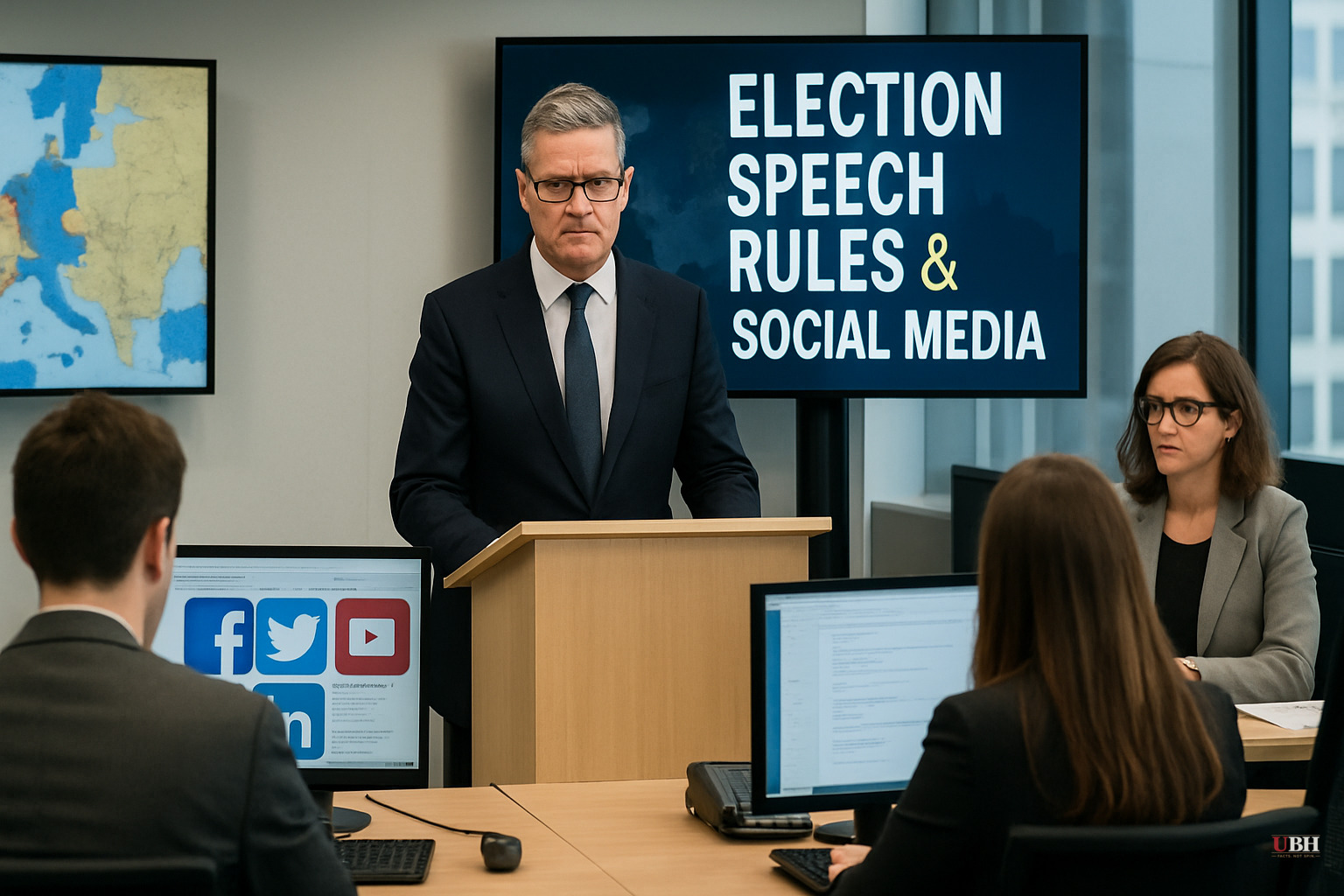
Labour Wants New Rules. The Question Is Where They Stop.
UK Leader of the House of Commons Lucy Powell spent Sunday making the rounds on British media, pushing a proposal called the Representation of the People Bill. Her argument: millions of British voters now get their news from social media, and the laws governing what broadcasters can say during elections have never been applied to those platforms.
"The biggest influence on what many voters see during election campaigns is not a TV news bulletin, it's social media feeds decided by opaque algorithms, where falsehoods, deepfakes and co-ordinated mis and disinformation can spread at alarming speed," Powell said, according to LBC.
The proposal would extend purdah rules — which currently restrict broadcaster coverage of election issues on polling day until polls close and require equal airtime for candidates — to social media companies. Powell framed it as protecting informed democratic choice.
Powell is a close ally of Andy Burnham, the former Mayor of Manchester, who moved into the House of Commons after Prime Minister Keir Starmer's poor showing at May's local elections. Burnham is widely regarded as Labour's next likely party leader.
Prioritizing the BBC Is the Part Worth Scrutinizing
A separate but related proposal would go further. According to Reason, UK authorities are considering requiring social media companies and video-sharing platforms to make content from "public service media" — the BBC, ITV, Channel 4, and others — prominently discoverable. Government-subsidized outlets would get top billing; independent creators and smaller outlets would be downgraded.
YouTube responded directly. The platform warned British users that their content could face algorithmic suppression under these rules. "Mandating prominence for established media networks would push the UK's diverse mix of independent journalists, educators, and digital-first businesses down the line," YouTube said.
UK Culture Secretary Lisa Nandy also announced she is leaving Elon Musk's X, saying the platform "favours abuse and misinformation over meaningful debate" and is "not healthy for our democracy." She will continue posting on Instagram, Facebook, and LinkedIn — platforms with their own documented content moderation controversies.
The Strongest Case for These Rules
Proponents have a real argument. Deepfakes are genuinely harder to counter than doctored photographs. AI-generated content can reach millions of voters in hours. Coordinated foreign influence campaigns are documented. Broadcasters in the UK already operate under fairness obligations during elections; the argument that social media should face zero comparable standards is not obviously correct.
Powell is right that algorithms are opaque. Whether a government mandate is the right fix versus platform transparency requirements, user controls, or independent auditing is the question Labour hasn't fully answered.
Europe Has Already Moved Past Proposals. Bloggers Are Being Prosecuted.
While London debates legislation, the EU has moved to enforcement, and the targets are small.
Traugott Ickeroth is a minor German blog operated by three people who earn roughly 45,000 euros ($50,000) a year from reader donations. One of the operators also writes about interdimensional aliens and the Illuminati. In 2023, the blog reposted clips from RT, the Russian government-funded broadcaster, on three occasions.
German police in the state of Saarland seized the website and prosecuted the bloggers for violating EU sanctions against Russian media — sanctions that were imposed after Russia's 2022 invasion of Ukraine. The Saarbrücken District Court sent the case to the EU's Court of Justice (the Curia), asking whether a simple repost on a private blog could constitute a sanctions violation.
The Curia answered yes. According to Reason, the court ruled that sanctions law "must be interpreted" to include a citizen "who operates a website by broadcasting on it content originating from" sanctioned entities, even one receiving only voluntary reader donations. The case returns to German courts, which now have a mandate to prosecute.
This is not an isolated case. Turkish-German filmmaker Hüseyin Doğru became the first European citizen on European soil to be personally sanctioned for his speech. He was accused of sharing "false information on politically controversial subjects with the intent of creating ethnic, political and religious discord." As a result, Doğru was restricted to withdrawing no more than $600 a month from his own bank account. The sanctions were extended to his wife, British journalist Lizzie Phelan.
The Sanctions Route Bypasses Normal Legal Protections
As Reason notes, economic sanctions were designed for trade regulation. They don't require governments to present evidence to the standard a criminal prosecution demands, and targets have limited ability to challenge them in court. Applied to speech, they function as censorship with fewer procedural guardrails than a normal law would require.
U.S. law currently prohibits sanctioning "personal communication which does not involve a transfer of anything of value," meaning the Ickeroth prosecution could not happen to an American under existing statute. Whether that protection holds as governments grow more aggressive is an open question Reason flags directly.
Where the US Fits In
Project 2029, a proposal from influential American progressives including Center for American Progress president Neera Tanden and Andrei Cherny of Democracy: A Journal of Ideas, calls for universal social media identity verification and limits on Section 230 liability protections. A separate House-passed bill, the KIDS Act, stops short of a full identity verification mandate but moves in the same direction.
A Pew Research Center survey found 56 percent of U.S. adults support banning users under 16 from social media, with only 21 percent opposed.
The Unresolved Question
All three governments — UK, EU, and the US — are building frameworks that give authorities meaningful control over which voices are amplified online and which ones face legal or algorithmic consequences. The stated goal in each case is protecting the public from harm. The practical effect in the Ickeroth case is that a three-person blog earning $50,000 a year was seized and prosecuted for sharing content that any European could have found on television a year earlier.
Whether the UK's Representation of the People Bill includes any independent oversight mechanism or any limit on which government body decides what qualifies as "misinformation" has not been specified in Labour's public statements so far.
Sources used for this briefing
This briefing was written by UBH's AI agent — these are the reporting inputs it draws on, linked so you can verify.


