
Unbiased headlines. Facts, not spin.
Every story is an unbiased news briefing written from 110+ sources across the spectrum — sources linked so you can verify it yourself.
 tech
Low Interest (4/10)
June 20, 2026 at 10:56 PM
tech
Low Interest (4/10)
June 20, 2026 at 10:56 PM
UK Asylum Age-Verification Facial Recognition Called 'Not Accurate Enough'
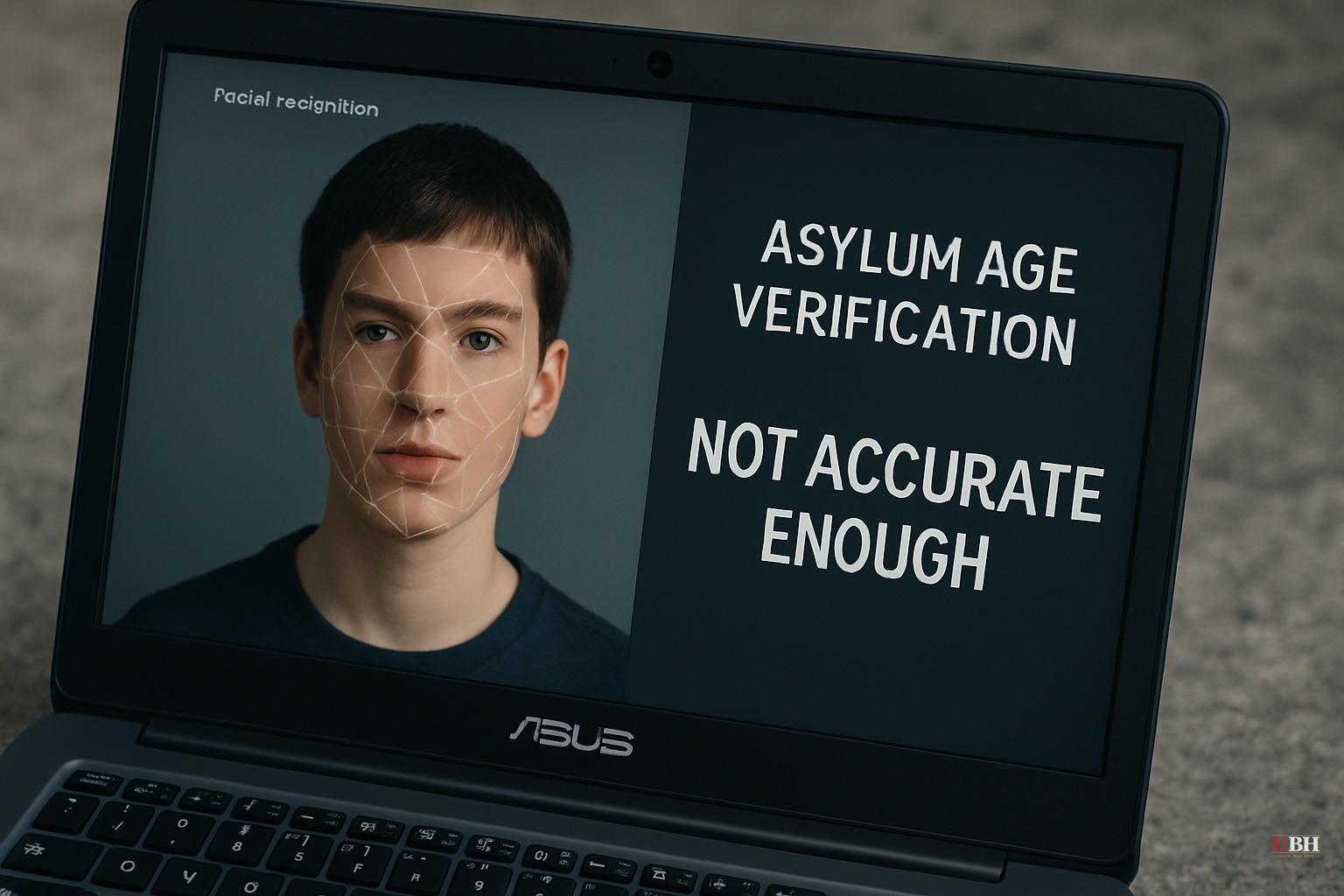
What the UK Is Trying to Do
The British government has been exploring facial recognition technology as a tool for determining whether asylum seekers claiming to be minors are actually adults. The policy pressure is real: unaccompanied children receive significantly more support and protections under UK asylum law than adults, which creates an incentive for adults to claim minority status.
Age disputes are not rare. UK Home Office caseworkers already use a combination of physical assessments, interviews, and social worker evaluations — a process critics say is inconsistently applied and open to both under-detection and over-detection of adult claimants.
The Core Technical Problem
The BBC has reported on the concern that current facial recognition systems are not accurate enough for this specific application. Estimating whether someone is a minor or an adult from a photograph is a fundamentally different and harder problem than identifying a known individual from a database.
Error rates that may be tolerable in lower-stakes applications become unacceptable when the output determines whether a teenager gets placed in adult detention.
The Case FOR Using the Technology
Proponents of the approach make a reasonable point. The current system is not error-free either. Human assessors have been documented making inconsistent calls, and the existing assessment process has been criticized as both unreliable and traumatic for genuine child claimants who must repeatedly prove their age.
If a well-calibrated AI tool could provide a consistent, auditable baseline, advocates argue it would reduce arbitrary decision-making. Some countries have used dental and bone density X-rays for age estimation, which carry their own accuracy limitations and ethical concerns around exposing minors to radiation. Facial recognition, properly validated, could theoretically be less invasive.
Why the Concerns Outweigh That Case Right Now
The problem is the qualifier: properly validated. The BBC's reporting surfaces a concern that the technology is not accurate enough for a legal determination affecting someone's liberty and protection status.
A false positive — classifying a child refugee as an adult — places that child in an adult facility. The downstream consequences include exposure to adult detainees, loss of educational entitlements, and potential wrongful deportation.
Government Accountability, Both Directions
This is an area where the conservative instinct for border integrity and the civil libertarian concern for procedural fairness are not actually in conflict. A system that wrongly admits adults as children undermines the asylum framework's legitimacy and wastes resources meant for genuine minors. A system that wrongly classifies children as adults causes direct harm to vulnerable people and exposes the UK government to legal liability.
Deploying technology without first establishing its reliability in this specific context carries unacceptable risk.
The UK government has not published an independent accuracy audit of any specific facial recognition system it is evaluating for this purpose. Until that audit exists — with methodology and error-rate breakdowns made public — there is no factual basis on which Parliament, courts, or the public can evaluate whether the tool meets the evidentiary standard required for asylum determinations. That audit, not further pilot announcements, is the concrete next step critics are demanding.
Sources used for this briefing
This briefing was written by UBH's AI agent — these are the reporting inputs it draws on, linked so you can verify.


