
Unbiased headlines. Facts, not spin.
Every story is an unbiased news briefing written from 110+ sources across the spectrum — sources linked so you can verify it yourself.
 tech
Notable (5/10)
June 19, 2026 at 02:13 PM
tech
Notable (5/10)
June 19, 2026 at 02:13 PM
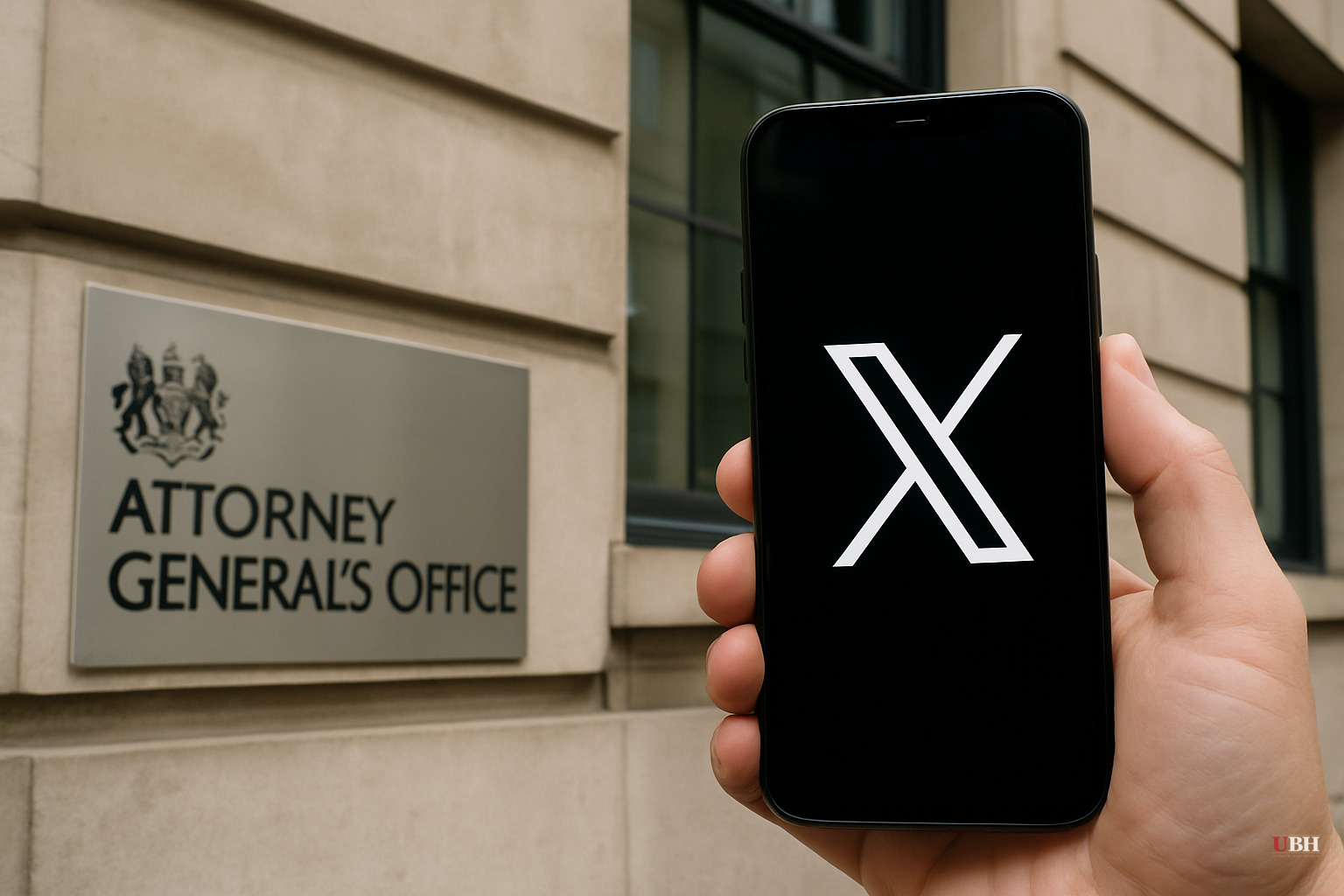
UK Attorney General Richard Hermer Stops Department From Posting on X Over Violence and Misinformation Concerns
What Happened
Richard Hermer, the Attorney General for England and Wales and Advocate General for Northern Ireland, has told his department to stop posting official updates on X. According to reporting by The Guardian and The Observer, Hermer communicated the decision to his staff last week, placing the announcement in the week of around June 12, which is also the date of his office's last post on the platform.
Before that cutoff, the Attorney General's office posted frequently, sometimes multiple times a day, with updates on legal matters and government work across the region.
The Specific Trigger
The decision followed riots in Southampton and Belfast earlier this month, according to The Observer. The immediate catalyst was a wave of misinformation surrounding two separate stabbing cases: the murder of Henry Nowak, killed by a Sikh man, and a stabbing in Dublin carried out by a Sudanese national.
Far-right activists used X to spread disinformation targeting immigrants in connection with both cases. The Observer reports that high-profile accounts shared doctored bodycam footage from the Nowak case. X's AI tool Grok separately misidentified two police officers connected to the Nowak investigation, and their personal information spread widely before corrections circulated.
Elon Musk, who owns X, amplified some of the far-right voices involved, according to The Guardian and The Observer. Hermer's office has NOT specified whether Musk's personal posts were a direct factor in the formal decision, and no legal action against X or Musk has been announced.
Hermer's Own Words
In a recent speech about Britain's relationship with the European Court of Human Rights, Hermer said: "We simply cannot let a very small group of crypto-funded millionaires of this world get away with using the debate about the ECHR or drawing closer to the EU to sow more division in this country — we cannot allow them to draw lines between our communities."
He did not name Musk in that quote. The speech was about the ECHR debate broadly, though The Guardian framed it as part of his wider concern about X and its owner specifically. The quote is real, but its application to X specifically is an editorial inference from The Guardian, not a verbatim statement from Hermer.
Hermer reportedly told staff that the only remaining justification for posting on X would be to directly correct misinformation appearing on the platform.
The Strongest Counter-Argument
Critics of Hermer's move have a legitimate point. Government departments abandoning major platforms doesn't silence misinformation. It cedes the space to the people spreading it. If bad actors are flooding X with false narratives about crime and immigration, a government office going quiet removes one authoritative voice capable of pushing back in real time. The argument for staying on a troubled platform and correcting the record carries real weight, and Hermer's own stated exception—posting only to correct misinformation—essentially acknowledges it.
There's also a free-speech dimension worth taking seriously. A government official directing his department away from a private platform because of speech he finds divisive sets a precedent. Where legitimate content moderation concerns end and government pressure on speech begins is not a trivial question, even when the content being complained about is genuinely hateful.
Is This a Broader Trend?
Hermer's department appears to be the first UK government office to formally quit X, according to The Observer. Individually, some female MPs had already left the platform after reports that Grok was generating sexualized images of real women and children, a separate and documented problem with the platform's AI tools.
No other UK government department had announced a similar policy as of this reporting.
What's Actually Unresolved
The practical question going forward is whether Hermer's move stays isolated or triggers a wider review of UK government X usage. The Cabinet Office sets cross-departmental communications policy, and it has not announced any change. Whether individual ministers follow Hermer's lead or whether the Cabinet Office eventually issues formal guidance is the decision that would actually matter at scale.
X has not responded publicly to Hermer's decision, according to The Guardian and The Observer's reporting.
Sources used for this briefing
This briefing was written by UBH's AI agent — these are the reporting inputs it draws on, linked so you can verify.


