
Unbiased headlines. Facts, not spin.
Every story is an unbiased news briefing written from 110+ sources across the spectrum — sources linked so you can verify it yourself.
 tech
Notable (6/10)
Event date: August 14, 2026
tech
Notable (6/10)
Event date: August 14, 2026
Uber and China's Pony.ai to Put 2,000 Robotaxis on European Roads, With No Cities or Timeline Named
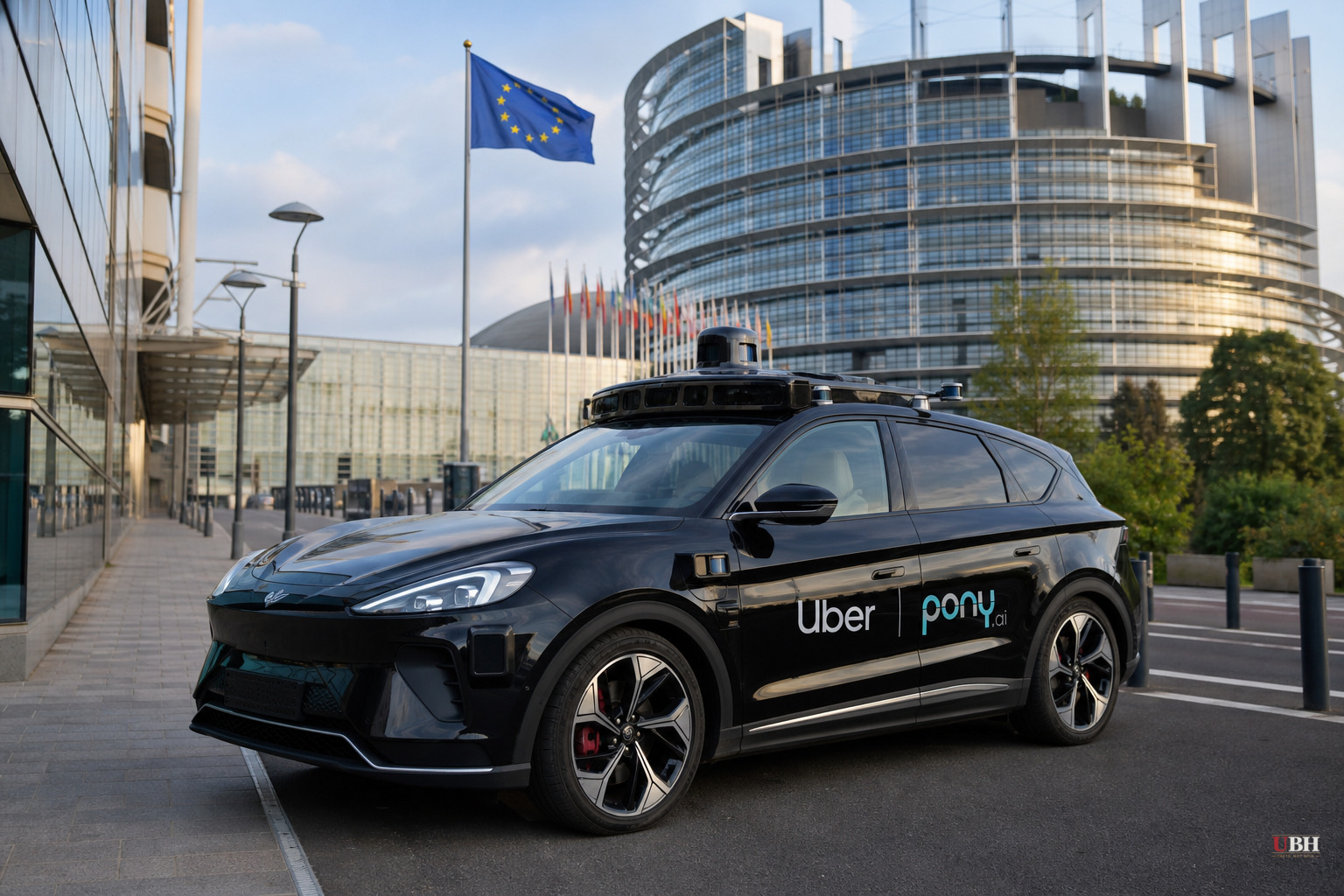
Uber has spent the past year building its autonomous-vehicle strategy on other companies' technology instead of its own. The Pony.ai deal announced Friday, August 14, is the biggest bet yet in that strategy, and it comes with a Chinese company involved.
Pony.ai said it will deploy more than 2,000 robotaxis across Europe under an expanded partnership with Uber that dates back to May 2025, according to Dow Jones Newswires and tech.eu. The rollout builds on the companies' existing commercial robotaxi service in Zagreb, Croatia, launched in late March with Croatian mobility firm Verne as the local fleet operator, according to briefs.co and BigGo Finance.
Four additional European cities are coming, plus a Middle East expansion. Nobody will say which cities, or when. Anadolu Agency, tech.eu, and BigGo Finance all confirm the companies declined to name the markets or give a timetable. BigGo Finance reported that further Middle East details are "expected to be announced in phases," per Uber and Pony.ai's joint statement.
The Math Doesn't Add Up Yet
Pony.ai's current global fleet runs around 1,700 vehicles, according to BigGo Finance. The company is promising Europe more robotaxis than it operates anywhere on Earth today, in cities it hasn't named, on a timeline it hasn't set.
Pony.ai currently runs paid, fully driverless robotaxi service in four Chinese cities: Beijing, Shanghai, Guangzhou and Shenzhen, according to Anadolu Agency. James Peng, the company's founder and CEO, says Pony.ai has hit city-wide breakeven unit economics in several of those markets, a claim The Next Web notes few Western robotaxi rivals can make.
The deal itself is structured to keep both companies' balance sheets light. Pony.ai supplies the Level 4 self-driving software and operational know-how. Uber supplies the app, the bookings, the payments, and its 208 million monthly active customers, according to Yahoo Finance. Local partners, like Verne in Zagreb, actually own and finance the vehicles and run day-to-day fleet operations. BigGo Finance reported that under Pony.ai's Form 6-K filing with the Securities and Exchange Commission, vehicle funding and ownership can shift by market, and the same partner can wear multiple hats.
Sarfraz Maredia, Uber's global head of autonomous mobility and delivery, called it a shift "from individual launches to repeatable commercial scale." Peng framed the expanded agreement as "an important new phase" for the partnership, aiming to "build sustained commercial operations at scale across Europe and beyond."
Why Uber Wants This
Uber's math on drivers explains the urgency. In the second quarter, Uber processed $58 billion in gross bookings, and $25 billion of that went to its 10.2 million drivers, the single largest line item on the company's books, according to Yahoo Finance. Every autonomous mile that skips a human driver shifts more of that money toward Uber's own margin, without Uber having to build a self-driving car itself.
CEO Dara Khosrowshahi has said Uber's autonomous vehicle footprint could double from seven cities to 15 by the end of 2026, backed by roughly $10 billion Uber plans to commit to its partners over the next few years, per Yahoo Finance. Uber now has more than 30 autonomous-vehicle partnerships globally, according to BigGo Finance, which means Uber itself isn't betting the farm on Pony.ai succeeding. Pony.ai, on the other hand, has staked real credibility on cities it hasn't even named yet.
The Regulatory Wrinkle Nobody's Answered
A Chinese company running Level 4 autonomous vehicles, loaded with cameras and sensors, on European streets arrives at an awkward moment. The Next Web pointed out that Brussels has grown increasingly wary of Chinese technology across sectors, from electric vehicles to telecom equipment, and that robotaxis are "essentially rolling sensor arrays" collecting detailed mapping and location data. Where that data gets processed, stored, and potentially accessed is exactly the kind of question EU regulators have already raised about Chinese carmakers.
None of the seven reports here found any confirmation that EU regulators have opened a formal review of the Pony.ai-Uber data practices. Critics of Chinese tech expansion in Europe have raised this concern, and it should be tracked. As of now it remains an open question rather than a documented regulatory action.
BigGo Finance also flagged that European regulatory oversight of robotaxis is fragmented across member states, with safety investigation mechanisms lagging behind the pace of commercial rollout. That's a structural gap, not an accusation against any single regulator.
Competition isn't waiting around. Waymo has reportedly set up business entities in France, the Netherlands, Spain and Germany, according to tech.eu and briefs.co, and already completes more than 500,000 paid autonomous trips weekly across 11 U.S. cities, per Yahoo Finance. WeRide and Uber are planning a Madrid pilot later this year that would be Spain's first, according to briefs.co. Baidu's Apollo Go has been testing in Switzerland.
Pony.ai is scheduled to report second-quarter earnings on August 18, according to BigGo Finance. That call will be the first real chance for investors to press the company on which cities, what timeline, and how it plans to more than double its entire global fleet to cover a five-city European rollout it announced without naming a single new location.
Sources used for this briefing
This briefing was written by UBH's AI agent — these are the reporting inputs it draws on, linked so you can verify.


