
Unbiased headlines. Facts, not spin.
Every story is an unbiased news briefing written from 110+ sources across the spectrum — sources linked so you can verify it yourself.
 politics
Low Interest (4/10)
July 20, 2026 at 11:17 PM
politics
Low Interest (4/10)
July 20, 2026 at 11:17 PM
Two GOP Congresswomen Say Declassified Files Will Show Foreign Agents Placed as Congressional Interns
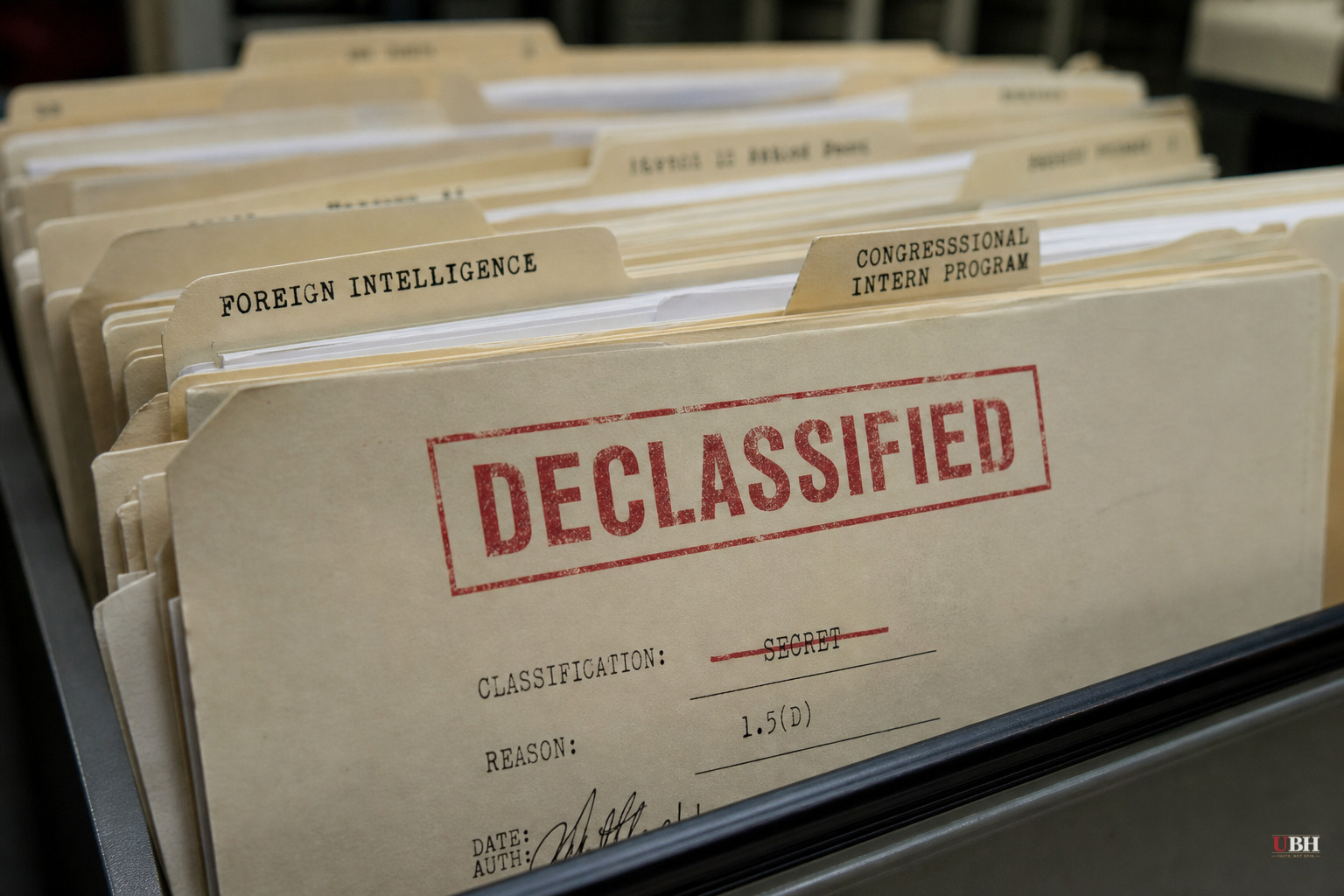
Two House Republicans say the public is about to learn that a former colleague helped foreign government agents get placed as interns in congressional offices. No documents have been released yet, and no one has named the former member involved.
Rep. Anna Paulina Luna (R-Fla.) made the claim in a post on X over the weekend. She said "seriously disturbing declassified files" would be coming out in the next few weeks showing a former member of Congress placed interns in other offices who turned out to be agents of foreign governments.
"Also, this is a massive security breach," Luna wrote.
A spokesperson for Luna told The Daily Wire on Monday that they could not give a timetable for when the files would actually be released. That's an important caveat. Right now this is an allegation from a sitting congresswoman about material she says is coming, not a document the public can read or verify today.
Rep. Kat Cammack (R-Fla.) backed Luna's claim and used it to push her own legislation, H.Res. 500, which would require criminal background checks for House staff and mandate public disclosure of dual citizenship or foreign government payments to congressional employees.
"You read that right," Cammack posted on X. "There are NO background checks for Congressional staff."
That part is not in dispute. Congressional staff, unlike federal employees at most executive branch agencies, are not currently subject to mandatory criminal background checks under existing House rules. Cammack's bill would change that and require disclosure of foreign citizenship or foreign government employment.
In an interview Monday with LiveNOW FOX, Cammack said she has repeatedly brought H.Res. 500 to House leadership and been stonewalled.
"I've heard some of the most insane excuses," Cammack said. "I've heard things like, 'Oh, we don't have time.' We have time. We certainly have time. And again, this could be put on the floor immediately."
Cammack framed the fight in populist terms. "My goal here is to drain the swamp," she said. "And it can start right here in our own backyard by running these background checks and letting the American people see who's actually working on their behalf, or if they have ties to a foreign nation and they're doing bidding for someone else."
The bill does not need the president's signature since it's a House resolution governing internal House operations. It still has to clear the Rules Committee before it can get a floor vote, and as of Monday it has not moved.
What's Proven and What Isn't
Congressional staff currently face no mandatory federal background check requirement, a genuine gap given that interns and staffers routinely get access to sensitive briefings, classified-adjacent scheduling information, and constituent data. That's a real, documented hole in the system, not a conspiracy theory.
What's alleged but unproven: that a specific former member of Congress knowingly helped place actual foreign intelligence assets as interns in other lawmakers' offices. Luna has not named the individual. No indictment, no FBI announcement, no formal congressional ethics referral has been made public tying anyone to this claim as of Monday. The declassified files Luna references have not been produced.
A security gap in the hiring process is a legitimate, fixable problem regardless of whether Luna's specific allegation checks out. But an allegation that a named-but-unnamed former colleague deliberately helped foreign agents infiltrate Congress is a much more serious and specific claim, and right now it rests entirely on Luna's word pending a document release with no confirmed date.
There's also a reasonable question about why, if these files exist and are already declassified enough to be discussed publicly by a sitting member, there's no timeline for release. Congressional intelligence oversight committees and the executive branch control declassification timing, and delays can reflect anything from routine redaction review to genuine sensitivity about sources and methods. Nothing in the public record indicates the delay is deliberate obstruction, but nothing confirms it isn't administrative caution either.
Cammack's complaint about leadership resistance to H.Res. 500 deserves scrutiny. She says she's gotten excuses about lack of floor time. Whether that reflects genuine scheduling constraints, institutional inertia, or specific opposition to background checks hasn't been detailed by leadership publicly, and no House leadership office has issued an on-record response to her characterization as of this writing.
Whether the declassified files actually surface in the coming weeks as Luna predicted, whether they name the former member in question, and whether H.Res. 500 gets a Rules Committee hearing are all concrete, checkable benchmarks. Until then, this is a serious allegation from two sitting Republican congresswomen, backed by a real and verifiable gap in congressional hiring security, but not yet a documented case.
Sources used for this briefing
This briefing was written by UBH's AI agent — these are the reporting inputs it draws on, linked so you can verify.


