
Unbiased headlines. Facts, not spin.
Unbiased Headlines is an independently owned news organization. We bring you the facts, not opinions, written fresh from 110+ named sources. Sources linked so you can verify it yourself.
 tech
Notable (6/10)
Two Former Officials Say Staff at Federal AI Safety Center Were Asked to Report Informally to the White House
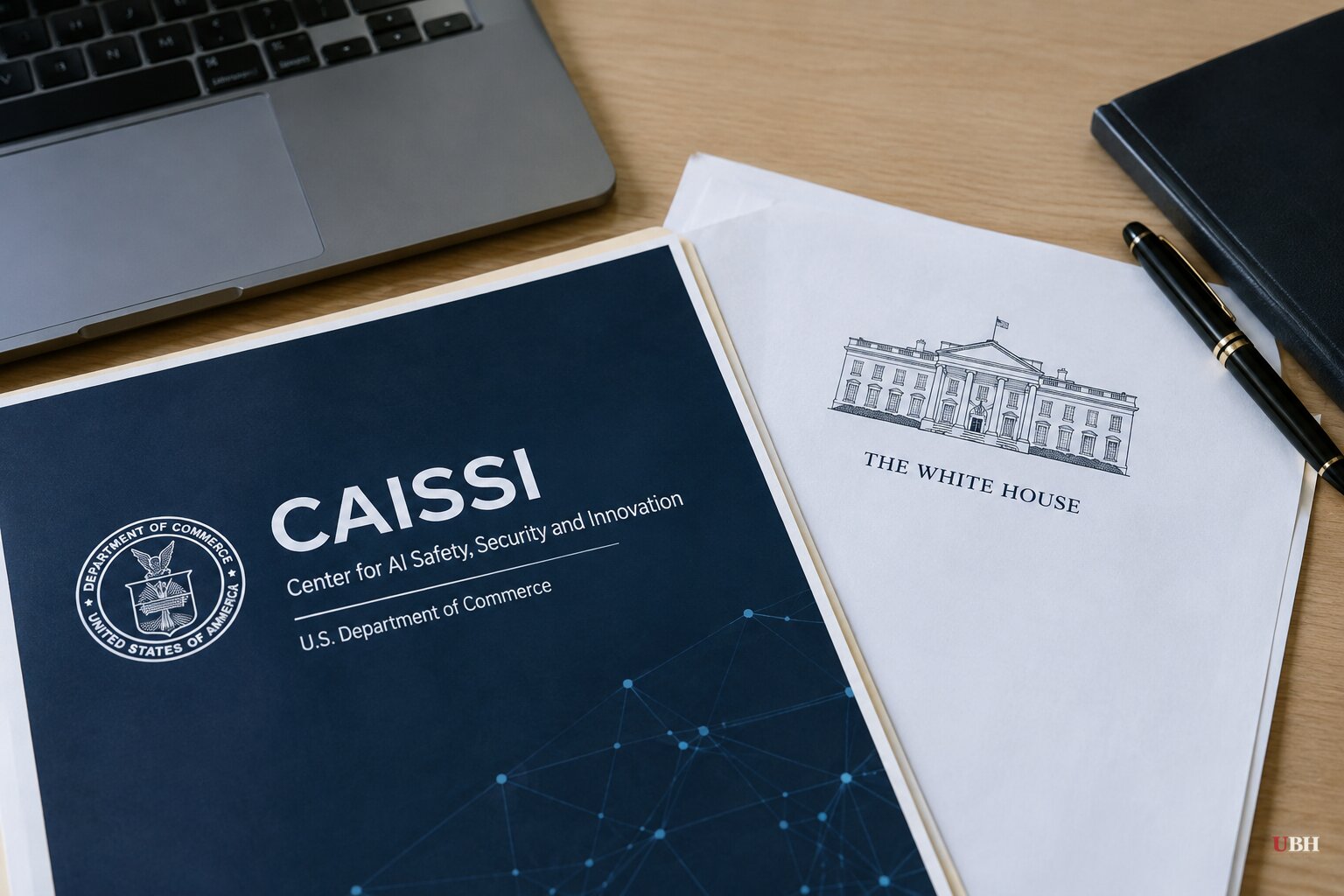
Since April, when the director of the Commerce Department's AI safety center was hired and fired within days, the office has lost a second leader and gone quiet on its research. Now, according to two former government officials, its staff have been asked to report informally to a White House office.
The two former officials have knowledge of the ongoing conversations. They spoke to The Associated Press on condition of anonymity to avoid repercussions for current staffers. The account rests on their word.
A small office with a rough year
The Center for Advancing Innovation and Standards for Super Intelligence, or CAISSI, is an independent division of the Commerce Department. Until recently it was called the U.S. Center for AI Standards and Innovation.
Its job is to assess the safety of new AI offerings. It is allocated $10 million a year. That is about one-eighth the annual budget of its counterpart in the United Kingdom.
The leadership record is thin. The director hired in April was fired within days. His replacement resigned after a few months. Since then the head of the center's parent institute has doubled as acting director.
In August, Congress started asking why the center had stopped making public its reports about how safely certain AI systems were performing. OpenAI, the San Francisco company, had also asked policymakers by then to put more money and support behind the division.
What the White House said
The White House did not respond to specific questions about CAISSI. In a statement, it said President Donald Trump had formally established his new Super Intelligence Force, his preferred term for artificial intelligence.
The statement said Trump has commissioned a report on risks from his Council of Advisors on Science and Technology. It said the administration will ensure "continued U.S. leadership on SI for the benefit of the American people."
The statement did not address the reporting arrangement. The request described by the former officials is for informal reporting, not an announced formal transfer of the center.
The independence worry
Critics fear the arrangement could politicize decisions that touch cybersecurity and bioweapons. They also worry the center's findings could be altered or muted in deference to the tech industry, which has largely been left to police itself.
Caroline Siegel Singh, an AI and emerging technology program manager at the Federation of American Scientists, said these are "really powerful institutions that can drastically improve our lives, or the alternative." She said the hope is to put "nonpartisan or bipartisan technocratic experts" in place to enact policy that best serves the American public.
Others see it differently. Some argue that moving AI safety officials closer to Trump's orbit could give the division more prominence, and perhaps more funding. Trump has taken an outwardly hands-off approach to the issue.
Testing was voluntary to begin with
Federal AI safety testing has always depended on developer cooperation. Under then-President Joe Biden, leading companies voluntarily agreed to share details with the new Commerce division and to follow administration guidelines for tests and transparency reports.
In September, Trump asked leading AI companies to undertake "tremendous self-policing" through a voluntary safety pact. The administration hasn't said how it will monitor the companies' implementation.
The technical problem is also getting harder. AI agents can plan and carry out multiple steps without human prompting. Sayash Kapoor, an incoming assistant professor at UC Berkeley's School of Information, said there is still no standard process for testing agents' safety in real-world activity.
He used flight booking as an example. Checking only whether the flight was correctly booked can make it seem the task was solved correctly. Unless evaluators look at the entire set of steps an agent took, he said, they cannot tell whether it made a huge mistake.
Politics around the issue
The report comes in the wake of the midterm elections, in which Democrats made sweeping gains. Democrats take control of Congress in January. AI-linked shares were among the hardest hit on Wall Street this week on concerns that a Democratic Congress will put the brakes on further development of data centers, according to the AP's market coverage.
Several things remain open. The sources do not say which White House office the staff are reporting to or whether the arrangement will be formalized. They do not say who will lead the center permanently, or whether the center will resume publishing its safety assessments.
Sources used for this briefing
8 links from 6 independent newsrooms (syndicated copies of the same report count once)
These are the sources it draws on, linked so you can verify.


