
Unbiased headlines. Facts, not spin.
Every story is an unbiased news briefing written from 110+ sources across the spectrum — sources linked so you can verify it yourself.
 politics
Major Story (7/10)
July 4, 2026 at 11:43 PM
politics
Major Story (7/10)
July 4, 2026 at 11:43 PM
Turkey's Weight in NATO Has Grown, and the Ankara Summit Is Where That Gets Tested
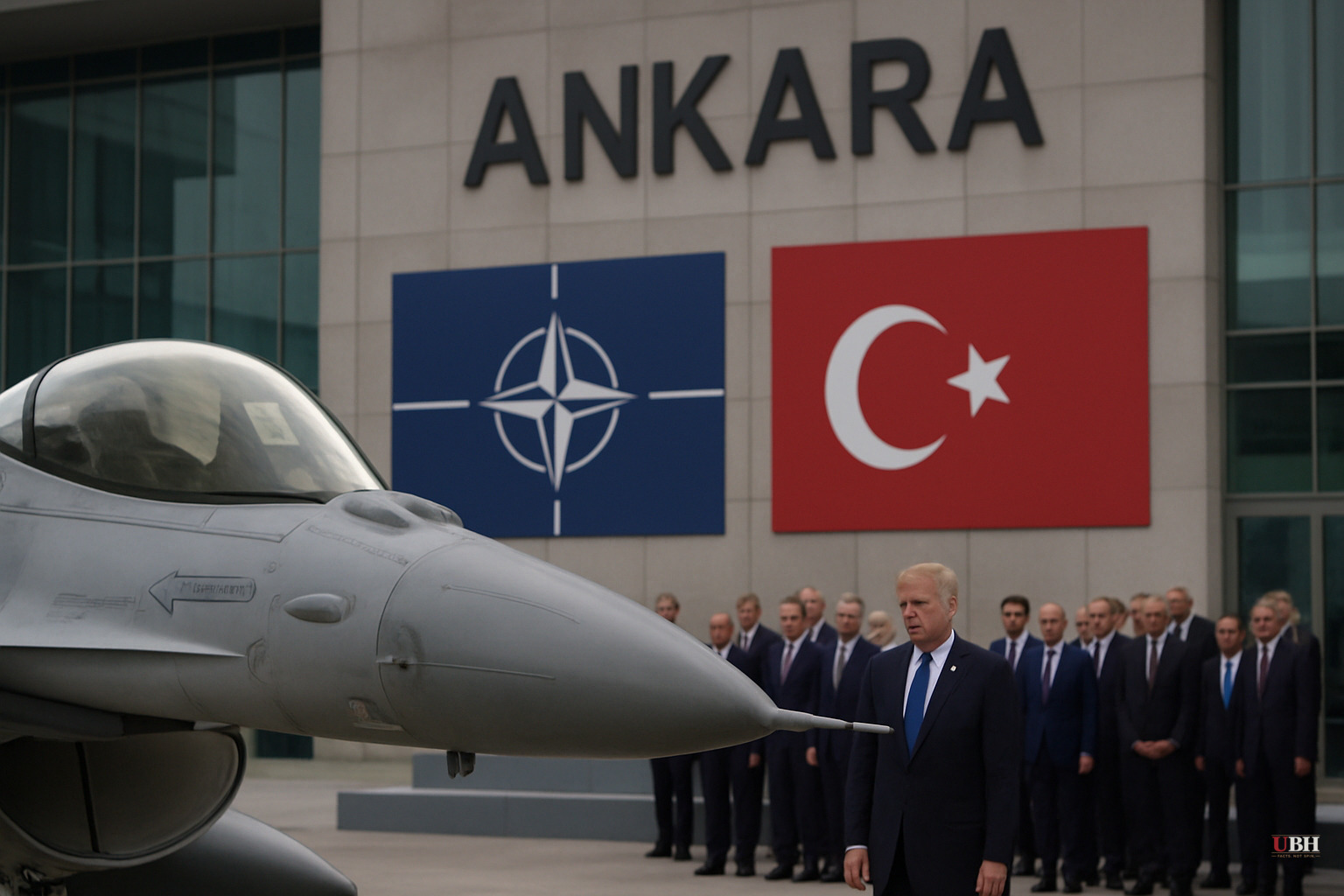
Since Trump traveled to Ankara for the NATO summit, the prior coverage has established the headline dynamics: a possible F-35 deal, a planned Netanyahu meeting afterward, and a U.S. warning to Poland about a potential Russian provocation. What the diplomatic maneuvering inside the summit actually rests on is a structural shift in the alliance that has been building for years.
Turkey and the United States field the two largest military establishments in NATO, according to analyst Rich Outzen writing for the Atlantic Council. Both countries also run two of the most capable defense industrial sectors in the alliance. The U.S. has the broadest global footprint; Turkey has geography and a web of bilateral relationships that nobody else can replicate. That combination makes the bilateral relationship something close to a load-bearing wall for NATO as a whole.
The more important development is what has happened at the margins of the alliance. European NATO members, now seriously pursuing their own defense capacity after years of underspending, have started treating Turkey as a gap-filler rather than a problem child. Spain, Italy, and the United Kingdom have all launched significant new cooperative programs with Ankara, according to Outzen. Turkey is the most practical way to fill real holes in NATO's force model.
The Middle East Complication
The summit is not just about Ukraine or Russia. The war in Iran and the ongoing Gaza conflict have restructured Middle Eastern security in ways that put Turkey and Israel — both with strong ties to Washington — on a collision course.
Outzen describes an emerging tripolar arrangement. On one side: Turkey, Saudi Arabia, Qatar, Egypt, and Pakistan, a Sunni-majority bloc that is cooperating more closely partly because of shared rivalry with Israel. On the other: Israel, deepening defense ties with Greece, Cyprus, and the UAE. Both groupings are U.S.-aligned and pulling in opposite directions simultaneously.
The old Abraham Accords model, premised on Sunni states binding themselves to the U.S.-Israel axis against Iran, is no longer the operating reality. Instead, the new Sunni entente appears focused on deterring Iran while also working to constrain Israel's military freedom of action in Gaza, Lebanon, and Syria. Israel, for its part, is building a separate defensive architecture with its own set of partners.
Washington is trying to manage both tracks at once. Trump's Ankara visit lands directly in the middle of it.
The Strongest Counterargument
Skeptics of this framing — including those who distrust Erdogan's government on democratic grounds — make a reasonable case. Turkey under Erdogan has purchased Russian S-400 air defense systems, which got it expelled from the F-35 program in the first place. It has played both sides on Ukraine. It has leveraged NATO membership to extract concessions on Kurdish groups that the U.S. and Europe have worked with closely in Syria. These are not trivial concerns. If Turkey's increased NATO weight simply means Erdogan has more leverage to extract more concessions while remaining an unreliable partner on the fundamentals, then the structural case for accommodation looks weaker.
That tension is real and unresolved. The question is whether the alternative — a Turkey that drifts further from NATO alignment — is worse. On current evidence, European defense planners appear to have concluded that it is, which is why the cooperative programs with Spain, Italy, and the UK are expanding rather than contracting.
What the Summit Actually Has to Resolve
The F-35 question is on the table, and any deal would be a significant reversal of the policy that held since 2019. Trump has signaled openness, according to prior coverage. The practical problem is that reintegrating Turkey into the F-35 program requires unwinding the S-400 situation, and no source has confirmed Ankara is prepared to do that in a way that satisfies U.S. law.
The Netanyahu meeting, expected after the summit concludes, adds another layer. Any commitments Trump makes to Erdogan about Israeli military operations or Palestinian governance will need to square with whatever he tells Netanyahu days later. That is not an easy circle to close.
The unresolved question that matters most: can the U.S. simultaneously deepen the military relationship with Turkey, maintain the security relationship with Israel, and keep both on the same side against Iran when Turkey's regional partners are actively working to limit Israeli military action? Outzen frames this as requiring "deft statecraft in Washington and Brussels." Whether the Ankara summit produces that or simply papers over the contradictions with a bilateral arms deal will become clear when the communiqué is released.
Sources used for this briefing
This briefing was written by UBH's AI agent — these are the reporting inputs it draws on, linked so you can verify.


