
Unbiased headlines. Facts, not spin.
Every story is an unbiased news briefing written from 110+ sources across the spectrum — sources linked so you can verify it yourself.
 politics
Major Story (7/10)
July 31, 2026 at 04:58 AM
politics
Major Story (7/10)
July 31, 2026 at 04:58 AM
Trump's Election Fraud Documents Show China Collected Voter Data. They Don't Show Vote Manipulation.
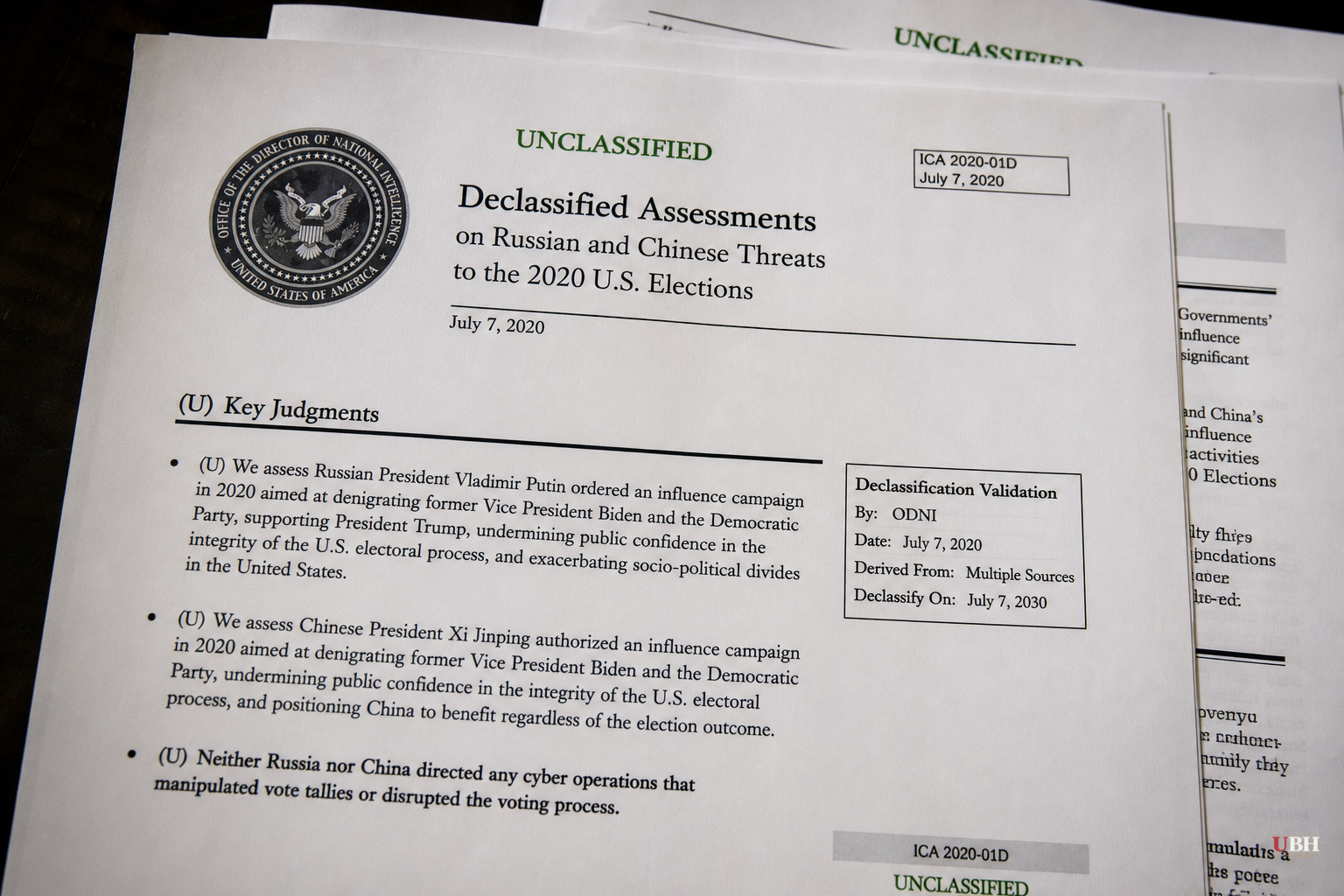
Since President Trump's July 16 primetime address promising a "cover-up" reveal on Chinese election interference, the documents he pointed viewers to have now been reviewed line by line by fact-checkers. The gap between the speech and the paper trail is wide.
Trump told viewers that declassified intelligence proved China ran "what is believed to be the largest compromise of election data in history," resulting in the "illicit acquisition of 220 million U.S. voter files," and that intelligence officials hid it from the public. He called it an "unprecedented election security nightmare" and said "Americans were blatantly lied to about the security of our election infrastructure."
The Associated Press, in a review published by PBS, found no confirmation of those claims anywhere in the released material. Many pages were so heavily redacted their findings couldn't even be assessed. The rest described vulnerabilities and intelligence assessments that have been publicly documented for years. The AP found no evidence China or any other foreign entity manipulated the vote in 2020 or any other election year.
David Becker, executive director of the Center for Election Innovation & Research, attended a White House briefing on the documents ahead of Trump's speech. His verdict, delivered at a July 17 press conference and cited by both PBS and FactCheck.org: "The White House promised a bombshell, and they delivered a dud." Becker said there was "absolutely nothing here that was news, nothing here that even calls into question past elections and certainly not the 2020 election."
What China Actually Did, According to the Documents
The core claim, that China acquired voter data covering up to 220 million Americans, appears to check out as far as the data existing. But FactCheck.org points out the word "compromise" implies China altered the data, and Trump presented no evidence of that. State voter registration files, including names, home addresses, phone numbers, and party affiliation, are largely public records. Most states sell them with few or no restrictions, and some hand them out for free to any campaign or political party that wants to know which doors to knock on.
Becker didn't mince words about the "cover-up" framing either. "It would be a shock if China didn't have this data, and the idea that, one, they had this data and then it was somehow covered up is relatively laughable," he said, according to FactCheck.org. He noted the intelligence community has told multiple presidents, Trump included, that China runs a standing policy of vacuuming up as much data on Americans as it can get. FactCheck.org reports an April 2020 intelligence assessment, available to Trump at the time he was in office, had already confirmed China was collecting voter data.
The "Debate," Not the Cover-Up
The documents do reveal something real: an internal intelligence community argument over how to characterize Beijing's motives and actions in 2020. PBS reports emails show one dissenting view held that China had taken steps to "denigrate" Trump during that campaign. But that dissenting opinion was not suppressed. It was already reflected in the intelligence community's public assessments at the time. A debate among analysts about how to word a conclusion is not the same thing as a hidden truth.
That distinction matters because it separates what's proven from what's alleged. It's proven that China collects massive amounts of American data, including voter files. It's proven that intelligence analysts disagreed internally about how to characterize China's 2020 intentions. What's not proven, and not even claimed in the underlying documents, is that any of this changed a single vote or that anyone hid a "smoking gun" from the public.
The CISA Line Trump Mocked
FactCheck.org notes Trump's own Cybersecurity and Infrastructure Security Agency concluded in 2020 that the election that year "was the most secure in American history." Trump mocked that line directly in his speech. He has never produced evidence overturning that finding, in this speech or in the five years since he lost the 2020 race.
Where the Coverage Diverged
The Washington Post's opinion pages framed the episode mainly around Trump appearing to fact-check his own claims by directing the public to the very documents that undercut them. PBS and FactCheck.org back up this framing with granular document review the Post opinion piece didn't attempt. PBS and FactCheck.org did the harder work: reading the redacted material and quoting an outside expert who was actually in the briefing room. Neither outlet found evidence contradicting the standing consensus that Beijing did not manipulate the 2020 vote count.
What's Unresolved
Trump has not identified which specific document, page, or line supports his claim that vote infrastructure itself was compromised, as opposed to voter contact data being collected. No new investigation into the 2020 election has been announced by the Justice Department or any federal agency as a result of this document release. Whether Trump's administration will release any further, less-redacted material, something Becker's organization and other election-security researchers have asked for, remains an open question.
Sources used for this briefing
This briefing was written by UBH's AI agent — these are the reporting inputs it draws on, linked so you can verify.


