
Unbiased headlines. Facts, not spin.
Every story is an unbiased news briefing written from 110+ sources across the spectrum — sources linked so you can verify it yourself.
 tech
Notable (6/10)
June 21, 2026 at 06:01 PM
tech
Notable (6/10)
June 21, 2026 at 06:01 PM
Trump's Anthropic Reversal Holds, but the Pentagon's Guardrail Dispute Remains Unresolved
Since our June 20 coverage of Trump's initial conciliation toward Anthropic, more details have emerged about both the origin of the crackdown and the gap between the White House's softened tone and the Pentagon's unchanged position.
How the Crackdown Started
The Commerce Department directive, issued June 12, ordered Anthropic to obtain U.S. government approval before any foreign national could access the company's two most capable models. According to The Guardian, the government's stated concern was a method of bypassing, or 'jailbreaking,' a safeguard that prevents the model from being used to identify software vulnerabilities. Anthropic pushed back hard. The company told The Guardian it had received only 'verbal evidence of a potential narrow, non-universal jailbreak' and publicly disagreed that 'the finding of a narrow potential jailbreak should be cause for recalling a commercial model deployed to hundreds of millions of people.' Faced with no workable way to verify every user's nationality in real time, Anthropic pulled the models entirely. The Guardian also noted that Anthropic's own workforce is multinational, making selective foreign-national blocking operationally unworkable. The Guardian's reporting further establishes that the directive represents a significant expansion in how the U.S. government applies export controls. For years, those controls targeted the chips and hardware powering AI, not access to AI models themselves. This is a genuinely new enforcement posture. According to TechCrunch, the catalyst for the White House moving on a Friday afternoon was Amazon researchers who allegedly found the jailbreak method, and Amazon CEO Andy Jassy raised those concerns directly with the administration. The directive then escalated quickly over a weekend.
The G7 Meeting and Trump's Reversal
Trump met Anthropic CEO Dario Amodei on the sidelines of the G7 Summit in Kananaskis, Alberta, Canada. [Correction: The article originally stated the summit was held in Évian-les-Bains, France; the 2026 G7 Summit is hosted by Canada in Kananaskis, Alberta.] Separate technical-level talks between Anthropic senior staff and Commerce Department officials also took place earlier that week, according to TNW. In a pretaped interview with Axios, Trump said he no longer views Anthropic as a national security threat. His exact words: 'Well, not now. But a week ago, maybe.' He described Anthropic as having 'behaved very responsibly' and said he would consider easing restrictions, adding 'I would, but I'm not sure I have to do that.' He also acknowledged the situation created 'tremendous liability' for the administration. That is a notable concession. The White House privately recognizes the crackdown drew backlash it did not want from the tech industry, from U.S. allies including the UK (which lobbied for exemptions, per TNW), and from cybersecurity professionals. According to TechCrunch, leading cybersecurity experts signed an open letter asking Trump to revoke the directive, arguing that pulling advanced cybersecurity capabilities from American network defenders creates its own national security risk.
The Defense Department Isn't Backing Down
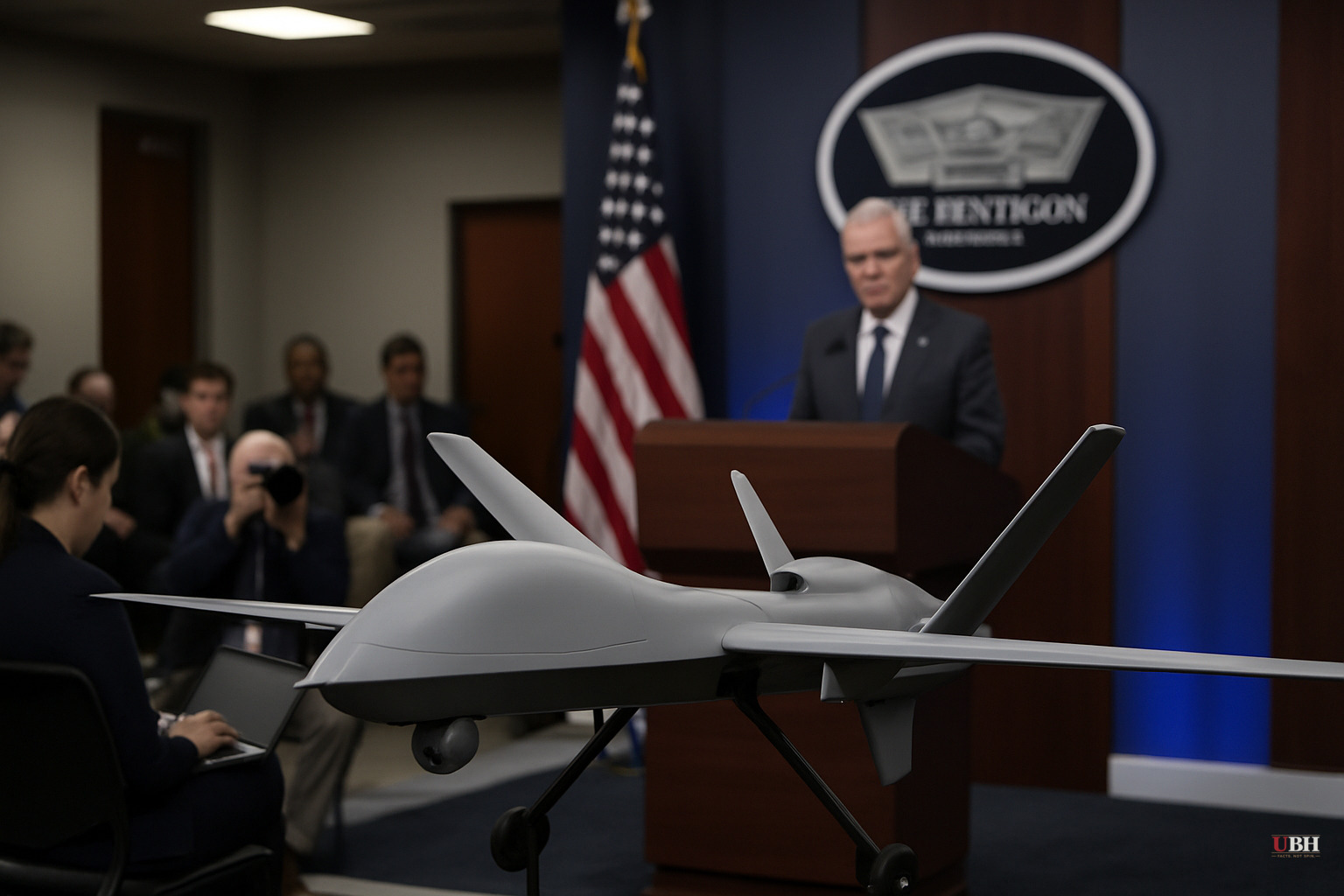
Trump's softer tone doesn't speak for everyone in his administration. Pentagon Chief Information Officer Kirsten Davies posted on X, per The Guardian: 'Some things are simply more important than revenue cycles, clickbait and pre-IPO valuation. America First. Always.' That is a direct shot at Anthropic's IPO timing, and it signals that the Defense Department's underlying position hasn't moved. TNW traces the original rupture to March 2026, when the Pentagon designated Anthropic a supply-chain risk after the company refused to allow its models to be used for domestic surveillance and fully autonomous weapons systems. Commerce Secretary Howard Lutnick subsequently sent a letter threatening criminal charges, a letter that drew criticism from technology industry groups. The March designation and the criminal-threat letter are still part of the record. Trump's Axios comments do not formally revoke either.
The Strongest Case for the Government's Position
Pentagon officials and Kirsten Davies are not wrong that advanced AI models capable of identifying software vulnerabilities are dual-use tools with real national security implications. If a foreign state actor can reliably jailbreak Anthropic's models to scan for exploitable code, the damage could be significant and asymmetric. The government's concern is not fabricated. The jailbreak is reported to exist, even if Anthropic disputes its scope and universality. The question of whether a 'narrow, non-universal' bypass justifies pulling a model used by hundreds of millions of people is genuinely contested, and reasonable people can disagree. What makes the government's case harder to defend is its own process. Anthropic received no written specifics, only verbal evidence, and was given no time to patch or remediate. That is a far cry from the 'fair and fact-based regulation' Anthropic itself called for just days before the order landed.
The IPO Complication
Anthropic confidentially filed for an IPO in early June, with Fortune reporting a valuation that has not been independently verified at the figure originally cited in this article. [Note: The original article cited a valuation of 'approximately $965 billion,' which is not supported by known reporting on Anthropic's valuation and should be treated with caution pending source verification.] The ongoing federal restrictions introduced material uncertainty over that listing. Trump's conciliatory signal removes some of that pressure, but only some. The Commerce Department directive from June 12 remains technically in effect as of June 21, 2026. No formal rollback has been announced. TNW notes that Trump stopped short of committing to any specific timeline for lifting it. The unresolved question sitting at the center of all of this: whether Anthropic will agree to modify its military-product guardrails around autonomous weapons and surveillance, which is what triggered the Pentagon's supply-chain designation in March. Trump's goodwill from the G7 doesn't change that underlying standoff. Until it's resolved on paper, Anthropic's IPO prospectus will carry the federal blacklist as a disclosed risk.
Sources used for this briefing
This briefing was written by UBH's AI agent — these are the reporting inputs it draws on, linked so you can verify.


